


AT A GLANCE
- If symptomatic vitreous opacities are visible and significantly affect the patient’s life, surgeons often opt for clinical observation before scheduling a vitrectomy—although some surgeons won’t offer surgery at all.
- Most surgeons are willing to leave some fibrovascular membranes if they can relieve the traction and reattach the retina.
- All surgeons agreed that having all possible disposables and tools immediately available in the OR will improve surgical efficiency.
The retina OR is one of the most dynamic surgical spaces. Each case is unique, no two surgeons are the same, and novel surgical techniques continue to push the envelope of what’s possible. Retina Today asked five top retina surgeons—Steve Charles, MD; Charles C. Wykoff, MD, PhD; Audina M. Berrocal, MD; Şengül Özdek, MD; and Edward F. Hall, MD—to share their preferences in the OR. Here, they discuss everything from managing symptomatic vitreous opacities (SVOs) and challenging tractional retinal detachments (TRDs) to exciting new tools, their best efficiency tips, and even their music choices while operating.
HOW DO YOU MANAGE YOUNGER PATIENTS WITH SVOs?
Dr. Charles: I try not to operate vitreous opacities unless a posterior vitreous detachment (PVD) appears to be present. I do not make a PVD in these cases.
Dr. Wykoff: For most patient with SVOs, I recommend clinical observation because many experience improvement over weeks to months. If patients can document limitations in their activities of daily living, as well as lack of improvement over months of observation, I consider surgical intervention in some patients. Ideally, patients would be pseudophakic and have a complete PVD prior to surgical intervention. If a patient is phakic and has an attached vitreous face, I am even more emphatic in discouraging surgical intervention.
Dr. Berrocal: It’s surprising how little time some doctors spend evaluating, diagnosing, and validating patients’ concerns regarding floaters. Many times, simply explaining the situation and, when appropriate, showing them imaging can alleviate their fears and worries. Recently, I developed a floater myself, and certain lighting conditions make it quite bothersome, which has deepened my empathy for my patients.
That said, floaters can be tricky, as they sometimes manifest as symptoms of mental health issues or anxiety. In such cases, a referral to a counselor, psychiatrist, or psychologist may be necessary.
In instances where I do remove floaters, “less is more.” Often, clearing the visual axis is sufficient, as removing a tight hyaloid can complicate matters unnecessarily.
Dr. Özdek: First, I listen to the patient's complaints to understand how much the SVOs affect their quality of life. Second, I perform a thorough ocular examination and document any SVOs with red-free OCT imaging. If the SVOs are visible and significantly affect the patient’s life, I educate the patient on the condition and the possible treatment approach with vitrectomy, including the risks of cataract, retinal break, and RD (2.4%).1 I send them home and call in 3 months; if they still insist, I schedule a vitrectomy. During the surgery, I induce a PVD up to the equator and trim the vitreous as much as possible without scleral indentation. Although inducing a PVD increases the risk of a retinal break and RD, I prefer to do it; if you don’t, a spontaneous PVD soon follows, which may cause new floaters and a retinal break. To avoid complications, I laser the peripheral retina and trim the vitreous as much as possible.
Dr. Hall: Managing younger patients with SVOs presents a unique challenge. First and foremost, a comprehensive discussion of the risks, benefits, and alternatives to vitrectomy is essential. Inducing a PVD in this population can be difficult and carries an increased risk of complications, especially if there is lattice degeneration or other concomitant peripheral pathology. I typically advise against vitrectomy for younger patients with an attached posterior hyaloid who present with SVO. I do not offer Nd:YAG vitreolysis.
If the patient experiences significant symptoms that align with clinical findings, I occasionally consider proceeding with vitrectomy. In such cases, I perform a core vitrectomy, followed by the application of diluted triamcinolone to visualize the cortical vitreous. Every effort is made to induce a PVD. A meticulous scleral-depressed examination at the conclusion of surgery is critical to identify and address any peripheral defects. Finally, I suture all sclerotomies and conjunctival incisions to further reduce the risk of complications. These cases carry significant potential liability, so it is important to be meticulous and document carefully.
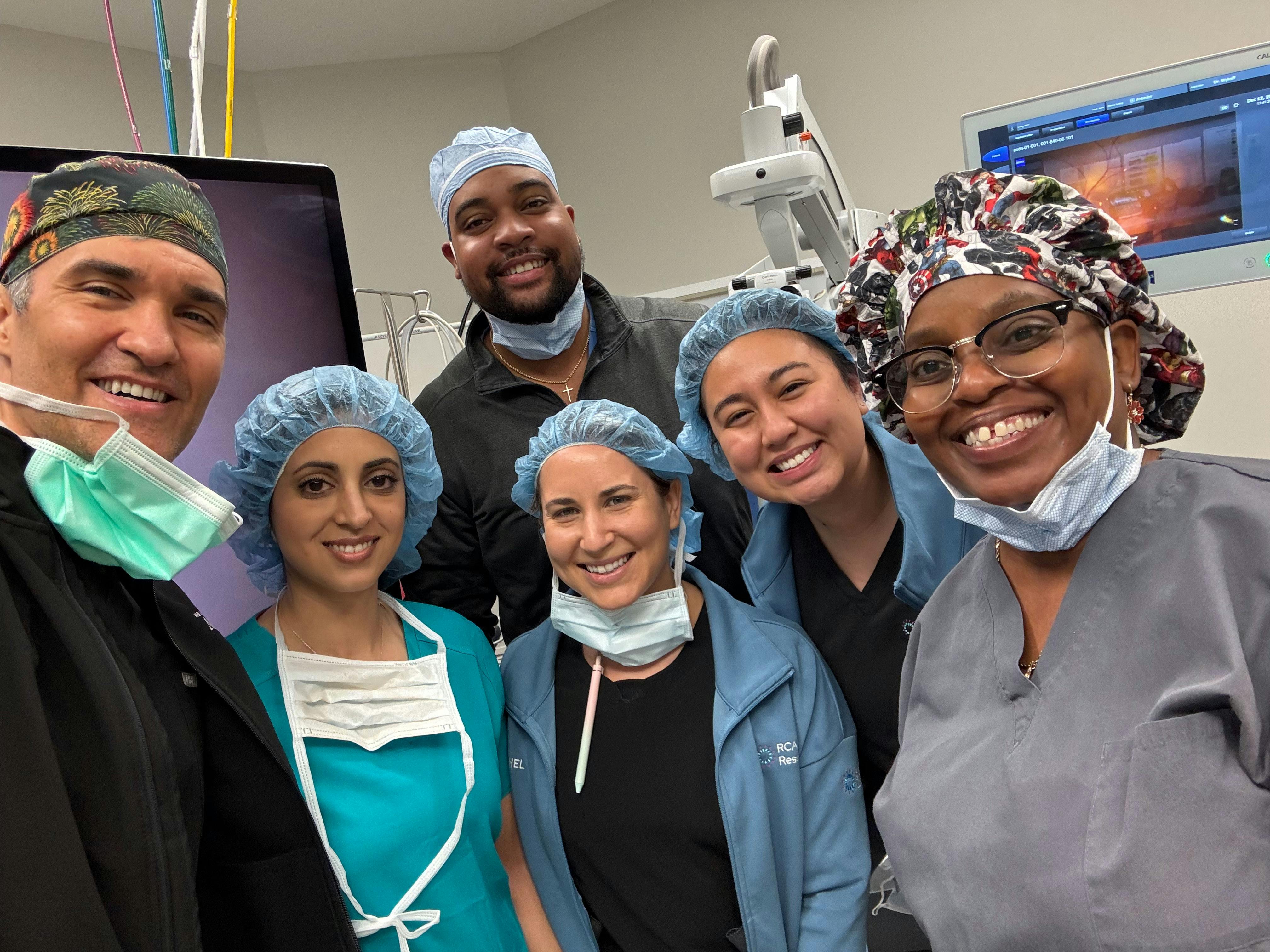
Figure 1. Dr. Wykoff and his powerhouse OR team celebrate after a successful subretinal gene therapy delivery case.
ARE YOU WILLING TO LEAVE SOME FIBROVASCULAR MEMBRANES IN CHALLENGING TRD CASES?
Dr. Charles: Yes; I remove what is necessary to avoid retinal breaks but reattach the macula. I make every effort to avoid silicone oil by using scissors, not just the cutter, and avoiding peeling and aggressive PVD creation.
Dr. Wykoff: With TRD repair in the context of proliferative diabetic retinopathy (PDR), my surgical goal is to achieve an attached posterior pole without creating iatrogenic retinal breaks. I relieve as much traction and remove as much of the fibrovascular tissue as possible. I often leave fibrous stalks that are not causing residual retinal traction.
Dr. Berrocal: If the vitreous around the fibrovascular membranes is removed, I typically leave the membranes intact. With today’s advanced vitrectors, we can get very close to the retina without causing damage, pulling, or creating holes or bleeding. As a result, these membranes may often be left in place.
Dr. Özdek: I almost always leave some fibrovascular membranes in pediatric TRD cases, such as retinopathy of prematurity, familial exudative vitreoretinopathy, and persistent fetal vasculature. I do not want to risk creating a retinal break by peeling more membranes; instead, I leave membranes that I feel are too risky to peel or if they are not crucial to relieve the traction. You can consider peeling the residual membranes in a second surgery, if needed.
For adults, I may leave some membranes in cases of significant PDR or vasculitis. Although a retinal break is less challenging in an adult, it necessitates use of gas or silicone oil tamponade. Additionally, peeling all membranes, especially in the major arcuate vessels, may cause uncontrollable bleeding, and cauterizing those vessels may lead to occlusion and irreversible damage. However, strongly adherent fibrovascular tissues left over the major vessels or the optic disc may be the reason for recurrent vitreous hemorrhage in adult PDR cases. Surgeons must evaluate each case carefully.
Dr. Hall: I perform a thorough core vitrectomy, trimming down to the fibrovascular plaque, and lyse all anterior-posterior vitreous adhesion for 360°. Vitreoschisis is almost always present, so I use diluted triamcinolone to highlight residual vitreous. I perform as much segmentation and delamination as is safely possible. Most of the time, I can remove all membranes, but there are certainly cases in which there is strong vitreoretinal adhesion, particularly in the midperiphery and in highly ischemic eyes in which it may be nearly impossible to remove the hyaloid and/or membranes without creating iatrogenic breaks. In these cases, I trim as much as possible and may risk iatrogenic breaks if needed (particularly above the horizontal meridian). Judicious panretinal photocoagulation is important. Careful scleral depression at the end of surgery and proper wound closure are essential.
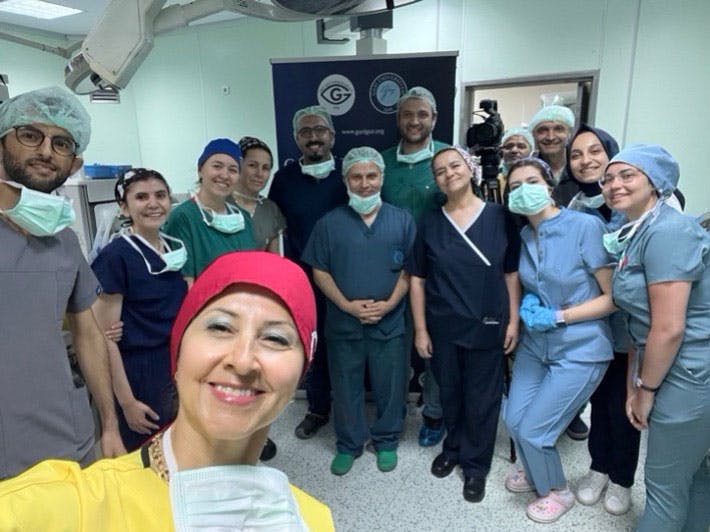
Figure 2. Dr. Özdek with her OR team, including (among others): Aylin Palandöken, RN; Olcay Salmanlı; Demet Coşkun, MD; H. Baran Özdemir, MD; Benay Karabulut, MD; and Ahmet Yiğiter, MD.
WHAT EXCITES YOU THE MOST ABOUT THE FUTURE OF VITREORETINAL SURGERY?
Dr. Charles: The introduction of Alcon’s new Unity Vitrectomy/Cataract System.
Dr. Wykoff: Our current vitrectomy platforms, instrumentation, and hardware for visualization are excellent. However, the field continues to move forward, and I look forward to improvements in all three. I currently use a microscope for visualization, and I’m very comfortable with my surgical setup. To date, I have not found the heads-up display options to be a necessity. That said, I do look forward to a future where some type of augmented-reality visualization could be used to enhance surgical visualization, as well as overlay key metrics related to fluidics and incorporate imaging such as OCT.
Dr. Berrocal: The integration of cutting-edge technology is essential for advancing our field. With tools like 3D surgery, OCT angiography, intraoperative OCT, microscope filters, and small-gauge surgery, a fully integrated system will reduce surgical time and significantly improve patient outcomes. Moreover, robotic surgery holds exciting potential, and it will be fascinating to see how these innovations are applied to our specialty.
As a fan of science fiction, I often imagine breakthroughs such as stimulating the vitreous instead of removing it (given that we likely haven't unlocked all its benefits), using glue for retinal tears, automatic laser, or even the potential for eye transplants one day.
Dr. Özdek: I am expecting better imaging systems that would allow us to see up to the pars plicata without indentation and too much effort. That would be exciting.
Dr. Hall: The future of vitreoretinal surgery is very exciting and will be marked by the continued advancement of intraoperative OCT, 3D visualization, and AI-assisted analysis to improve diagnostic accuracy, surgical planning, and enhanced OR efficiencies. Additionally, the continued evolution of drug delivery systems and gene therapy means that vitreoretinal surgeons may be busier than ever before. Meanwhile, advances in robotic surgery may help ameliorate surgeon fatigue, improve accuracy and precision, and even allow for more advanced technical maneuvers than are currently possible.
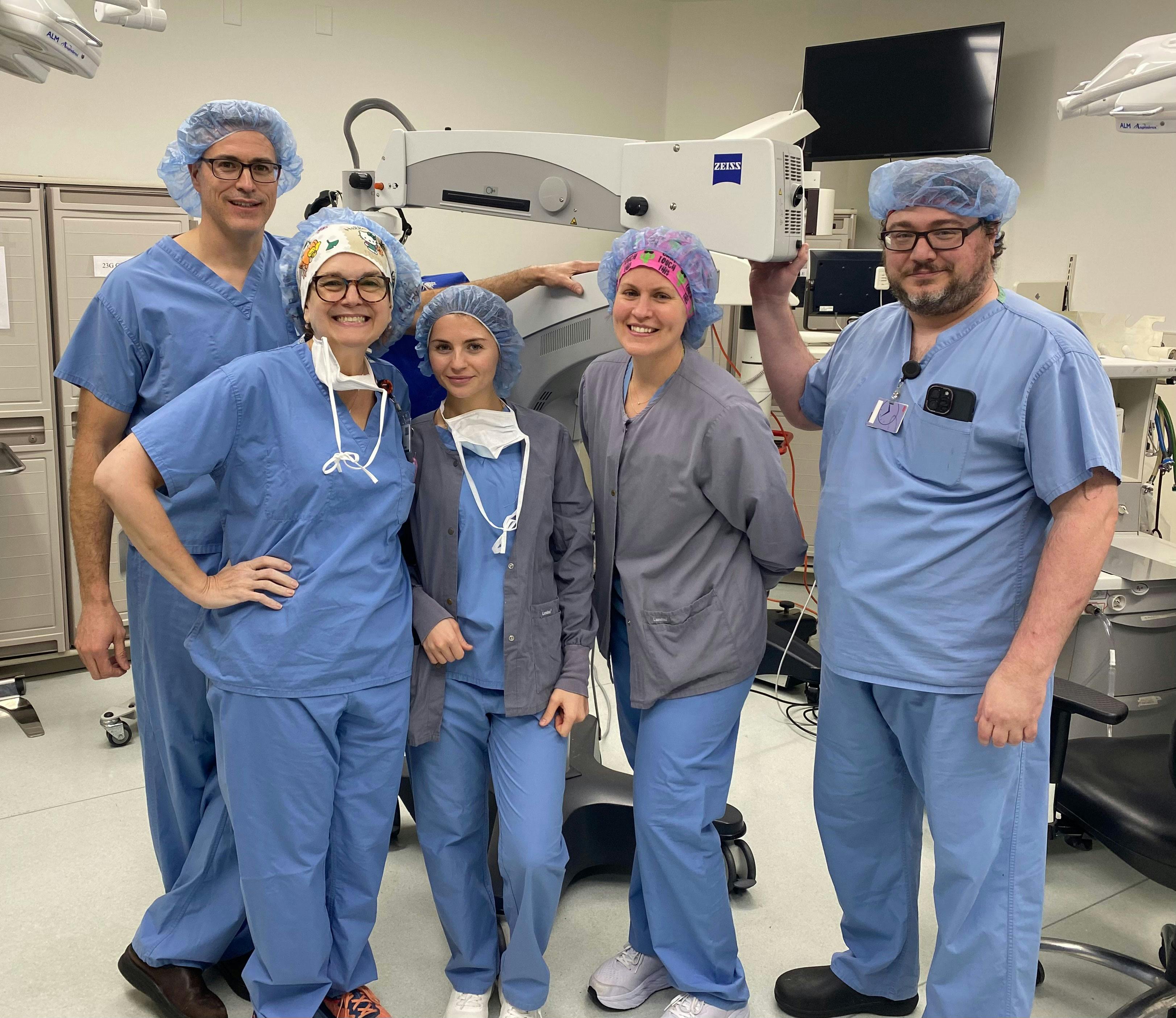
Figure 3. Dr. Hall (far left) with OR staff (left to right): Mary Wiersma, RN; Nataliya Nakonechnaya, RN; Kori Beck, RN; and Brian Volke, CST. We are fortunate to have such amazing staff at Brighton Surgery Center!
AS A BUSY, HIGH-VOLUME SURGEON, WHAT ARE YOUR TOP THREE TIPs FOR IMPROVING EFFICIENCY IN THE OR?
Dr. Charles: Pay your scrub techs, rehearse the case ahead of time, and ensure that you have all possible disposables and tools immediately available.
Dr. Wykoff: The most important aspect to maximize efficiency is a knowledgeable, team-oriented surgical assistant; I work with a fantastic scrub tech who often knows what I need before I do (Figure 1). Second, I always have a preoperative surgical plan and am aware of any unique situations for a given eye—for example, knowing where all the breaks and patches of lattice are in a rhegmatogenous RD. Finally, I ensure an efficient turnover and have ready access to all the potential instruments and surgical adjuncts in the OR itself to optimize flow and minimize interruptions.
Dr. Berrocal: Having the same well-trained staff is crucial. It’s important to communicate all the instrumentation that might be needed ahead of time. Keeping a cart inside the room with the necessary instruments helps avoid delays.
When training fellows, it’s essential to know when to step in to keep the case moving forward. Ensuring that the next patient is in the holding area before you finish the current case is key to maintaining efficiency.
Pediatric cases tend to take longer, and working with a pediatric-trained anesthesiologist is a great asset, allowing us to handle a high volume of cases.
Dr. Özdek: I use two ORs at the same time with two fellows (Figure 2). I find this to be very efficient. While the fellows or residents do the initial steps to prepare the surgery for you, you can complete the crucial step of another surgery and then leave the closure of the entry sites to the fellow. I also do a lot of academic work between surgeries, if I have the time.
Dr. Hall: Efficiency is important, but never at the expense of outcomes. My three tips are:
Make sure you are comfortable and in an ergonomically sound position. Build from there. Don't worry about being a diva!
Worry about being a diva! You can greatly improve OR turnover by helping open supplies or even just informing staff what instrumentation you will need during the next case. Be friendly with your staff and assume positive intent (Figure 3).
Don’t over-operate. For example, something as seemingly benign as clearing mild posterior capsule opacification can lead to difficulty with visualization, oil sticking to an IOL, etc. Don’t open Pandora’s box!
WHAT IS YOUR TAKE ON PLAYING MUSIC IN THE OR?
Dr. Charles: I never play music in the OR; I want to be able to talk to and hear the patient under the drape.
Dr. Wykoff: I do prefer to have music playing during surgery. My go-to is Journey Radio or similar. But I am flexible with this, and my operating team often sets the tunes.
Dr. Berrocal: I need to have music playing in the OR—it relaxes me and helps me focus. However, it must be music that I enjoy. My taste is eclectic, but I don’t like jazz. On Fridays I play the favorite music of my scrub and circulator. It makes everyone enjoy the end of the week.
Dr. Özdek: I have playlists in my Spotify account labeled OR. Most of them are from Beethoven, Chopin, Vivaldi, Erik Satie, and Queen. My second list is Turkish nostalgic pop/rock from the 80s and 90s. I choose playlists depending on my mood.
Dr. Hall: Music in the OR is very important to me. The right music can help set the room at ease, including the patient, staff, and surgeon. The wrong music can be offensive, distracting, and increase tension in the OR. I usually choose the music, and I try to pick something with broad multigenerational appeal like Van Morrison or The Eagles.
1. Zeydanli EO, Parolini B, Ozdek S, et al. Management of vitreous floaters: an international survey the European VitreoRetinal Society Floaters study report. Eye (Lond). 2020;34(5):825-834.


_1784132761.jpg?auto=compress,format&w=75)





