


AT A GLANCE
- In Japan, surgical fees paid by patients and revenue received by the practice are consistent across all settings, including university hospitals, public hospitals, and private practices offering office-based surgery.
- After analyzing 3,362 cases of office-based vitreoretinal surgeries at an eye clinic in Japan, the authors found a single-surgery anatomic success rate of 97.3% for a consecutive series of 883 retinal detachment cases.
- In the United States, barriers to the adoption of office-based vitreoretinal surgery include safety concerns, reimbursement considerations, and space limitations.
Between an aging population, increasing rates of eye disease, and better access to eye care, there is an expected rise in the annual number of eye surgeries performed. However, by 2035, the number of ophthalmologists is projected to decline by 12% while the demand for ophthalmologists is projected to increase by 24%.1 One approach to increase access to surgery is to provide office-based procedures, and several studies have recently evaluated the real-world practicality of office-based vitrectomy.2-4
Here, we present the benefits and feasibility of office-based vitrectomy, as well as the hurdles to adoption in the United States.
THE IN-OFFICE OR IN JAPAN
By Taku Wakabayashi, MD, PhD, and Yusuke Oshima, MD, PhD
In Japan, vitreoretinal surgeries are increasingly performed in office-based ORs at private practices.5,6 This shift has been made possible by advances in vitreoretinal surgery, including a reduction in incision size from 20-gauge to 25- or 27-gauge, the adoption of transconjunctival sutureless approaches, the development of high-speed cutters and small-gauge instruments, improved illumination, and the use of wide-angle viewing systems.
The in-office OR is more than just a procedure room within the practice—it is a fully equipped OR that meets the same standards as a hospital or ambulatory surgical center (ASC) OR.
When to Consider Office-Based Surgery
We consider office-based vitreoretinal surgery for any adult patient with vitreoretinal disease, including epiretinal membrane, macular hole, vitreous hemorrhage, subretinal hemorrhage, retained lens fragment, IOL dislocation, rhegmatogenous retinal detachment (RRD) requiring scleral buckle or vitrectomy, proliferative vitreoretinopathy, diabetic tractional RD, and endophthalmitis. The office-based setting is especially effective when urgent same-day surgery for macula-threatening RRD and endophthalmitis is required.
Office-based vitrectomy is not indicated in pediatric patients or in cases with severe open-globe injuries that require general anesthesia managed by an anesthesiologist.
Anesthesia
We perform all office-based surgeries using local anesthesia, which is common in Japan, even in academic centers and hospitals. Typically, the patients undergo topical anesthesia with 4% lidocaine followed by posterior sub-Tenon’s anesthesia with 2% lidocaine administered through a 27-gauge cannula. Supplemental posterior sub-Tenon’s lidocaine is occasionally added before peripheral vitreous shaving under scleral depression. When necessary, we perform retrobulbar anesthesia for cases with scleral buckle. On occasion, patients with significant preoperative anxiety receive oral benzodiazepine anxiolytics prior to surgery. Oral anesthesia has demonstrated safety and efficacy in ocular surgery.7
As of 2022, an anesthesiologist must be available on office-based surgery days, but their physical presence is no longer required for office-based surgeries under local anesthesia.
Safety
To ensure safety, we employ several pre- and perioperative assessments. Prior to surgery, we review each patient’s medical history and medications, maintain close collaboration with primary care physicians, and obtain medical clearance when necessary. In cases of systemic complications, we arrange hospital admission, inform patients, and obtain consent regarding the possibility of being transferred to another facility. However, no cases to date have required perioperative intervention or transfer to a general hospital. For patients with severe medical comorbidities (eg, hypertension exceeding 200 mm Hg or a hemoglobin A1c of 15%), their systemic condition is prioritized for treatment before medical clearance is granted. Patients requiring advanced monitoring by an anesthesiologist due to significant comorbidities, such as severe heart failure, are deemed unsuitable for office-based vitreoretinal surgery.
During the perioperative period, we monitor vital signs, including temperature, blood pressure, and heart rate. In diabetic patients who require longer surgical times, we occasionally monitor blood glucose levels. For patients presenting with hypertension on the day of surgery, oral antihypertensive medication is administered before surgery.
Reimbursement
In Japan, surgical fees paid by patients and revenue received by the practice are consistent across all settings, including university hospitals, public hospitals, and private practices offering office-based surgery. However, reimbursement systems vary by country, and some have lowered reimbursement for office-based surgery.5,6 In addition, the practice can charge an additional fee for a short-term postoperative stay if the practice can provide a recovery room, a minimum nurse-to-patient ratio of 1:4, and 24-hour emergency coverage for 3 days postoperatively.
Our Data
We have performed 3,362 cases of office-based vitreoretinal surgery with 25- and 27-gauge systems for various vitreoretinal diseases (Figure 1). Our single-surgery anatomic success rate was 97.3% for a consecutive series of 883 RRD cases, and, to date, we have had no cases of postoperative endophthalmitis (Figure 2). Our anatomic and visual outcomes for office-based vitreoretinal surgery are comparable with those of academic hospitals. In the office, we can safely perform more surgeries per day due to the efficient setting and shorter turnover times.
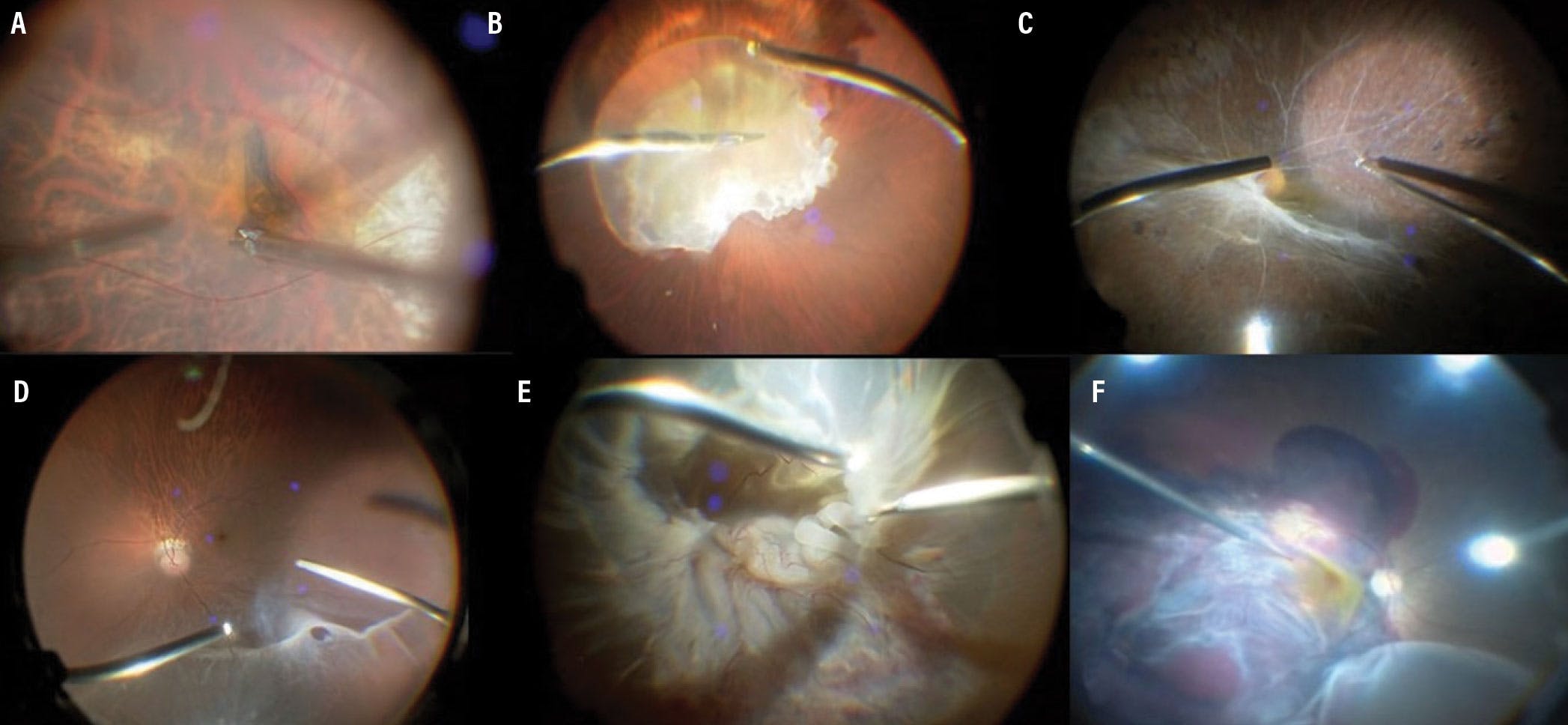
Figure 1. Office-based vitreoretinal surgery in Japan is indicated for any adult vitreoretinal diseases, including macular diseases (A), retained lens fragments (B), diabetic tractional RD (C), RRD (D), proliferative vitreoretinopathy (E), and subretinal hemorrhage (F).
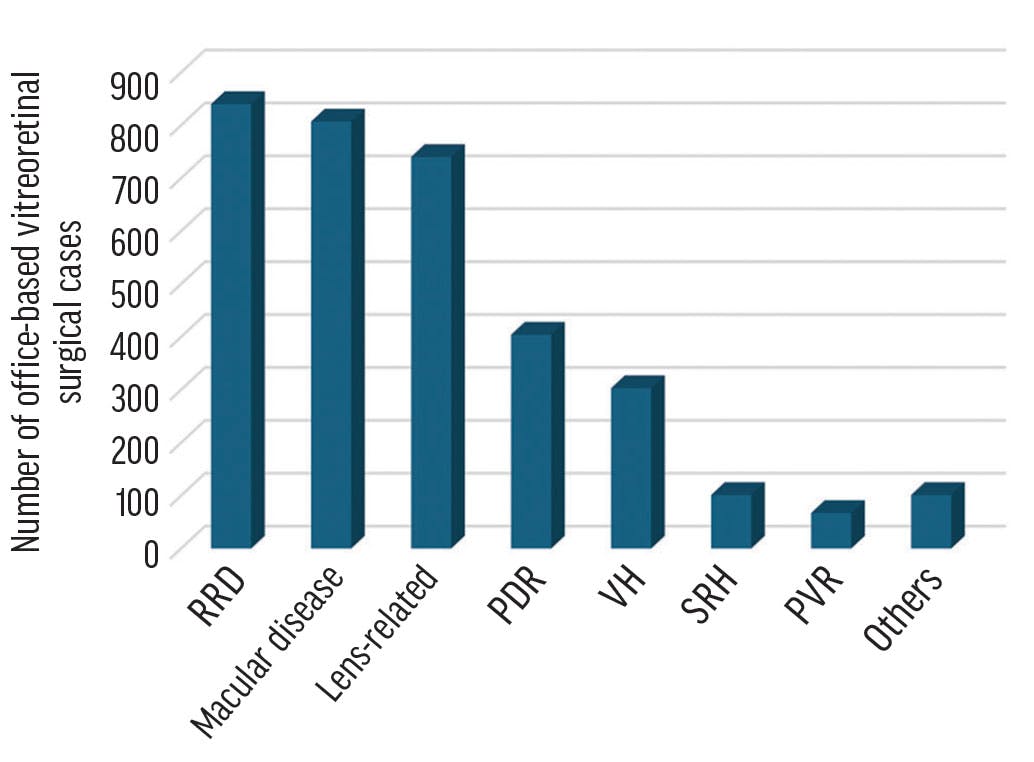
Figure 2. This chart shows the number of office-based vitreoretinal surgeries performed in an in-office OR at an eye clinic in Japan. Single-surgery anatomic success was achieved in 97.3% of eyes in a consecutive series of 883 RRD cases. Abbreviations: PDR, proliferative diabetic retinopathy; VH, vitreous hemorrhage; SRH, subretinal hemorrhage; PVR, proliferative vitreoretinopathy.
Why You Should Consider Office-Based Surgery
Based on our favorable experiences, we predict that office-based vitreoretinal surgery will become more common in the next decades, at least in Japan (Figure 3). Providing in-office vitreoretinal surgery at clinics close to residential areas, combined with the larger surgical volumes possible, results in shorter wait times for patients and prompt treatment and recovery.
In Japan, office-based surgery is supported by the country’s relatively robust health care and insurance systems, along with geographic accessibility to hospitals in the rare event of complications. The global adoption of in-office retinal surgery requires the development and understanding of various health care and reimbursement systems in different countries. Thus, reimbursement systems may either promote or hinder the office-based surgery trend.
Despite these hurdles, we believe that this trend will gain broader acceptance as a highly efficient and safe approach for the treatment of adult vitreoretinal diseases.
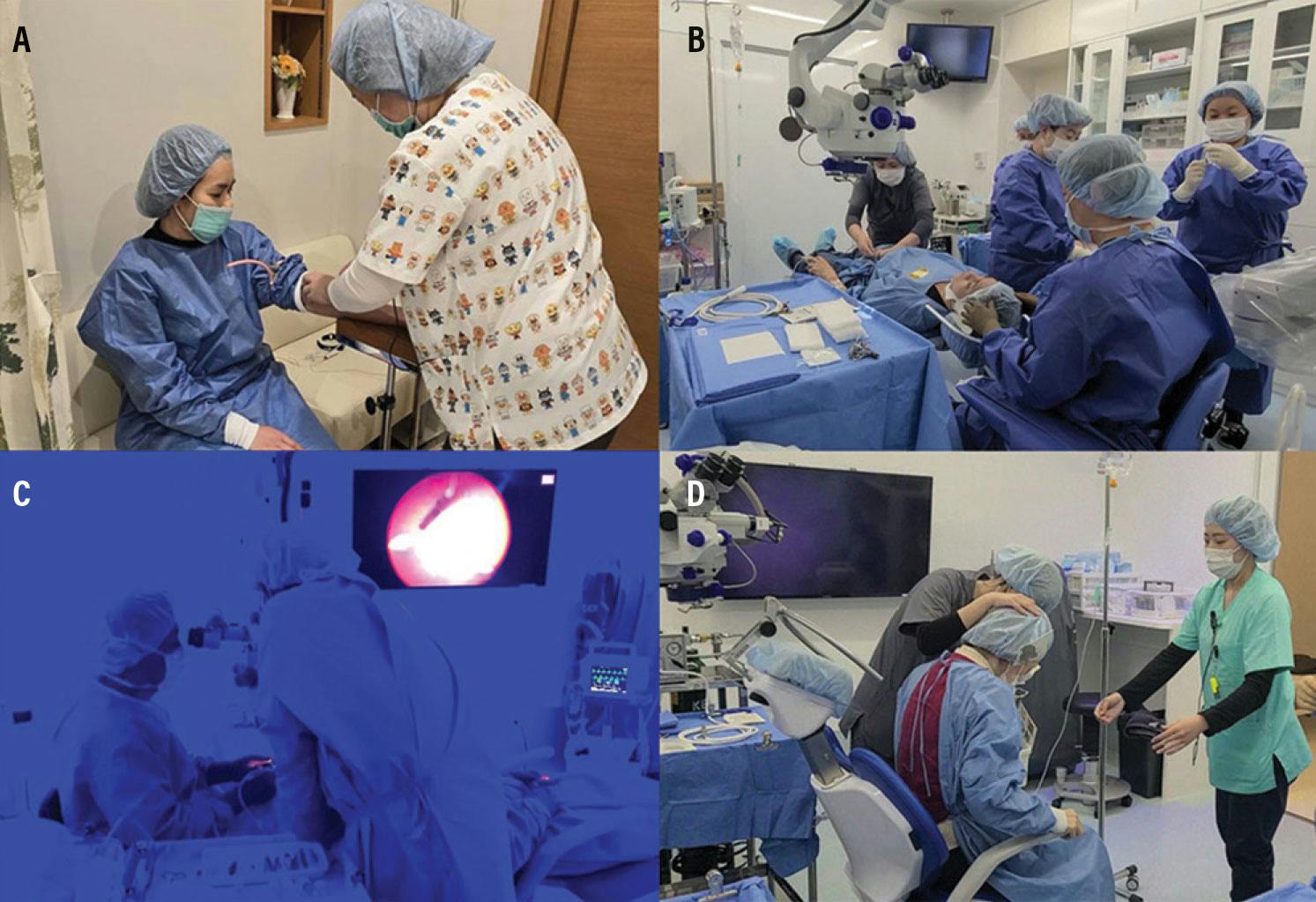
Figure 3. The flow of the day for an office-based vitrectomy. The patient changes into a gown and receives an intravenous line (A) before moving to the OR (B). Intraoperatively, the team monitors vital signs (C). If the patient is being seen for an RD repair, they assume face-down positioning immediately after surgery (D). After a brief rest in the recovery room, the patient returns home.
IN-OFFICE HURDLES IN THE UNITED STATES
By Brandon Fram, MD; Emmanuel Y. Chang, MD, PhD; and Prethy Rao, MD, MPH
While some literature shows promise in the possibility of office-based vitreoretinal surgery, the complex interplay of safety, feasibility, and differential reimbursements makes the current reality difficult in the United States from both a provider and a patient perspective.
Safety and Complexity
Multiple studies demonstrate comparable complication rates of office-based cataract surgery and some vitreoretinal surgeries to those performed in ASCs and hospital surgery settings.3,4,8,9 However, these studies were restrictive in the study criteria and may not represent the breadth of complexity in vitreoretinal surgery. For example, patients in the vitreoretinal surgery studies largely had procedures that are less time-intensive, more amenable to local anesthesia, and in healthier patients with low rates of serious comorbidities.4,10
However, vitreoretinal surgeons generally care for a sicker population of people who often need a mix of urgent, more complex, and longer surgeries. Vitreoretinal surgeons also care for pediatric patients with a history of prematurity or genetic conditions that require general anesthesia with a highly skilled anesthesiologist. Office-based surgery studies lack these cases. Even if topical anesthesia is feasible in the office, most studies focus on practices that have office-based ORs that were at or near a hospital or ASC. In the United States, this may not always be an option.
Location and Reimbursement
In addition to safety concerns, one of the biggest questions is cost. Conservative estimates to fully equip a retina OR are between $250,000 and $1,000,000, in addition to the costs to staff the OR, anesthesiology, and triage teams.11 There is also a wide range of costly instrumentation that may be unexpectedly needed, such as chandeliers, lighted picks, perfluorocarbon, and silicone oil. New billing practices, equipment maintenance, and upkeep of OR materials would also fall to the physician/practice itself, rather than the facility.
In some countries, such as China and Japan, reimbursement for a vitrectomy is the same, irrespective of location. However, in the United States, hospital-based vitrectomy currently reimburses higher than ASCs.11 Thus, in-office vitrectomy may result in even lower reimbursement for a highly complex surgery performed by surgeons with unique and extensive training. With direct costs of startup and maintenance falling on the physician or group and a lower reimbursement, in-office retina surgery may not be feasible for smaller, privately-owned practices and may skew toward larger hospital-based or private equity-based practices.
While some companies assist with billing for office-based surgeries (eg, iOR Partners) and newer vitrectomy technology for in-office surgery, they are not widely used and require additional financial commitment.12 These differential operating costs may ultimately fall to the patient and result in higher out-of-pocket costs if this is not balanced.
Another logistical consideration is the office space required. As a high-volume specialty, most modern ophthalmology offices are equipped and designed for patient throughput. The rooms are often narrower and shorter than what is needed for a comfortable vitreoretinal surgery setup with the necessary machinery and sterile areas. Large practices may have rooms that can be remodeled into an office OR or a room already designated for minor procedures, but for many, a lack of space may be prohibitive.
HURDLES TO ADOPTION
Many practices are developing an interest in office-based surgery worldwide because of the convenience and cost for patients and the inherent inefficiencies of hospital and ambulatory surgery. While many countries, including Japan, have addressed patient safety, space constraints, and differential operating costs to make office-based retina surgery a reality, the same cannot be said for the United States.
Still, in-office vitrectomy is an attractive option that may one day become preferred for some surgeries like cataract surgery; until then, it is likely to be limited to a select number of vitreoretinal surgeries.
1. Berkowitz ST, Finn AP, Parikh R, Kuriyan AE, Patel S. Ophthalmology workforce projections in the United States, 2020 to 2035. Ophthalmology. 2024;131(2):133-139.
2. Trujillo-Sanchez GP, Gonzalez-De La Rosa A, Navarro-Partida J, Haro-Morlett L, Altamirano-Vallejo JC, Santos A. Feasibility and safety of vitrectomy under topical anesthesia in an office-based setting. Indian J Ophthalmol. 2018;66(8):1136-1140.
3. Ianchulev T, Litoff D, Ellinger D, Stiverson K, Packer M. Office-based cataract surgery: population health outcomes study of more than 21 000 cases in the United States. Ophthalmology. 2016;123(4):723-728.
4. Hilton GF, Josephberg RG, Halperin LS, et al. Office-based sutureless transconjunctival pars plana vitrectomy. Retina. 2002;22(6):725-732.
5. Shakir OR, Almeida DRP, Mei CK, Aaberg TM Jr. Office-based surgery: Our first 700 cases. Retina Times. 2024;42:34-37.
6. Shevchenko L, Westhouse SJ, Aaberg TM Jr. When office-based vitrectomy makes sense. Retinal Physician. 2014;11.
7. Chen M, Hill GM, Patrianakos TD, et al. Oral diazepam versus intravenous midazolam for conscious sedation during cataract surgery performed using topical anesthesia. J Cataract Refract Surg. 2015;41:415-421.
8. Rezende FA, Qian CX, Sapieha P. Evaluation of the vitreous microbial contamination rate in office-based three-port microincision vitrectomy surgery using retrector technology. BMC Ophthalmol. 2014;14:58.
9. Kent C. Office-Based Surgery: Tales from the Front. Rev Ophthalmol. 2022;29(10):48-56.
10. Dickson R, Eastwood A, Gill P, et al. Management of cataract. Qual Health Care. 1996;5:180-185.
11. Medicare Claims Processing Manual - Ambulatory Surgical Centers. CMS. Accessed December 12, 2024. bit.ly/3DB2pxs
12. Morales-Canton V, Kawakami-Campos PA. Machines and cutters: VersaVIT - potential and perspectives of office-based vitrectomy. Dev Ophthalmol. 2014;54:17-22.


_1773249222.png?auto=compress,format&w=75)




