


AT A GLANCE
- There is a paucity of data describing current eye care use and barriers to care for the LGBTQIA+ population.
- A survey of 116 patients and 36 providers found that 14 patients (12.1%) and three providers (8.3%) identified as LGBTQIA+.
- The authors plan to develop a course for ophthalmology trainees and providers on LGBTQIA+ informed care.
Despite the growing number of people who identify as lesbian, gay, bisexual, transgender, queer, intersex, and asexual plus (LGBTQIA+) in the United States,1 no studies have investigated LGBTQIA+ inequities among ophthalmology patients and practitioners. In a 2022 review of 75 studies exploring disparities in ophthalmic care, none evaluated inequities within the LGBTQIA+ community.2 Some studies have explored the potential for increased burden of ophthalmic conditions for members of the LGBTQIA+ community, such as human immunodeficiency virus retinopathy, cytomegalovirus retinitis, and ocular syphilis.3,4 However, there is a paucity of data describing eye care use and barriers to care for the LGBTQIA+ population.
Likewise, there is little literature discussing physicians who identify as LGBTQIA+ in the ophthalmic workforce. A recent international survey of 403 ophthalmologists showed 13.2% identified as LGBTQIA+, which was associated with personal and work-related burnout.5 Association of American Medical Colleges data from 2016 to 2019 demonstrated that only 3.3% of LGB-identified medical students intended to pursue a career in ophthalmology, the second lowest chosen specialty for this group.6
In response, we conducted a single-center survey assessing the prevalence and experiences of LGBTQIA+ patients and providers within ophthalmology. We distributed a cross-sectional questionnaire (in English and Spanish) regarding demographics and lived experiences around LGBTQIA+ inclusion in the ophthalmic community and care setting. We also gathered clinician perspectives of providing inclusive care to LGBTQIA+ patients. Confidential responses were collected from March to June 2023. In total, 116 patients and 36 providers participated in the study.7
A LOOK AT THE NUMBERS
The survey found that 14 patients identified as LGBTQIA+ (12.1%). Of these, one patient identified as a transgender woman (7% of non-cisgendered respondents), six indicated nonbinary (42.8%), and seven indicated other (50%). The most common sexual orientation was bisexual (42.9%), followed by queer (35.7%) and gay (28.6%). Patients who identified as LGBTQIA+ were more likely to be between the ages of 26 and 40 (P = .0004). Although there was no statistically significant difference in reported gross income between groups (P = .3), there was an observed trend that LGBTQIA+ patients reported lower income than non-LGBTQIA+ patients. Two LGBTQIA+ patients (15.4%) and seven non-LGBTQIA+ patients (7.1%) said they had no primary care provider, a difference that was not statistically significant. Of LGBTQIA+ patients, 69.2% indicated that they had disclosed their sexual and/or gender identity to their primary care provider, while 15.4% had done so with their eye care provider (P = .4). Among all patients surveyed, 87.6% stated that their eye care provider had not asked about or discussed their sexual orientation and/or gender identity.7
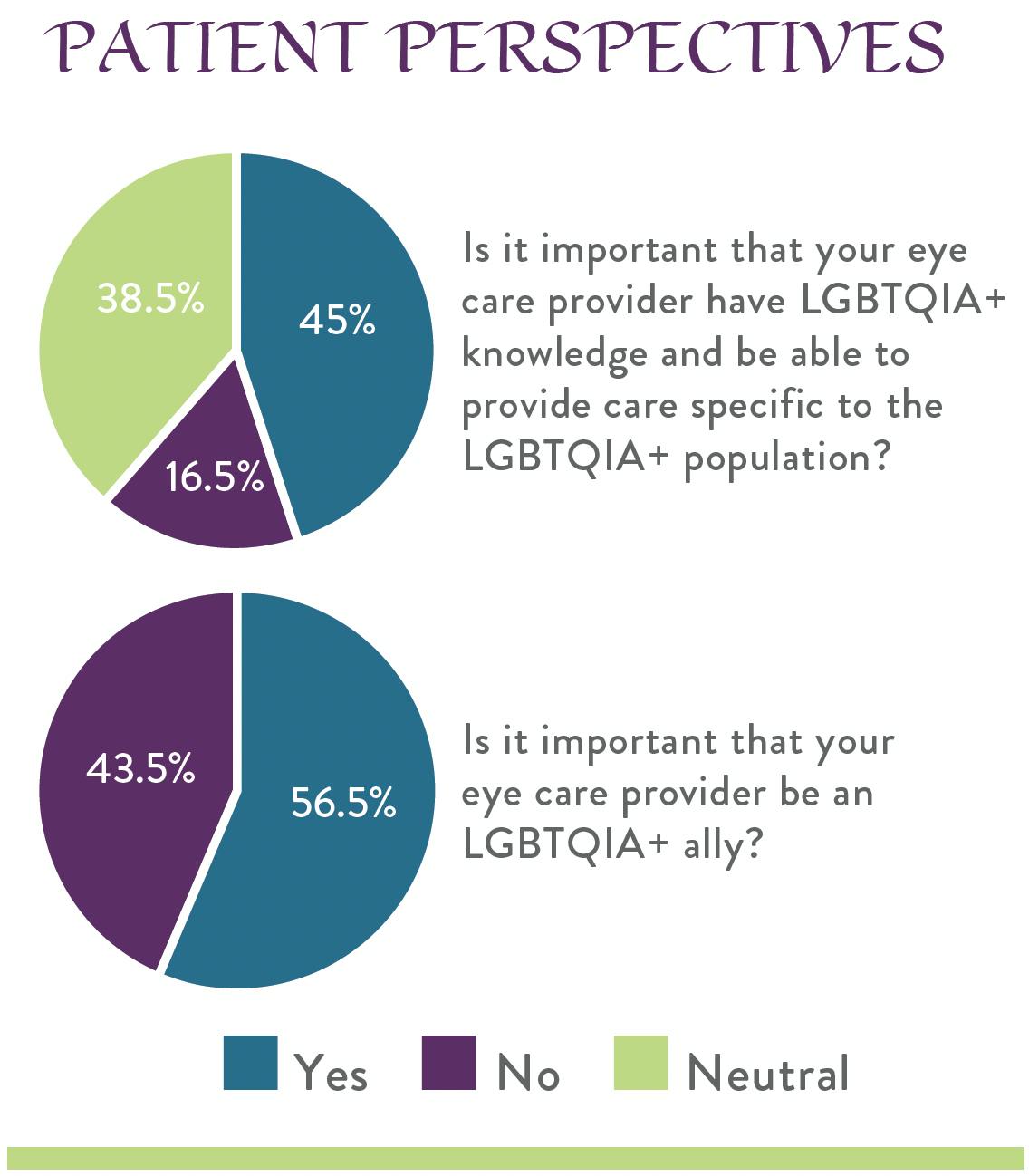
In total, 45% of surveyed patients felt it was important for their eye care provider to have LGBTQIA+ knowledge and be able to provide care specific to the LGBTQIA+ population. Comparatively, 38.5% were neutral on this topic, and 16.5% disagreed. Answers did not differ between LGBTQIA+ and non-LGTBQIA+ identified patients (P = .5). Most patients (56.5%) agreed that it was important that their eye care provider be an LGBTQIA+ ally (P = .06).7
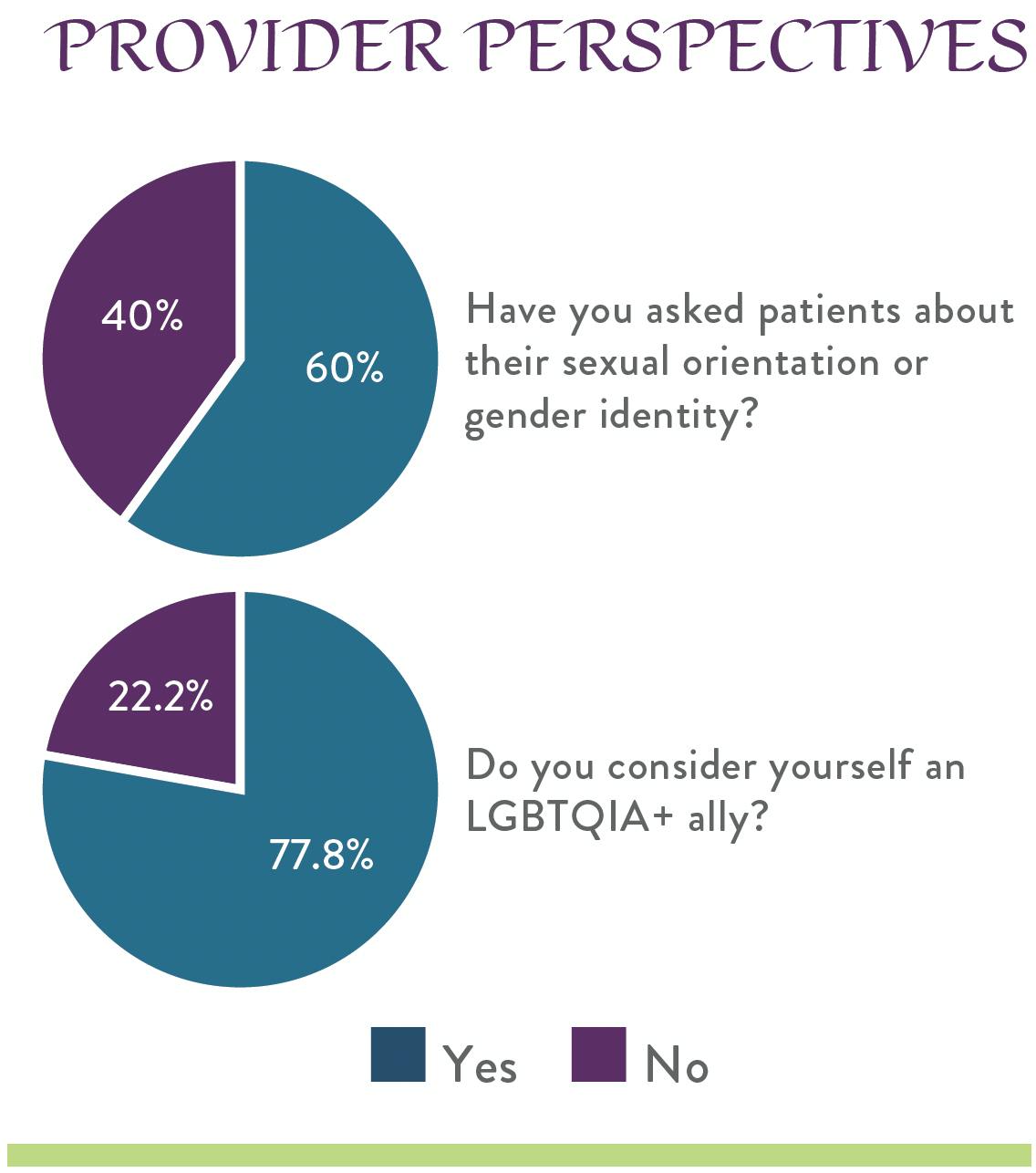
Among the 36 providers surveyed, five (13.9%) identified as LGBTQIA+ in terms of sexual orientation, with two identifying as bisexual, one as gay, one as pansexual, and one as other; 28 (77.8%) identified as straight, and three did not provide a response. Most (88.9%) providers identified as cisgender, one identified as a gender minority, and three did not provide a response. Of the providers, 60% stated that they have asked patients about their sexual orientation or gender identity, while 40% have never asked. Most (77.8%) providers identified as LGBTQIA+ allies, 84.8% agreed that there is a need for continuing education and training on LGBTQIA+ care, and 72.7% felt that allyship was important.7
IMPLICATIONS FOR CLINICAL PRACTICE
Our results indicate a desire from both patients and providers to better understand, consider, and address intersectionality as it pertains to sexual orientation and gender identity within ophthalmology. We currently have a poor understanding of how LGBTQIA+ identity intersects with health disparities in the eye care setting. A key impediment is the low rates of sexual orientation and gender identity (SOGI) disclosure in the electronic health record, making equity analysis and emerging eye care trends within the LGBTQIA+ community difficult to study. SOGI data would be useful in evaluating the ocular effects of systemic therapies used in LGBTQIA+ care, as well as further examining inequalities in access to eye care for LGBTQIA+ patients.
In addition to a lack of research regarding LGBTQIA+ patients in ophthalmology, there is a need for increased diversity among the physician workforce in eye care. Ophthalmologists have been calling for increased outreach efforts and better SOGI data collection to understand provider self-identification.8 Improving physician workforce diversity has been demonstrated to improve patient outcomes,9,10 meaning that provider representation can affect health care disparities for LGBTQIA+ ophthalmology patients. The inclusion of LGBTQIA+ among underrepresented groups in previously established programs, as well as the creation of gender minority-focused programs, are accessible solutions that will help increase representation, provide support, and ultimately improve patient care.
CONTINUING EDUCATION ON LGBTQIA+ CARE
Our study demonstrated a desire from patients and providers to have an eye care team that consists of LGBTQIA+ allies capable of providing culturally directed care to this population as appropriate. To increase education of our trainees and providers regarding the effect of LGBTQIA+ care on ophthalmic issues, our team plans to develop a course for ophthalmology trainees and providers on LGBTQIA+ informed care. Interventional studies in other medical training settings have provided promising outcomes.11,12 Looking forward, studies in our training and care settings to evaluate ophthalmologist comfort and competence when providing inclusive care are needed to further develop our understanding of the intersectionality of LGBTQIA+ issues and ophthalmic health.
THE INTERSECTION WITH RETINA
No studies have explored the prevalence of LGBTQIA+ individuals specifically in retina, but the LGBTQIA+ community has anecdotally not been well-represented within ophthalmology. Still, established retina specialists in the LGBTQIA+ community have highlighted the unique challenges they faced, particularly early in their careers.13,14 The lack of LGBTQIA+ mentors and leaders in the field, as well as uncertainties surrounding the assessment of job fit, are two important points raised by these experts. They also report the abundance of LGBTQIA+ patients in retina. For example, Scott Walter, MD, MSc, discusses how “many older patients have come out to [him], and for them it’s liberating to finally have a provider with whom they can identify. It’s important to have providers out there who represent the diversity in our communities, and that goes for gender, race, sexual orientation, and every other category of diversity.”13
Our study aligns with the message shared by these retina specialists: We need more research and training in LGBTQIA+ directed ophthalmic care to provide the best care for our patients. Mentorship is another important area of improvement, and the American Society of Retina Specialists’ Underrepresented in Retina Mentorship Program is the first program of its kind in the retina community that includes LGBTQIA+ trainees as underrepresented. We hope other established mentorship programs within retina and ophthalmology will follow this example to increase LGBTQIA+ representation, which will ultimately benefit not only our professional community, but also our patients.
1. Jones J. U.S. LGBT identification steady at 7.2%. Gallup. February 22, 2023. Accessed January 14, 2025. bit.ly/40BXbcR
2. Hemmerich C, Jones G, Staggs J, Anderson RM, Bacani R, Vassar M. Inequities and research gaps in ophthalmology: a scoping review. JAMA Ophthalmol. 2023;141(1):63-70.
3. Hollar MW, Zhang MM, Mawn LA. Ophthalmic disparities in transgender patients. Semin Ophthalmol. 2016;31(4):426-431.
4. Lobo AM, Gao Y, Rusie L, Houlberg M, Mehta SD. Association between eye diagnosis and positive syphilis test results in a large, urban sexually transmitted infection/primary care clinic population. Int J STD AIDS. 2018;29(4):357-361.
5. Chang TC, A R, Candelario C, et al. LGBTQ+ identity and ophthalmologist burnout. Am J Ophthalmol. 2023;246:66-85.
6. Mori WS, Gao Y, Linos E, et al. Sexual orientation diversity and specialty choice among graduating allopathic medical students in the United States. JAMA Netw Open. 2021;4(9):e2126983.
7. Quinones CT, Smith M, Fuller D, et al. Assessment of LGBTQIA+ inclusion and care in ophthalmology. Invest Ophthalmol Vis Sci. 2024;65(7):6383.
8. Sokkary N, Awad H, Paulo D. Frequency of sexual orientation and gender identity documentation after electronic medical record modification. J Pediatr Adolesc Gynecol. 2021;34(3):324-327.
9. Poma PA. Race/ethnicity concordance between patients and physicians. J Natl Med Assoc. 2017;109(1):6-8.
10. Iyengar NS, Law JC, Chang TC. Increasing LGBTQ+ visibility and representation in ophthalmology: a professional imperative. Am J Ophthalmol. 2022;242:A4-A6.
11. Barrett DL, Supapannachart KJ, Caleon RL, Ragmanauskaite L, McCleskey P, Yeung H. Interactive session for residents and medical students on dermatologic care for lesbian, gay, bisexual, transgender, and queer patients. MedEdPORTAL. 2021;17:11148.
12. Cohen JJ, Gabriel BA, Terrell C. The case for diversity in the health care workforce. Health Aff (Millwood). 2002;21(5):90-102.
13. Churgin D, Sanislo S, Velez W, Walter SD. A word from members of the LGBTQ community. Retina Today. 2021;16(2):40-43.
14. Hau VS, Diaz-Rohena R, Churgin DS, Thomas M, Kondapalli SSA. Providing equitable healthcare for all: understanding the LGBTQIA+ community. Retina Times. Accessed January 14, 2024. bit.ly/3QjYuZn


_1784132761.jpg?auto=compress,format&w=75)





