


Ocular surgery in patients with uveitis presents unique complexities due to the interplay of chronic inflammation, postinflammatory anterior segment anatomical changes, and prolonged corticosteroid therapy. Optimal surgical outcomes require tailored preoperative planning, perioperative inflammatory control, flexible intraoperative techniques, and close postoperative monitoring. This article discusses surgical considerations for cataract and vitreoretinal surgeons managing uveitis.
CATARACT SURGERY IN UVEITIS
Preoperative Planning
Patients with intraocular inflammation, especially those treated with corticosteroids, have an increased rate of cataract development. Still, surgical and visual outcomes remain largely favorable, with a median gain of 4.8 lines and a median BCVA of 20/25 1 year after surgery.1 Preoperative preparation consists of the following:
- Achieve inflammatory quiescence for at least 3 months before surgery to minimize postoperative complications.2-4 If topical, periocular, and systemic corticosteroids are insufficient, consider systemic immunomodulatory therapies. Intravitreal steroids, such as the 0.7 mg dexamethasone intravitreal implant (Ozurdex, Abbvie), have shown efficacy in mitigating uveitic macular edema and controlling inflammation preoperatively.5
- A thorough clinical examination with multimodal imaging, including OCT and ultra-widefield fluorescein angiography, can help assess how much immunosuppression is needed and guide discussions regarding visual prognosis. The preoperative examination should focus on the presence of anterior or posterior synechiae (Figure 1), pupil size, fibrotic anterior capsule, band keratopathy, and phacodenesis suggestive of zonulopathy.
- Set realistic expectations and educate patients on the importance of medication adherence. While most patients experience visual improvement, recovery can be prolonged, and the risk of complications (eg, posterior capsular opacification or fibrin membrane formation) should be discussed. Younger patients face unique long-term challenges; in one study, 39% of pediatric uveitic eyes achieved 20/40 vision or better 1 year after cataract surgery compared with much higher rates in adults.6
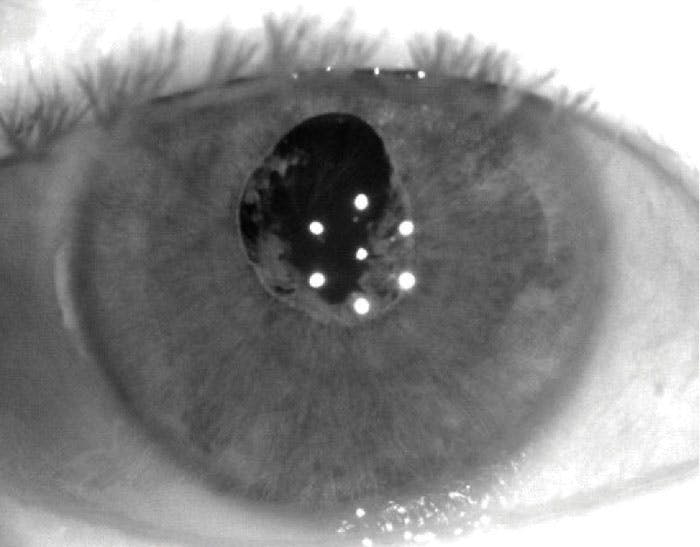
Figure 1. The infrared image of the right eye shows a distorted, irregularly shaped pupil with posterior synechiae, consistent with chronic uveitis.
Intraoperative Planning
Typically, patients are instructed to begin preoperative topical and/or oral corticosteroids, depending on the risk of postoperative flare and chronic inflammation.7 Additionally, some surgeons may opt for a periocular or intraocular steroid injection or dexamethasone implant to enhance surgical outcomes and visual recovery.8,9 If the patient has a history of severe intraocular inflammation (Figure 2), an intravenous dose of corticosteroids can be given at the time of surgery to assist with perioperative control.
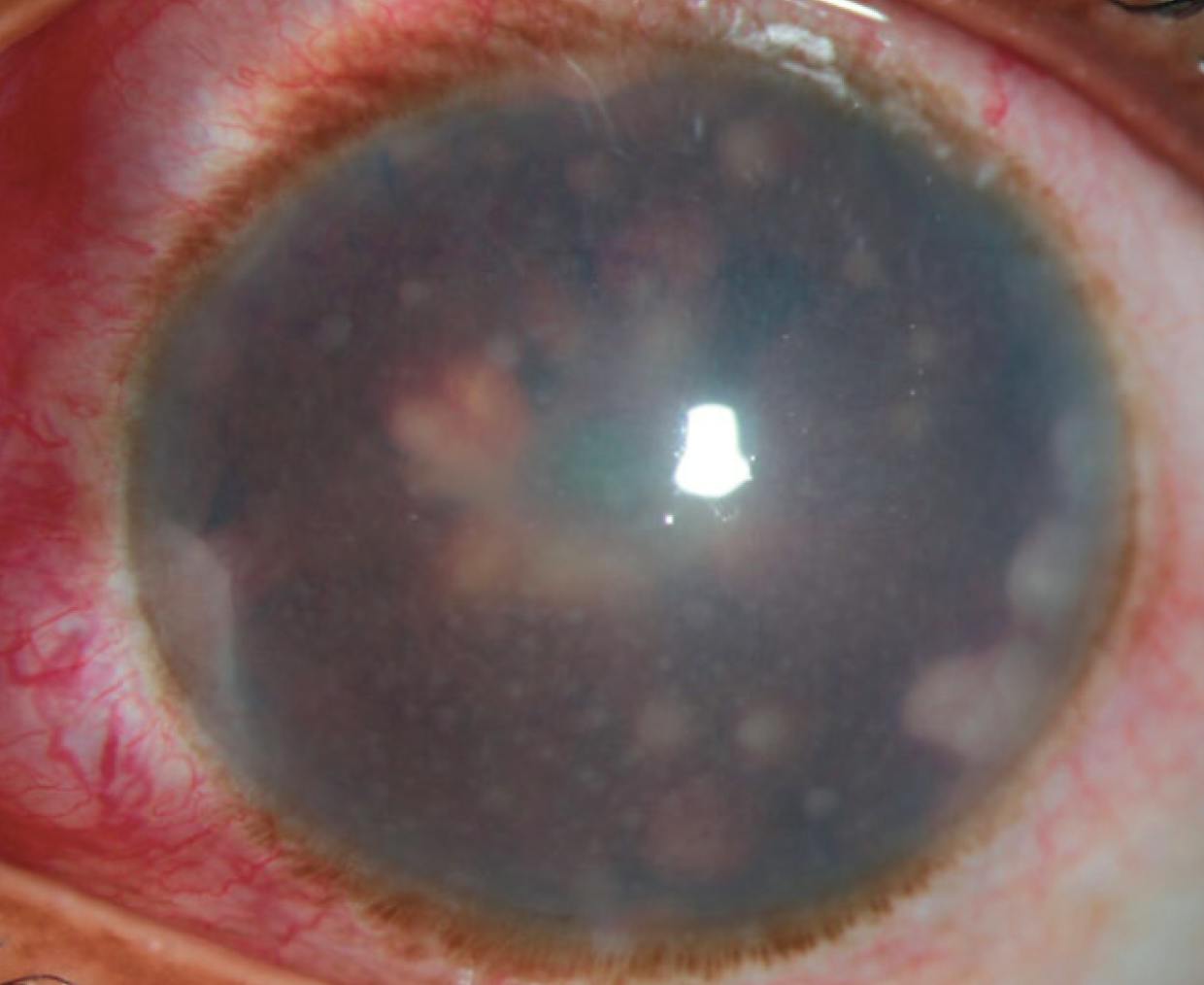
Figure 2. This slit lamp photograph shows severe inflammation of a panuveitis sarcoid eye, showcasing prominent inflammation in the anterior chamber. Multiple granulomatous nodules are visible. Koeppe nodules are seen at the pupillary margin, appearing as small, white inflammatory lesions. Busacca nodules are scattered across the iris stroma, indicative of more widespread granulomatous involvement. Berlin nodules are present on the anterior chamber angle, contributing to anterior chamber inflammation.
Anatomic changes in eyes with uveitis, such as the presence of small pupils, capsular fibrosis, and zonular instability, necessitate preoperative planning and adaptation of surgical techniques. Consider the following:
- Strong mydriatic agents, such as phenylephrine 10%, can assist with dilation. Intracameral phenylephrine can provide additional intraoperative dilation when topical agents are insufficient.
- Band keratopathy can be removed by chemical chelation with 1% to 2% ethylenediaminetetraacetic acid if it is in the visual axis or causes recurrent corneal erosion.
- Uveitic eyes with synechiae and dense fibrin membranes can have miotic pupils. Synechiolysis techniques include using a cyclodialysis spatula or gentle viscoelastic to break adhesions without putting undue stress on the lens capsule. For more resistant synechiae, bimanual techniques using Sinskey or Kuglen hooks are effective. For flat adhesions, a 27- or 30-gauge bent needle on a syringe can create space between the iris and capsule, and then a cyclodialysis spatula or viscoelastic cannula can be used. Iris hook retractors, Malyugin rings, or viscoelastic-assisted dilation can keep the pupil enlarged.
- With a poor red reflex, trypan blue staining enhances visualization of the anterior capsule. In eyes with fragile or fibrotic capsules, cohesive viscoelastic provides endothelial protection and helps maintain a stable anterior chamber. In instances of capsular fibrosis, the use of intraocular scissors may be necessary to facilitate capsulorhexis. The can-opener technique should be used when the edge of the rhexis is lost or radialized and involves the creation of peripheral punctures that are subsequently pulled centrally to connect the torn edges.
- Capsular tension rings can stabilize the capsular bag in eyes with zonular weakness. For severe zonulopathy, sutured capsular tension rings or scleral fixation of the IOL may be necessary to achieve stable lens positioning.
Postoperative Management
Close monitoring is essential for 5 to 7 days following surgery, as inflammation can escalate.9 Postoperative drop regimens often need to be increased and tapered over a prolonged period compared with routine cataract surgery. OCT can detect early signs of cystoid macula edema.10
Although posterior capsular opacification frequently occurs, IOL placement in uveitic eyes of adult patients is no longer discouraged.11,12 However, even with optimal management, complications such as capsular contraction, synechiae recurrence, zonular dehiscence, and cystoid macula edema may still arise. Suboptimal postoperative inflammatory control can lead to optic capture, pupillary membranes, and complications from persistent fibrin, including postoperative hypotony.10 Early intervention with antiinflammatory agents can mitigate these complications and improve outcomes.
VITRECTOMY IN UVEITIS
Pars plana vitrectomy (PPV) in eyes with uveitis may be indicated for therapeutic or diagnostic purposes.10,12 Indications include media opacities, tractional or combined retinal detachments (RDs), and epiretinal membrane formation. PPV can be effective in controlling intraocular inflammation and improving visual outcomes in patients with accompanying structural or inflammatory complications.13,14
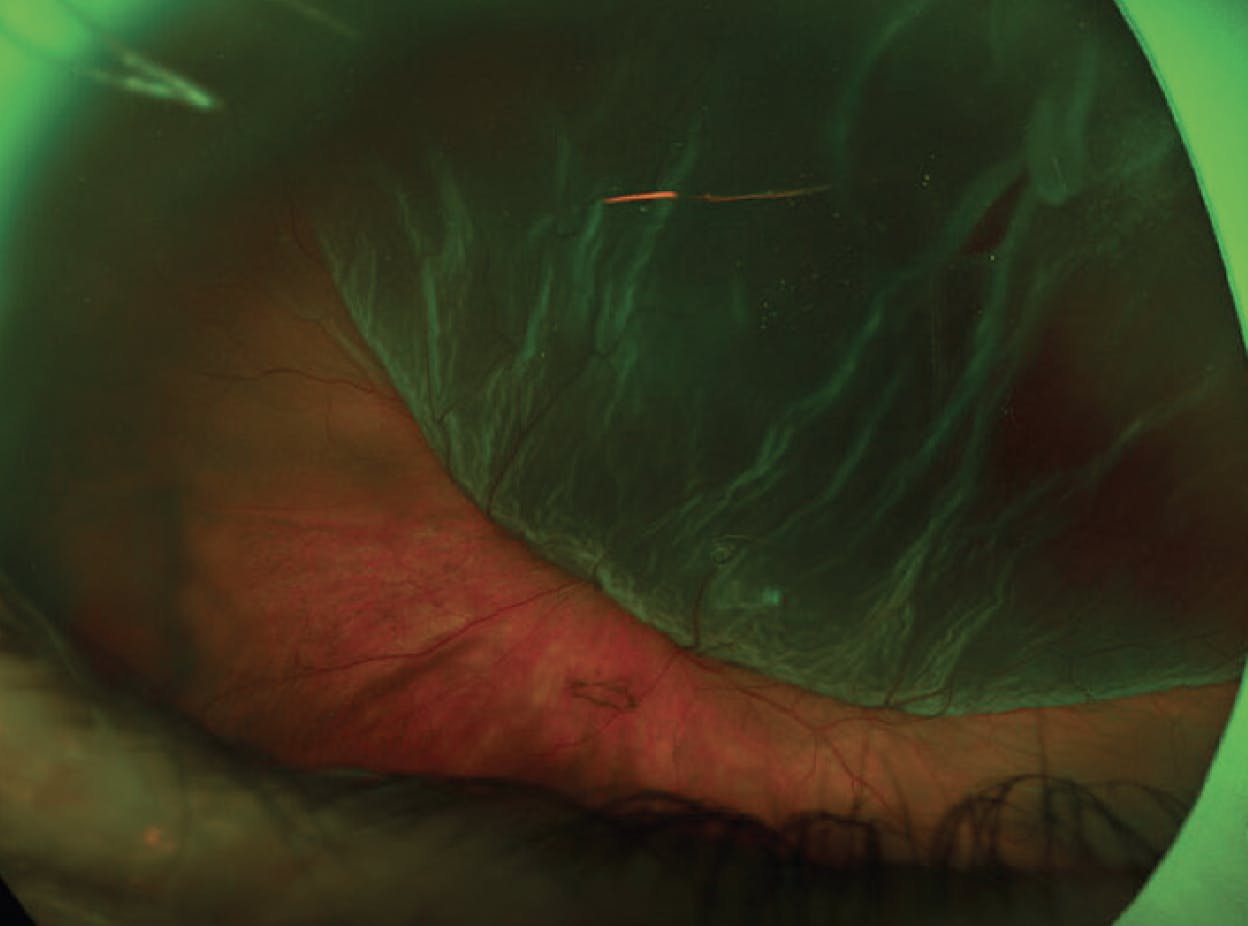
Preoperative considerations include a thorough anterior segment examination. Posteriorly, a scleral-depressed examination should assess for any snowbanking at the pars plana, which can affect trocar placement. B-scan ultrasonography can also assess for choroidal thickening or effusions, which may necessitate the use of a 6 mm infusion cannula and/or choroidal drainage prior to trocar entry.10,15 Uveitic eyes may also have subretinal fluid, and whether the fluid is rhegmatogenous or exudative may guide surgical decision making. To distinguish between an exudative and rhegmatogenous RD (RRD), a thorough history and scleral-depressed examination looking for retinal breaks is required to evaluate underlying inflammatory or systemic causes (Figure 3). The presence of shifting fluid and the absence of vitreous pigment can be helpful in pointing to an exudative cause, but the presence of vitreous pigment can occur with RRD or uveitis with exudative RD. Multimodal imaging including OCT can be helpful, as outer retinal corrugations are more common in RRD than in exudative RD.
Sustained Drug Delivery
With the development of sustained drug delivery devices, the treatment of chronic and recurrent uveitis has shifted. These devices allow for controlled, long-term release to keep treatment levels steady. Three implants are FDA-approved to treat uveitis: the 0.59 mg fluocinolone acetonide implant (Retisert, Bausch + Lomb), the 0.7 mg dexamethasone intravitreal implant, and the 0.18 mg fluocinolone acetonide implant (Yutiq, ANI Pharmaceuticals).
These implants deliver a controlled intravitreal steroid release for between 3 and 36 months, depending on the implant.16 Compared with periocular steroid injections and systemic corticosteroids, these procedures have been shown to better control inflammation, improve visual outcomes, and lower recurrence rates.17,18
Biopsy Techniques
When performing PPV with vitreous biopsy and/or chorioretinal biopsy, avoid corticosteroids for 2 weeks prior, as steroid use can lead to lysis of lymphoma cells and limit the biopsy's diagnostic utility.
Undiluted and diluted vitreous samples are ideal for diagnostic analysis and should be refrigerated/frozen to preserve cell morphology for cytology, polymerase chain reaction, viral, bacterial, and fungal cultures, and antibody analysis.19 Flow cytometry is useful for finding clonal B-cell populations that are indicative of vitreoretinal lymphoma. In suspected cases of lymphoma, analysis of MYD88 mutations can be helpful in corroborating the diagnosis. Researchers have found elevated IL-10 concentrations (IL-10:IL-6) in intraocular lymphoma. Polymerase chain reaction-based assays can detect pathogens and atypical bacteria and fungi.
If vitreous biopsy does not yield a diagnosis, a chorioretinal biopsy may help.9 In a study of 29 patients with suspected lymphoma, chorioretinal biopsy provided a definitive diagnosis of lymphoma in 59% of patients and excluded a lymphoma diagnosis in 31% of patients (Figure 4).20 Surgical tools such as intraoperative OCT can assist in guiding the depth of the biopsy to ensure accurate sampling without damaging the surrounding tissue. Lesion margins are more likely to yield pathological results.21
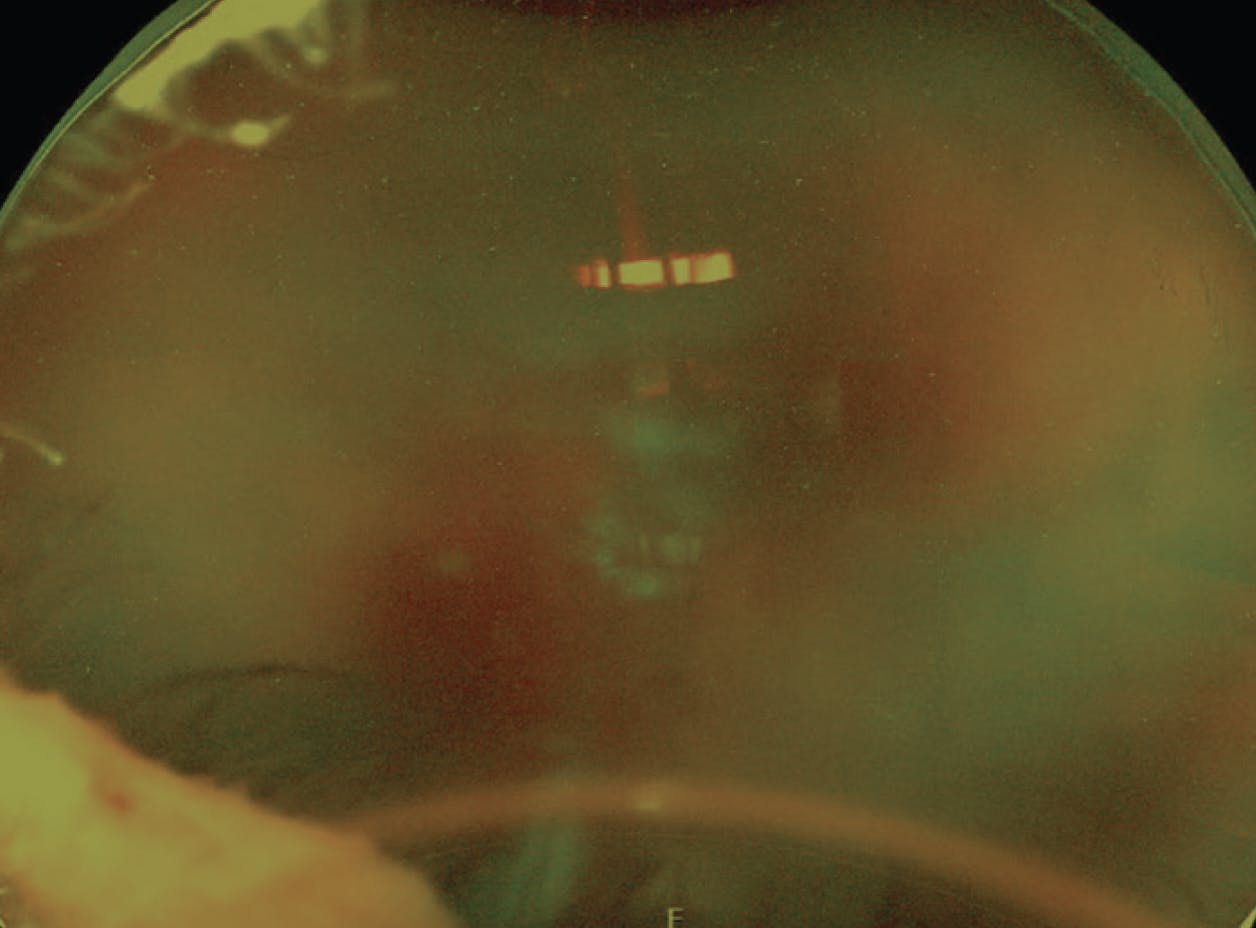
Figure 4. An 86-year-old woman presented with dense 4+ vitreous cell. PPV and vitreous biopsy showed results consistent with primary vitreoretinal lymphoma.
WEIGHING THE RISK-REWARD
Cataract and vitreoretinal surgery in eyes with uveitis poses unique challenges and necessitates a careful risk-benefit discussion and planning. Achieving quiescence preoperatively and tailoring intraoperative strategies can improve outcomes. Advances in the field, such as sustained-release drug implants and enhanced biopsy techniques, have improved the management of complex cases. Meaningful rehabilitation can be achieved with close postoperative monitoring and patient-centered approaches.
1. Jabs DA, Sugar EA, Burke AE, et al. Cataract surgery in patients with uveitis treated with systemic therapy in the Multicenter Uveitis Steroid Treatment (MUST) trial and follow-up study: risk factors and outcomes. Am J Ophthalmol. 2023;254:210-220.
2. Kalogeropoulos D, Asproudis I, Stefaniotou M, et al. The large Hellenic study of uveitis: diagnostic and therapeutic algorithms, complications, and final outcome. Asia Pac J Ophthalmol (Phila). 2023;12(1):44-57.
3. Llop SM, Papaliodis GN. Cataract surgery complications in uveitis patients: a review article. Semin Ophthalmol. 2018;33(1):64-69.
4. Al-Essa RS, Alfawaz AM. New insights into cataract surgery in patients with uveitis: a detailed review of the current literature. Saudi J Ophthalmol. 2022;36(2):133-141.
5. Thorne JE, Sugar EA, Holbrook JT, et al. Periocular triamcinolone vs. intravitreal triamcinolone vs. intravitreal dexamethasone implant for the treatment of uveitic macular edema: the PeriOcular vs. INTravitreal corticosteroids for uveitic macular edema (POINT) trial. Ophthalmology. 2019;126(2):283-295.
6. Gangaputra S, Newcomb C, Armour R, et al. Long-term visual acuity outcomes following cataract surgery in eyes with ocular inflammatory disease. Br J Ophthalmol. 2024;108(3):380-385.
7. Deng J, Sun WT, Ai H, Wang LP. Combination of cataract surgery with intravitreal injection of dexamethasone intravitreal implant (Ozurdex) for uveitis-induced cataract. Int J Ophthalmol. 2023;16(3):361-366.
8. Mora P, Gonzales S, Ghirardini S, et al. Perioperative prophylaxis to prevent recurrence following cataract surgery in uveitic patients: a two-centre, prospective, randomized trial. Acta Ophthalmol. 2016;94(6):e390-e394.
9. Nussenblatt RB, Whitcup SM. Uveitis: Fundamentals and Clinical Practice. Elsevier Health Sciences, 2010.
10. Jevnikar K, Počkar S, Umek L, Rothova A, Valentincic NV. Prognostic factors of cataract surgery in patients with uveitis. Int Ophthalmol. 2023;43(12):4605-4612.
11. Bélair ML, Kim SJ, Thorne JE, et al. Incidence of cystoid macular edema after cataract surgery in patients with and without uveitis using optical coherence tomography. Am J Ophthalmol. 2009;148(1):128-135.
12. Arepalli S. Surgical management options in uveitis. Advances in Ophthalmology and Optometry. 2024;9(6).
13. Shin YU, Shin JY, Ma DJ, Cho H, Yu HG. Preoperative inflammatory control and surgical outcome of vitrectomy in intermediate uveitis. J Ophthalmol. 2017;2017:5946240.
14. Emami P, Srivastava SK. Surgical considerations in the uveitic patient. Complications in Uveitis. 2020: 247-259.
15. Bovey EH, Herbort CP. Vitrectomy in the management of uveitis. Ocul Immunol Inflamm. 2000;8(4):285-291.
16. Mishra K, Leng T. Steroid therapy for the long haul. Retina Today. 17(1):24-27.
17. Jaffe GJ, Martin D, Callanan D, et al. Fluocinolone acetonide implant (Retisert) for noninfectious posterior uveitis: thirty-four-week results of a multicenter randomized clinical study. Ophthalmology. 2006;113(6):1020-1027.
18. Pavesio C, Zierhut M, Bairi K, Comstock TL, Usner DW. Evaluation of an intravitreal fluocinolone acetonide implant versus standard systemic therapy in noninfectious posterior uveitis. Ophthalmology. 2010;117(3):567-575.
19. Lin P, ed. Current Practices in Ophthalmology: Uveitis. Springer Nature; 2019.
20. Mastropasqua R, Di Carlo E, Sorrentino C, Mariotti C, da Cruz L. Intraocular biopsy and immunomolecular pathology for “unmasking” intraocular inflammatory diseases. J Clin Med. 2019;8(10):1733.
21. Mastropasqua R, Thaung C, Pavesio C, et al. The role of chorioretinal biopsy in the diagnosis of intraocular lymphoma. Am J Ophthalmol. 2015;160(6):1127-1132.


_1784132761.jpg?auto=compress,format&w=75)





