





The incidence of retinal and optic nerve hemorrhages in neonates is around 20%,1 yet the incidence of neonatal vitreous hemorrhage (VH) is unknown. While retinopathy of prematurity (ROP) is a well-recognized cause of VH in premature neonates,2 clinicians must be knowledgeable of other conditions that can present with VH, are associated with serious systemic manifestations, or may lead to blindness. In particular, the risk of amblyopia is a critical point of consideration, as are structural changes that may affect vision. Here, we discuss various etiologies of neonatal VH and briefly outline diagnostic considerations.
VASCULAR ABNORMALITIES
Familial exudative vitreoretinopathy (FEVR) is a bilateral hereditary disorder that typically presents in full-term infants. This feature distinguishes it from ROP, which develops in pre-term infants.3 Mutations in FZD4, LRP5, TSPAN12, and NDP lead to impaired vascularity and arrested retinal angiogenesis during the last trimester of pregnancy.3,4
Clinical examination demonstrates peripheral retinal avascularity with minimal vitreous condensation. This avascularity creates a hypoxic drive that can lead to secondary neovascularization and VH. Routine monitoring with widefield imaging and fluorescein angiography (FA) is necessary to assess disease activity and progression.3
ROP and FEVR (ROPER) is a subset of FEVR that presents in premature infants. As it can be challenging to distinguish ROPER from ROP, FA can help differentiate the two. In ROP, FA demonstrates a homogenous front/border; in ROPER, there are irregular sprouts as well as vessel pruning, segmental vascular leakage, and vascular loops beyond the edge of vascularization. Because the clinical course in ROPER is unpredictable with stages of inactivation and re-activation, patients require regular, life-long evaluation.4
Incontinentia pigmenti is a rare, inherited condition caused by a mutation in the NEMO gene, which regulates NF-kB activity and is vital for cell survival.3,5 Systemic manifestations include skin blisters that eventually resolve into streaks of hypopigmented macules, dental abnormalities, and neurologic impairment.5 The majority of cases are female, as the mutation is lethal in males.3
Ocular involvement occurs secondary to vaso-occlusion and ischemia.6 In contrast to ROP and FEVR, retinal ischemia does not follow a developmental vascular pattern.3 Thus, while peripheral ischemia leads to classic neovascularization and subsequent tractional retinal detachment (RD), central ischemia can lead to foveal hypoplasia.3,6
FA can identify areas of avascular retina requiring laser photocoagulation, while OCT and OCT angiography can aid in the identification of macular abnormalities.3,7 These patients should be followed monthly with dilated fundus examination and, preferably, FA from birth to 4 months of age and then every 3 months until 1 year of age.3
Persistent fetal vasculature (PFV) is a sporadic condition caused by failed involution of the embryonic hyaloid vasculature.8 It is typically unilateral but may be bilateral in systemic conditions.9,10
Clinically, PFV is characterized into anterior and posterior ocular involvement, although patients can present with both forms simultaneously.10,11 Posterior involvement is characterized by the presence of a retrolental stalk or persistent fibrovascular tissue extending from the optic nerve.9,10 This tissue causes traction on the retina, resulting in retinal folds and distortion of the optic nerve and macula, which can progress to RD.10 VH is secondary to hyaloid artery fragility and can be precipitated by ocular trauma.12
Norrie disease is a severe, rare X-linked disorder caused by a mutation in the NDP gene.3,13 This genetic defect primarily affects retinal development.13,14 Systemic manifestations commonly include progressive hearing loss and various neurologic abnormalities.13,15 As it is an X-linked condition, the vast majority of affected patients are male.16
Patients typically present with bilateral leukocoria at or within a few weeks of birth.15 The fundus examination reveals a dysplastic retinal mass located behind the lens, which is often termed a pseudoglioma because it resembles the tumor retinoblastoma (RB).3 The retina immediately beyond this mass is often avascular.3 This widespread avascularity leads to severe retinal traction,3 resulting in VH and progressive RD. Persistent stalk tissue connecting the lens to the dysplastic retina significantly contributes to retinal traction.3,14
Cutis marmorata telangiectatica congenita (CMTC) is a spontaneous, cutaneous vascular disorder characterized by three main features of the skin: a mottled, net-like pattern, telangiectasias, and a potential for skin ulcerations and other vascular lesions, including port wine stains.17,18 The associated ocular abnormalities are varied and include glaucoma,19 peripheral retinal vasculopathy, nonperfusion, and RD.17
The spectrum of retinal pathology in CMTC is wide, ranging from subtle findings such as mild vessel straightening to severe complications, including widespread nonperfusion, fibrovascular proliferation, and subsequent RD (Figure 1).17 Severe nonperfusion is hypothesized to occur secondary to vascular occlusion within the retina.20 The potential for rapid deterioration is significant, as demonstrated in one case series where the avascular retina progressed to retinal hemorrhage or VH within a week, underscoring the critical importance of close and timely ophthalmic follow-up for these patients.17
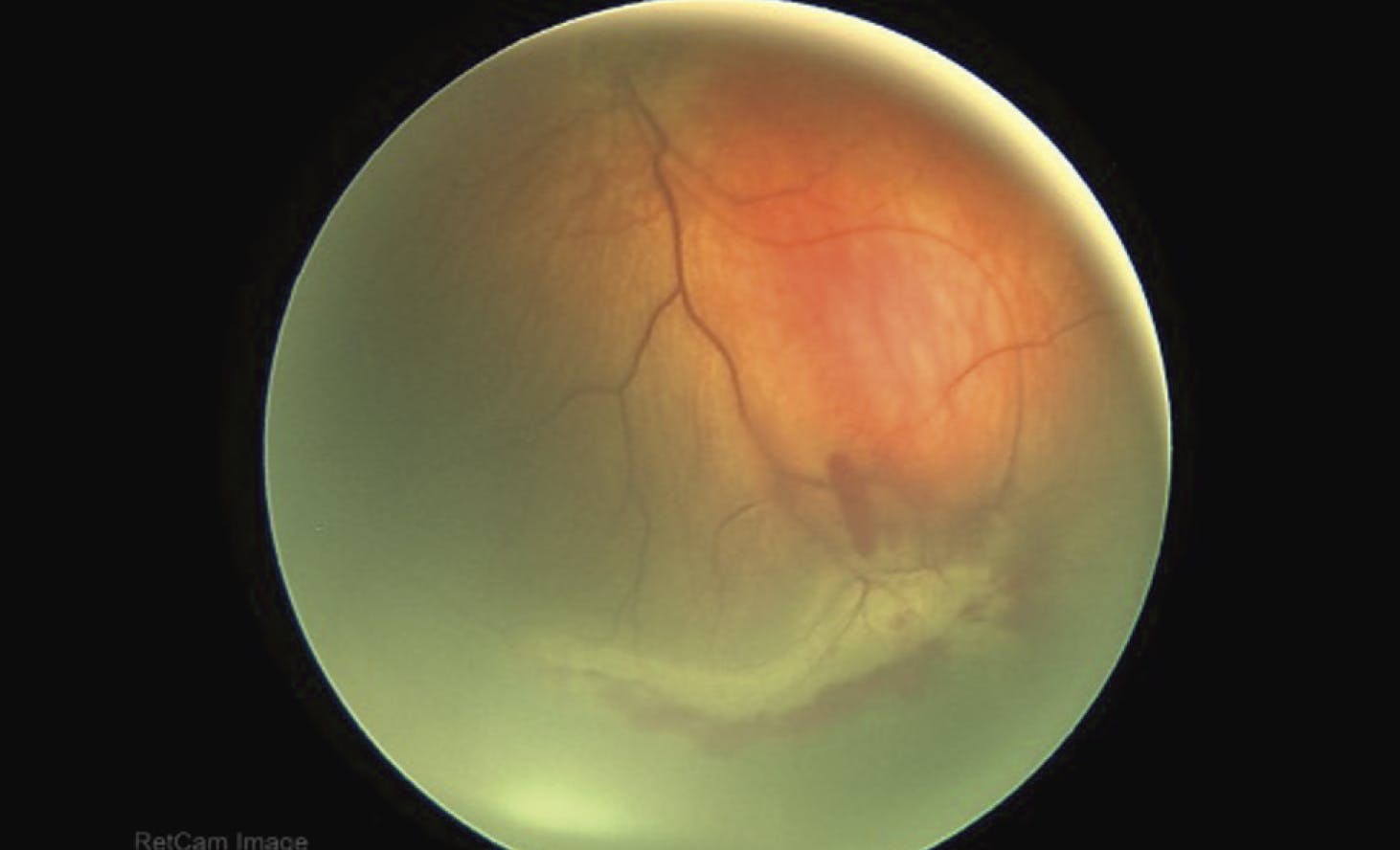
Figure 1. Fundus photography of CMTC demonstrates severe peripheral nonperfusion and subsequent hemorrhage and traction.
Patients diagnosed with CMTC must receive a comprehensive ophthalmic examination immediately after birth.17 Given the risk of rapid progression, these patients require frequent follow-up examinations and FA throughout the first few months of life.17 As this condition is rare, no established guidelines exist. However, the more severe the initial findings, the more frequently patients must be seen.
NEOPLASMS
Retinal cavernous hemangioma (RCH) is a benign vascular tumor defined by unique grape-like clusters of thin-walled intraretinal angiomatous lesions.21,22
These lesions often have a distinctive cap of glial tissue on their surface. Although typically stable and asymptomatic, RCH lesions have been known to occasionally present with VH. This hemorrhage is often secondary to the inherent fragility of the thin vascular walls of the hemangioma, although some neonatal cases have been hypothesized to be secondary to birth trauma.22,23
Due to the occasional association between VH and birth trauma, RCH should be included in the differential diagnosis when evaluating infants presenting with VH of unknown cause.22,23 If RCH is confirmed, a systemic evaluation for associated lesions is mandatory, particularly for cavernous hemangiomas of the brain and skin.
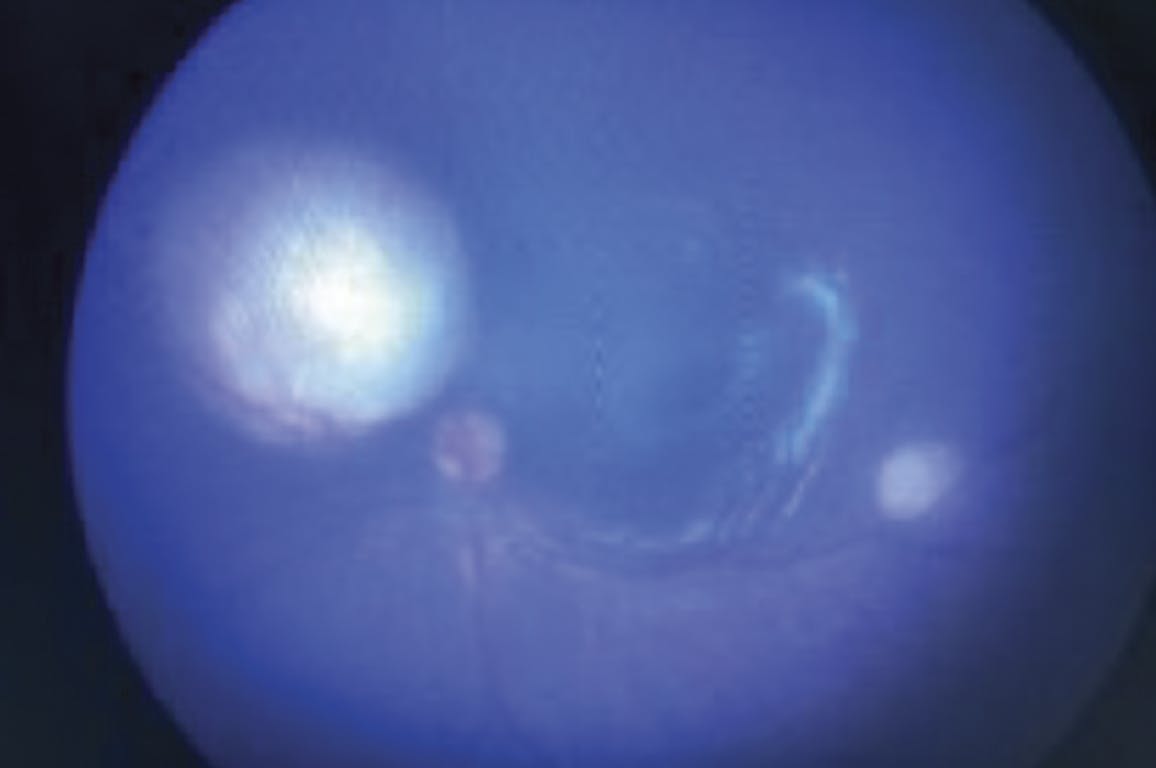
RB is the most common primary intraocular malignancy in children and is a critical diagnosis to exclude in any young patient presenting with a suspicious intraocular mass.24 RB is well described to cause VH in older infants and children when the tumor necrosis or bleeding vessels disrupt the inner retinal boundary (Figure 2).25 Therefore, RB must be kept high on the differential diagnosis for any child with unexplained VH.
Neonatal RB, while rare, commonly presents in association with familial RB. In these high-risk familial cases, specialized screening for tumors can be performed as early as the third trimester of pregnancy or immediately at birth.26,27 Thus, unexplained VH in a newborn should prompt additional questioning on any history of familial RB and warrants a low threshold for obtaining further imaging.
TRAUMA
Abusive head trauma (AHT) frequently presents with hemorrhages in all three retinal layers (preretinal/subhyaloid, intraretinal, and subretinal) and is often accompanied by VH (Figure 3).28 The presumed mechanisms include a rapid shearing motion generated during shaking or a sudden, dramatic rise in intracranial pressure that is rapidly transmitted to the eye.29
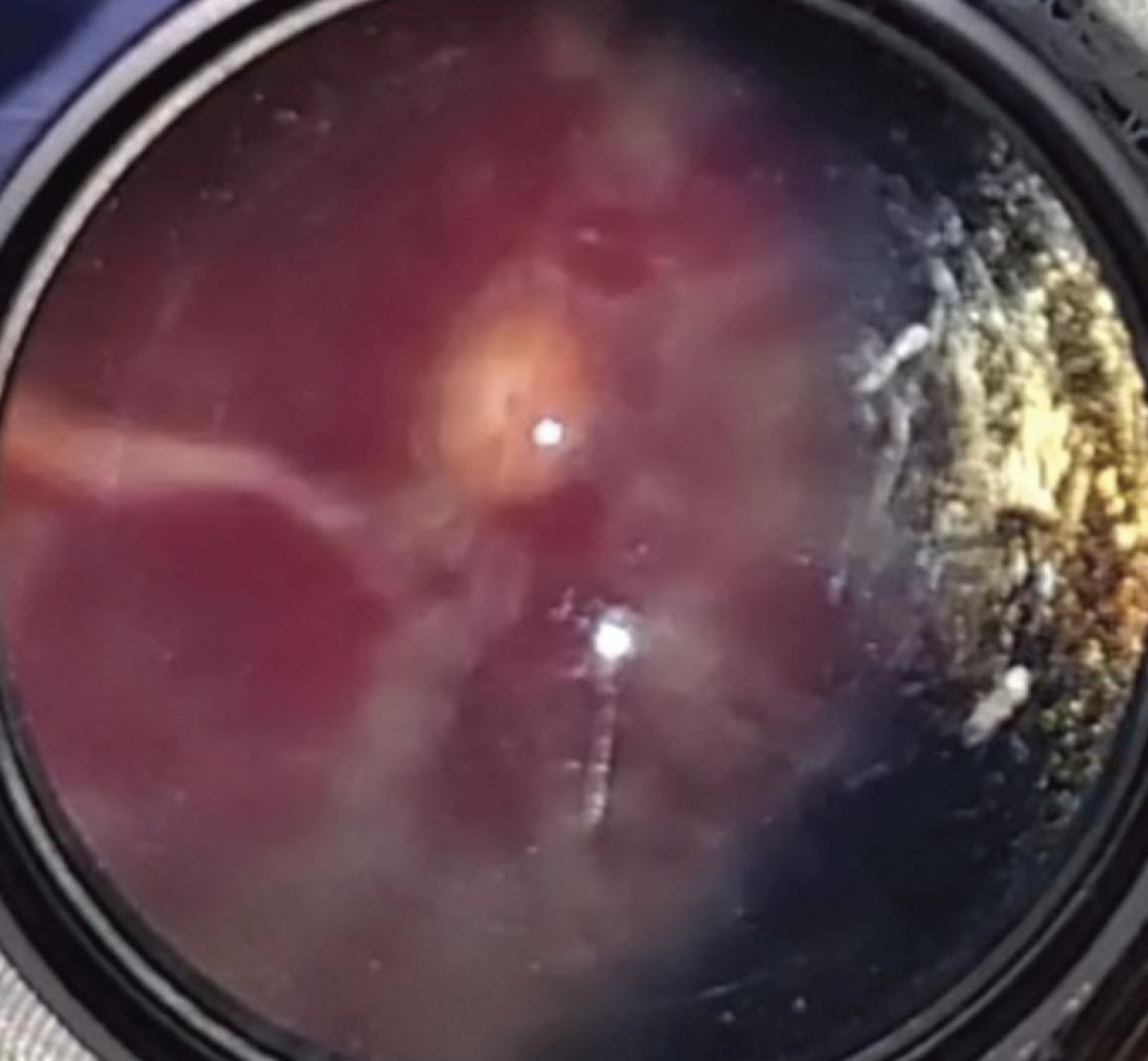
In neonates with AHT, the presence of VH is a marker for a poor neurological and ocular prognosis.28 This is likely secondary to concurrent visual pathway dysfunction and other concomitant retinal pathology.28
Birth trauma typically presents with retinal hemorrhages, but it has also been documented to present with VH, although less commonly.1,30,31 When a significant birth-related VH does not clear spontaneously, vitrectomy may be performed to remove the blood and prevent amblyopia.32
RARE VH DIFFERENTIALS
Terson syndrome is defined as the presence of intraocular hemorrhage concurrent with an acute intracranial hemorrhage (Figure 4).33 Terson syndrome is rare in the neonate and pediatric population compared with the adult population.34 This rarity is likely due to physiologic protective factors in children, including better autoregulation of cerebral vasculature and potentially more restrictive communication between the optic nerve sheath and intracranial space, limiting the transmission of pressure.35
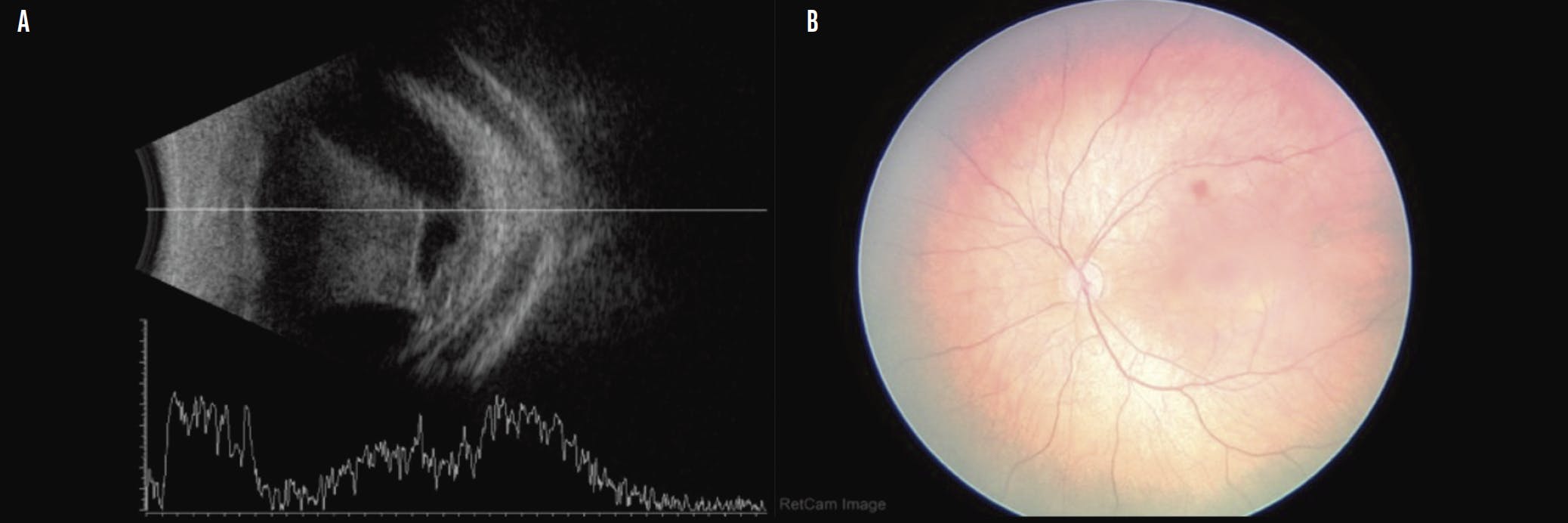
Figure 4. B-scan ultrasound of the right eye shows VH in association with Terson syndrome that required vitrectomy (A). Fundus photography of the left eye shows intraretinal hemorrhage (B).
Terson syndrome, when reported in children, is associated with several underlying causes, including accidental trauma, birth trauma, and leukemia.34,36,37 If there is minimal improvement in VH, a low threshold for vitrectomy should be maintained to prevent amblyopia.34
Toxoplasmosis, other agents such as syphilis/parvovirus, rubella, cytomegalovirus, and herpes simplex virus (TORCH) have been shown to cause intraocular inflammation and VH in premature and systemically ill neonates. The challenge in diagnosis is highlighted by a case report where the initial working diagnosis was aggressive ROP. Subsequent definitive diagnosis during vitrectomy revealed findings consistent with bilateral retinal necrosis.38
Hematologic abnormalities can lead to neonatal VH due to underlying coagulopathy. Case reports have described neonatal VH from severe vitamin K deficiency or untreated galactosemia, with associated liver dysfunction likely causing widespread coagulopathy.39,40
KEEP AN OPEN MIND
When faced with VH in a neonate, clinicians must consider a robust list of differentials beyond ROP to ensure proper diagnosis and treatment. In the management of VH, clinicians must account for the significant risk of amblyopia—an outcome equally as important as the structural ocular changes seen with these conditions. Optimal care for these patients requires the unified expertise of pediatric ophthalmology and vitreoretinal surgeons.
1. Callaway NF, Ludwig CA, Blumenkranz MS, Jones JM, Fredrick DR, Moshfeghi DM. Retinal and optic nerve hemorrhages in the newborn infant: one-year results of the Newborn Eye Screen Test study. Ophthalmology. 2016;123(5):1043-1052.
2. Funnell CL, Simmons IG. Retinopathy of prematurity treatment and vitreous hemorrhage. J Pediatr Ophthalmol Strabismus. 2008;45(2):118-120.
3. Özdek Ş, Zeydanlı EÖ, Baumal C, et al. Avascular peripheral retina in infants. Turk J Ophthalmol. 2023;53(1):44-57.
4. John VJ, McClintic JI, Hess DJ, Berrocal AM. Retinopathy of prematurity versus familial exudative vitreoretinopathy: report on clinical and angiographic findings. Ophthalmic Surg Lasers Imaging Retina. 2016;47(1):14-18.
5. Peng J, Zhang Q, Long X, et al. Incontinentia pigmenti-associated ocular anomalies of paediatric incontinentia pigmenti patients in China. Acta Ophthalmol. 2019;97(3):265-272.
6. Islam YFK, Khurshid SG. Incontinentia pigmenti and the eye. Curr Opin Ophthalmol. 2022;33(6):525-531.
7. Kim SJ, Yang J, Liu G, Huang D, Peter Campbell J. Optical coherence tomography angiography and ultra-widefield optical coherence tomography in a child with incontinentia pigmenti. Ophthalmic Surg Lasers Imaging Retina. 2018;49(4):273-275.
8. Goldberg MF. Persistent fetal vasculature (PFV): an integrated interpretation of signs and symptoms associated with persistent hyperplastic primary vitreous (PHPV). Am J Ophthalmol. 1997;124(5):587-626.
9. Khandwala N, Besirli C, Bohnsack BL. Outcomes and surgical management of persistent fetal vasculature. BMJ Open Ophthalmol. 2021;6(1):e000656.
10. de Saint Sauveur G, Chapron T, Abdelmassih Y, et al. Management and outcomes of posterior persistent fetal vasculature. Ophthalmology. 2023;130(8):844-853.
11. Zahavi A, Weinberger D, Snir M, Ron Y. Management of severe persistent fetal vasculature: case series and review of the literature. Int Ophthalmol. 2019;39(3):579-587.
12. Alsarhani W, Alkatan H, Maktabi A, Edward DP, Kozak I. Clinical and pathological characterization of persistent fetal vasculature associated with vitreous hemorrhage. Am J Ophthalmol Case Rep. 2020;19:100743.
13. Holmes L. Norrie’s disease — an X-linked syndrome of retinal malformation, mental retardation and deafness. N Engl J Med. 1971;284(7):367-368.
14. Walsh MK, Drenser KA, Capone A, Trese MT. Early vitrectomy effective for Norrie disease. Arch Ophthalmol. 2010;128(4):456-460.
15. Warburg M. Norries disease—differential diagnosis and treatment. Acta Ophthalmol. 1975;53(2):217-236.
16. Lin P, Shankar SP, Duncan J, Slavotinek A, Stone EM, Rutar T. Retinal vascular abnormalities and dragged maculae in a carrier with a new NDP mutation (c.268delC) that caused severe Norrie disease in the proband. J AAPOS. 2010;14(1):93-96.
17. Dedania VS, Moinuddin O, Lagrou LM, et al. Ocular manifestations of cutis marmorata telangiectatica congenita. Ophthalmol Retina. 2019;3(9):791-801.
18. Kienast AK, Hoeger PH. Cutis marmorata telangiectatica congenita: a prospective study of 27 cases and review of the literature with proposal of diagnostic criteria. Clin Exp Dermatol. 2009;34(3):319-323.
19. Murphy CC, Khong CH, Ward WJ, Morgan WH. Late-onset pediatric glaucoma associated with cutis marmorata telangiectatica congenita managed with Molteno implant surgery: case report and review of the literature. J AAPOS. 2007;11(5):519-521.
20. Sassalos TM, Fields TS, Levine R, Gao H. Retinal neovascularization from a patient with cutis marmorata telangiectatica congenita. Retin Cases Brief Rep. 2021;15(1):77-80.
21. Gass JD. Cavernous hemangioma of the retina. A neuro-oculo-cutaneous syndrome. Am J Ophthalmol. 1971;71(4):799-814.
22. Fowler BJ, Simon L, Scott NL, Negron CI, Berrocal AM. Case report: vitreous hemorrhage as the presenting sign of retinal cavernous hemangioma in a newborn. Am J Ophthalmol Case Rep. 2021;23:101174.
23. Schiller ER, Kalafatis NE, Shields CL. Retinal cavernous hemangioma in a newborn: an unusual presentation of a rare tumor. J AAPOS. 2022;26(6):330-333.
24. Review of retinoblastoma. American Academy of Ophthalmology. Accessed November 14, 2025. tinyurl.com/mry2xdsk
25. He M, Yang L, Jia S, et al. Does vitreous haemorrhage and calcification lead to increased risk of enucleation in advanced retinoblastoma? Acta Ophthalmol. 2024;102(3):e296-e301.
26. Kivelä TT, Hadjistilianou T. Neonatal retinoblastoma. Asia Pac J Oncol Nurs. 2017;4(3):197-204.
27. Abramson DH, Du TT, Beaverson KL. (Neonatal) retinoblastoma in the first month of life. Arch Ophthalmol. 2002;120(6):738-742.
28. Matthews GP, Das A. Dense vitreous hemorrhages predict poor visual and neurological prognosis in infants with shaken baby syndrome. J Pediatr Ophthalmol Strabismus. 1996;33(4):260-265.
29. Ober RR. Hemorrhagic retinopathy in infancy: a clinicopathologic report. J Pediatr Ophthalmol Strabismus. 1980;17(1):17-20.
30. Kaur B, Taylor D. Fundus hemorrhages in infancy. Surv Ophthalmol. 1992;37(1):1-17.
31. Spirn MJ, Lynn MJ, Hubbard GB. Vitreous hemorrhage in children. Ophthalmology. 2006;113(5):848-852.
32. Simon J, Sood S, Yoon MK, et al. Vitrectomy for dense vitreous hemorrhage in infancy. J Pediatr Ophthalmol Strabismus. 2005;42(1):18-22.
33. Aboulhosn R, Raju B, Jumah F, et al. Terson’s syndrome, the current concepts and management strategies: a review of literature. Clin Neurol Neurosurg. 2021;210:107008.
34. Alobaid MM, Alhaidari AI, Adhi MI, Nabeel Refka M. Terson syndrome in two infants: case report and literature review. Cureus. 2024;16(12):e75102.
35. Schloff S, Mullaney PB, Armstrong DC, et al. Retinal findings in children with intracranial hemorrhage. Ophthalmology. 2002;109(8):1472-1476.
36. Moshfeghi DM. Terson syndrome in a healthy term infant: delivery-associated retinopathy and intracranial hemorrhage. Ophthalmic Surg Lasers Imaging Retina. 2018;49(10):e154-e156.
37. Wang YM, Nudleman E, Vinocur D, Kuo DJ. Terson syndrome before induction chemotherapy for acute lymphoblastic leukemia. J Pediatr Hematol Oncol. 2018;40(2):141-142.
38. Khurram D, Ali S, Kozak I. Bilateral acute retinal necrosis in premature newborn with skin, eye, and mouth infection presenting with vitreous and subretinal hemorrhage. Indian J Ophthalmol. 2020;68(9):2009-2011.
39. Levy HL, Brown AE, Williams SE, Juan E De. Vitreous hemorrhage as an ophthalmic complication of galactosemia. J Pediatr. 1996;129(6):922-925.
40. Ratageri VH, Shepur TA, Kiran G. Vitreous hemorrhage secondary to vitamin K deficiency bleeding. Indian J Pediatr. 2007;74(3):314.


-1%20(1)_1769020986.jpg?auto=compress,format&w=70)


%20FINAL-1_1771612597.jpg?auto=compress,format&w=70)


_1784132761.jpg?auto=compress,format&w=75)





