



AT A GLANCE
- Researchers continue to improve existing treatments, investigate novel delivery systems, and explore treatments beyond anti-VEGF agents.
- Several new approaches to anti-VEGF therapy are under investigation, including sustained delivery, high-dose therapeutics, and a novel antibody biopolymer conjugate platform.
- Novel mechanisms to treat diabetic eye disease that are showing promise include gene therapy, a dual decoy receptor trap fusion, and two oral options.
Diabetic retinopathy (DR) and diabetic macular edema (DME) continue to impose a heavy burden on millions of adults with diabetes in the United States and globally (Figures 1 and 2). The disease not only threatens eyesight, but heavily burdens the health care system.1 Medical research and clinical trials continue to advance our management options by improving existing treatments, investigating novel delivery systems, and exploring treatments beyond anti-VEGF agents.
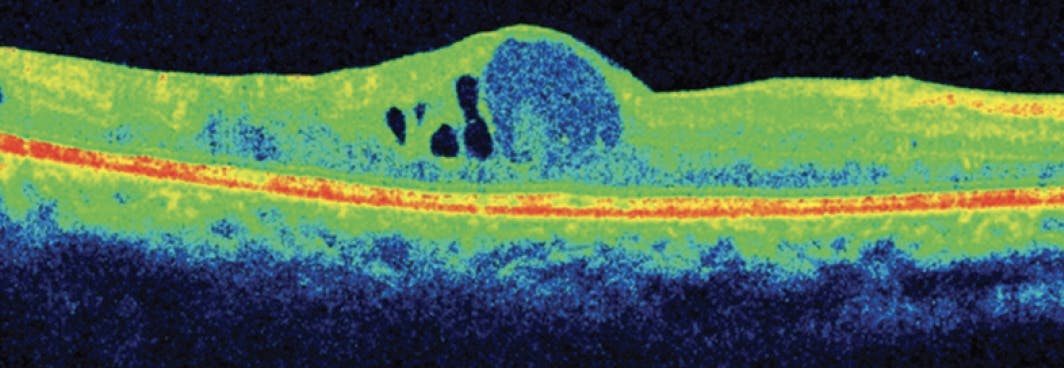

Figure 2. Patients such as this one with PDR may one day have access to new treatment options as researchers continue to investigate novel therapeutic approaches.
PHASE 3 TRIALS TO WATCH
Surgical Intervention
PAVILION and PAGODA are two phase 3 randomized clinical trials examining the port delivery system (PDS) with ranibizumab (Susvimo, Genentech/Roche).2-4 In PAVILION, participants without center-involving DME (CI-DME) either receive two injections of ranibizumab (Lucentis, Genentech/Roche) and then the PDS or undergo monitoring every 4 weeks until they meet the predetermined eligibility criteria to receive the PDS. Refill-exchange procedures occur every 36 weeks. The primary outcome is the percentage of patients with a ≥ 2-step improvement from baseline on the Diabetic Retinopathy Severity Scale (DRSS) at week 52.4 In PAGODA, participants with CI-DME receive either four monthly injections of ranibizumab and then the PDS or intravitreal ranibizumab every 4 weeks until they receive the PDS based on predetermined eligibility criteria. Refill-exchanges occur every 24 weeks. The primary outcome measure is change in BCVA from baseline averaged over weeks 60 and 64.3
The company announced a voluntary recall of the PDS in October due to manufacturing issues, temporarily halting new implantations in ongoing global clinical trials.5
Anti-VEGF Advances
The phase 2/3 PHOTON trial is examining high-dose aflibercept (Regeneron) in 660 patients with CI-DME.6,7 The study met its primary endpoint of noninferior BCVA gains after treatment with 8 mg aflibercept at 12- or 16-week intervals compared with the standard 2 mg aflibercept (Eylea, Regeneron) dosed every 8 weeks.8 The mean BCVA improvement was 9.2 letters for the 2 mg aflibercept arm, 8.8 letters for the high-dose aflibercept arm treated every 12 weeks, and 7.9 letters for the high-dose arm treated every 16 weeks. In addition, 91% and 89% of patients maintained the 12- or 16-week dosing regimen, respectively, and 29% and 20% of patients in the 12- and 16-week dosing arms had a ≥ 2-step DRSS improvement. Serious ocular adverse events were noted in 0.6% of patients in each of the three arms.8
Tarcocimab (KSI-301, Kodiak Sciences) is an intravitreal anti-VEGF biologic that uses an antibody biopolymer conjugate platform. In the phase 1b study, treatment-naïve patients with wet AMD, retinal vein occlusion, or DME who were treated with 2.5 mg or 5 mg tarcocimab had a mean gain of 5.9 letters and a 58-µm reduction in central subfield thickness at 24 weeks.9 The phase 3 GLEAM and GLIMMER studies are evaluating the efficacy and safety of intravitreal 5 mg tarcocimab for treatment-naïve DME. The primary outcome is change in BCVA compared with aflibercept.9-11
A Topical Option
OCS-01 (Oculis) is a high concentration, preservative free, topical formulation of dexamethasone under investigation for the treatment of DME. Phase 2 data showed that patients treated with the topical drop achieved a mean central macular thickness of -53.6 μm compared with -16.8 μm in the control group. The mean change in BCVA for study patients at week 12 was +2.62 letters compared with +1.04 letters in the control group. Safety was similar between the groups, although IOP increases were, unsurprisingly, more common in the treatment group.12
The primary endpoint for the phase 3 DIAMOND randomized multicenter study of OCS-01 in subjects with DME is the mean change in BCVA. The secondary endpoint will assess the mean change in macular thickness.13
PHASE 2 UNDERWAY
Gene Therapy
RGX-314 (Regenxbio) is an adenoviral vector containing a transgene for a soluble anti-VEGF antibody fragment.14 It is a one-time, in-office gene therapy injected into the suprachoroidal space. The phase 2 ALTITUDE randomized trial with 60 patients with moderately severe nonproliferative DR (NPDR), severe NPDR, or mild proliferative DR (PDR) has three arms: an observation control arm and two RGX-314 treatment arms (doses 1 and 2). The primary outcome measure is the proportion of participants achieving a ≥ 2-step improvement in their DRSS at week 48.15,16
Secondary outcomes include safety and the need for additional standard of care interventions for complications.15,16 The 6-month data showed that 40% of patients in cohort 1 and 11% in cohort 2 achieved a ≥ 2-step improvement in DRSS compared with 10% of control patients. There were no reports of intraocular inflammation.15 The company announced the expansion of the trial to include two new cohorts (4 and 5) at a third, higher, dose level.15
Dual Action
RC28-E (RemeGen) is a VEGF and basic-fibroblast growth factor dual decoy receptor trap fusion protein that has shown potential therapeutic benefits in a streptozotocin-induced DR rat model.17,18 The phase 2 study of 120 patients with moderately severe to severe NPDR is investigating the drug’s efficacy and safety with intravitreal injection.18 Patients will be randomized to one of the following arms: 1.0 mg RC28-E every 8 weeks, 1.0 mg RC28-E every 4 weeks for five visits followed by as-needed injections based on prespecified criteria, 2.0 mg RC28-E every 8 weeks, or 2.0 mg RC28-E every 4 weeks for five visits followed by as-needed injections based on prespecified criteria.17 The primary outcome measure is the proportion of patients with a ≥ 2-step improvement in DRSS from baseline at weeks 24 and 52.17
OPT-302 (Opthea) is an anti-VEGF therapy that is designed to block the activity of VEGF-C and VEGF-D and is used in combination with currently approved anti-VEGF agents. In the phase 2 trial of patients with persistent DME, 52.8% of participants treated with the OPT-302 combination therapy achieved a VA improvement of ≥ 5 letters at 12 weeks compared with baseline.19 The company has yet to announce plans for a phase 3 trial.
Novel Targets
Unity Biotechnology announced positive 24-week data from the BEHOLD study of UBX1325, a senolytic Bcl-xL inhibitor, in patients with DME. The phase 2 proof-of-concept study of approximately 62 patients is evaluating the drug’s safety, tolerability, and effect on visual function. At 24 weeks, patients treated with a single injection of UBX1325 experienced a mean improvement in BCVA of +7.6 ETDRS letters compared with sham-treated patients. Treated patients experienced a mean change in central subfield thickness of -5.4 µm from baseline compared with +34.6 in the sham group. The fully enrolled trial is ongoing through 48 weeks.20
THR-149 (Oxurion) is a bicyclic peptide that selectively inhibits human plasma kallikrein with the goal of preventing the induction of retinal vascular permeability and inflammation. The phase 1 trial of 12 patients with DME demonstrated a favorable safety profile and a quick onset of action. The mean change in BCVA from baseline was highest at day 14 after the single intravitreal injection, +7.5 letters, and the average BCVA improvement at month 3 was 6.4 letters.21 The phase 2 KALAHARI study will evaluate the safety and efficacy of six dosing regimens compared with aflibercept.22
D-4517.2 (Ashvattha Therapeutics) is a tyrosine kinase inhibitor in phase 2 for both wet AMD and DME. The sunitinib analog is injected subcutaneously every month.23
Noninvasive Options
APX3330 (Ocuphire Pharma) is a small-molecule inhibitor of Ref-1, a multifunctional protein with reduction-oxidation activity that stimulates numerous transcription factors involved in angiogenesis.24 APX3330 inhibits retinal vascular endothelial cell proliferation and the formation of capillary-like structures in vitro in a dose-dependent manner.25,26
ZETA-1 is a phase 2 randomized study designed to evaluate the efficacy and safety of oral APX3330 (600 mg daily) over 24 weeks in patients with DR.25,27 Inclusion criteria is at least one eye with moderately severe to severe NPDR or mild PDR, corresponding to DRSS 47, 53, or 61; BCVA of ≥ 60 ETDRS letters; and body mass index between 18 kg/m2 and 40 kg/m2. The primary outcome measure is the percentage of subjects with a ≥ 2-step improvement in DRSS in the study eye. Some secondary outcome measures include the percentage of subjects with a change in DRSS at weeks 12 and 24, mean change in BCVA at week 24, and mean change in central subfield thickness at week 24.27
OTT166 (OcuTerra) is a small molecule selective integrin inhibitor formulated as a topical drop. The phase 1/2 clinical trial of 44 patients with DME demonstrated safety, tolerability, and evidence of biological activity. The phase 2 DR:EAM study dosed the first patient in August. The trial will assess the safety and efficacy of OTT166 in approximately 210 patients with moderately severe to severe NPDR or mild PDR using two different dosing regimens.28 The primary endpoints include safety measures and the proportion of patients with a ≥ 2-steps increase in DRSS scores.27
Bayer is investigating an oral dose of runcaciguat, a soluble guanylate cyclase activator, for the treatment of NPDR.29,30 The phase 2 NEON-NPDR trial will assess the safety and efficacy of the therapeutic in approximately 98 participants, with a primary endpoint of a DRSS improvement of ≥ 2 steps at 24 weeks.29
WHAT’S NEXT
The studies highlighted here suggest exciting advances in the treatment of DR and DME. Modifications to the dosing, frequency, and delivery of trusted anti-VEGF therapies may provide patients and physicians with more options with current agents, while the investigation of oral therapies may one day revolutionize the way DR and DME patients access and interact with eye care. Investigation into one-time gene therapies may also transform our current practice. Certainly, the future of diabetic eye disease treatment is promising.
1. National Center for Chronic Disease Prevention and Health Promotion. Diabetic Retinopathy. Accessed September 8, 2022. preventblindness.org/wp-content/uploads/2017/10/factsheet.pdf
2. Ranade SV, Wieland MR, Tam T, et al. The port delivery system with ranibizumab: a new paradigm for long-acting retinal drug delivery. Drug Deliv. 29(1):1326-1334.
3. This study will evaluate the efficacy, safety, and pharmacokinetics of the port delivery system with ranibizumab in participants with diabetic macular edema compared with intravitreal ranibizumab (Pagoda). Updated November 14, 2022. Accessed October 13, 2022. clinicaltrials.gov/ct2/show/NCT04108156
4. A multicenter, randomized study in participants with diabetic retinopathy without center-involved diabetic macular edema to evaluate the efficacy, safety, and pharmacokinetics of ranibizumab delivered via the port delivery system relative to the comparator arm (PAVILION). Updated August 5, 2022. Accessed October 13, 2022. clinicaltrials.gov/ct2/show/NCT04503551
5. Genentech voluntarily recalls Susvimo ocular implant for wet AMD [press release]. Eyewire+. October 20, 2022. Accessed November 4, 2022. eyewire.news/news/genentech-voluntarily-recalls-susvimo-ocular-implant-for-wet-amd
6. Study of a high-dose aflibercept in participants with diabetic eye disease (PHOTON). Updated November 4, 2022. Accessed October 12, 2022. clinicaltrials.gov/ct2/show/NCT04429503
7. Kansteiner F. Regeneron’s bid for high-dose Eylea scores early win, but the “all important” data are still to come: analysts [press release]. Fierce Pharma. August 24, 2021. Accessed October 12, 2022. www.fiercepharma.com/pharma/regeneron-cautiously-optimistic-wet-amd-after-higher-dose-eylea-passes-safety-bar-phase-2
8. Aflibercept 8 mg meets primary endpoints in two global pivotal trials for DME and wAMD, with a vast majority of patients maintained on 12- and 16-week dosing intervals [press release]. Regeneron. September 8, 2022. investor.regeneron.com/news-releases/news-release-details/aflibercept-8-mg-meets-primary-endpoints-two-global-pivotal
9. Stern HD, Hussain RM. KSI-301: an investigational anti-VEGF biopolymer conjugate for retinal diseases. Expert Opin Investig Drugs. 2022;31(5):443-449.
10. A trial to evaluate the efficacy, durability, and safety of KSI-301 compared to aflibercept in participants with diabetic macular edema (DME) (GLEAM). Updated June 6, 2022. Accessed October 12, 2022. clinicaltrials.gov/ct2/show/NCT04611152
11. A study to evaluate the efficacy, durability, and safety of KSI-301 compared to aflibercept in participants with diabetic macular edema (DME) (GLIMMER). Updated June 6, 2022. Accessed July 28, 2022. clinicaltrials.gov/ct2/show/NCT04603937
12. Efficacy and safety of dexamethasone nanoparticles eye drops in diabetic macular edema. Updated June 28, 2022. Accessed October 13, 2022. clinicaltrials.gov/ct2/show/results/NCT05343156
13. Multicenter study on the efficacy and safety of ocs-01 in subjects with diabetic macular edema. Updated December 2, 2021. Accessed October 13, 2022. clinicaltrials.gov/ct2/show/NCT05066997
14. Koponen S, Kokki E, Kinnunen K, Ylä-Herttuala S. Viral-vector-delivered anti-angiogenic therapies to the eye. Pharmaceutics. 2021;13(2):219.
15. Regenxbio presents positive interim data from and the expansion of phase II ALTITUDE trial of RGX-314 for the treatment of diabetic retinopathy using suprachoroidal delivery [press release]. Regenxbio. November 3, 2022. regenxbio.gcs-web.com/news-releases/news-release-details/regenxbio-presents-positive-interim-data-and-expansion-phase-ii
16. RGX-314 gene therapy administered in the suprachoroidal space for participants with diabetic retinopathy (DR) without center involved-diabetic macular ddema (CI-DME) (ALTITUDE). November 17, 2022. Accessed October 12, 2022. clinicaltrials.gov/ct2/show/NCT04567550
17. Evaluation of RC28-E injection in diabetic retinopathy. Updated June 11, 2021. Accessed Ocotber 12, 2022. clinicaltrials.gov/ct2/show/NCT04782128
18. Jiang J, Wang L, Kou X, et al. In vivo characterization of RC28-E, a fusion protein targeting VEGF and bFGF: Pharmacokinetics and ocular distribution in primates. Exp Eye Res. 2020;190:107823.
19. A dose ranging study of OPT-302 with aflibercept for persistent diabetic macular edema. Updated June 22, 2022. Accessed October 13, 2022. clinicaltrials.gov/ct2/show/results/NCT03397264
20. Unity Biotechnology announces positive 24-week data from phase 2 BEHOLD study of UBX1325 in patients with diabetic macular edema [press release]. November 1, 2022. Accessed November 1, 2022. ir.unitybiotechnology.com/news-releases/news-release-details/unity-biotechnology-announces-positive-24-week-data-phase-2
21. Van Bergen T, Hu TT, Little K, et al. Targeting plasma kallikrein with a novel bicyclic peptide inhibitor (THR-149) reduces retinal thickening in a diabetic rat model. Invest Ophthalmol Vis Sci. 2021;62(13):18.
22. A study to evaluate THR-149 treatment for diabetic macular oedema (KALAHARI). Updated October 31, 2022. Accessed October 12, 2022. clinicaltrials.gov/ct2/show/NCT04527107
23. A study to evaluate the safety, tolerability and pharmacokinetics of D-4517.2 after subcutaneous administration in subjects with neovascular (wet) age-related macular degeneration (AMD) or subjects with diabetic macular edema (DME) (Tejas). Updated September 21, 2022. Accessed November 16, 2022. clinicaltrials.gov/ct2/show/NCT05387837
24. Jiang A, Gao H, Kelley MR, Qiao X. Inhibition of APE1/Ref-1 redox activity with APX3330 blocks retinal angiogenesis in vitro and in vivo. Vision Res. 2011;51(1):93-100.
25. Boyer DS, Brigell M, Kolli A, et al. The safety of APX3330, an oral drug candidate for the treatment of diabetic eye disease, in the ongoing masked 24-week ZETA-1 phase 2 clinical trial. Invest Ophthalmol Vis Sci. 2022;63(7):675-F0129.
26. Luo M, Delaplane S, Jiang A, et al. Role of the multifunctional DNA repair and redox signaling protein APE1/Ref-1 in cancer and endothelial cells: small-molecule inhibition of the redox function of APE1. Antioxid Redox Signal. 2008;10(11):1853-1867.
27. Study of the safety and efficacy of APX3330 in diabetic retinopathy (ZETA-1). Updated April 29, 2022. Accessed October 12, 2022. clinicaltrials.gov/ct2/show/NCT04692688
28. OTT166 in diabetic retinopathy (DR). Updated November 4, 2022. Accessed October 13, 2022. clinicaltrials.gov/ct2/show/NCT05409235
29. Non-proliferative diabetic retinopathy treated with runcaciguat (NEON-NPDR). Updated October 24, 2022. Accessed October 12, 2022. clinicaltrials.gov/ct2/show/NCT04722991
30. Nassar K, Schubert W, Xu Z, et al. Retinal vascular effects of novel soluble guanylate cyclase activator (sGCa) runcaciguat. Invest Ophthalmol Vis Sci. 2021;62(8):3002.


_1784132761.jpg?auto=compress,format&w=75)





