


The Pacific Retina Club (PRC) was created in 2013 when the Western Retina Study Club merged with the Los Angeles Imaging Conference of Retina Specialists. The founders and program directors of PRC—H. Richard McDonald, MD; SriniVas R. Sadda, MD; and David Sarraf, MD—hosted the 9th annual meeting on June 2-3, 2023, at the University of California San Francisco Mission Bay Conference Center (Figures 1 and 2).
CASES PRESENTATIONS
The first day kicked off with 20 mystery cases presented by residents and fellows. The self-appointed panel sitting in the front row battled it out to guess the diagnosis within the first 2 minutes of each presentation. The presenters felt victorious if their case remained unsolved by the end of the 6-minute time slot. Cases of rare inherited disease dominated the line-up, with a wide range of conditions, such as maternally inherited diabetes and deafness, Shwachman Diamond syndrome, Knobloch syndrome, enhanced S-cone syndrome, and a dual diagnosis of phacomatosis pigmentovascularis of cesioflammea type and TSPAN12-associated familial exudative vitreoretinopathy. Infectious, inflammatory, and masquerading cases were thrown into the mix, and the audience was reminded of the differential diagnoses for temporal thinning on OCT, which include sickle cell retinopathy and Alport syndrome.
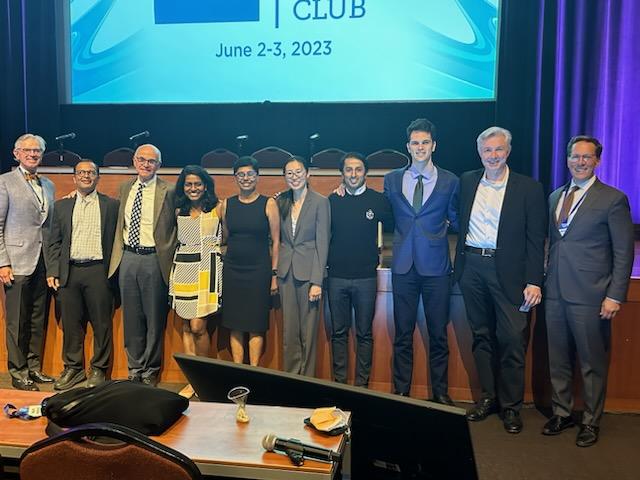
Figure 1. The PRC faculty and attendees gathered for the 9th annual meeting (from left to right): H. Richard McDonald, MD; Gaurav K. Shah, MD; Robert N. Johnson, MD; Malini V. Pasricha, MD; Anita Agarwal, MD; Judy J. Chen, MD; Ananda Kalevar, MD, FRCS(C), DABO; Joseph B. Alsberge, MD; Emmett T. Cunningham Jr, MD, PhD, MPH; and Brandon Lujan, MD.
More than 30 additional cases were presented throughout the day by retina attendings from across the country. Notable topics that spurred enthusiastic audience participation included cases of placoid retinal lesions, acute macular neuroretinopathy following COVID-19 vaccination, and melanoma-associated retinopathy (which Ehsan Rahimy, MD, playfully coined the term “Steve Jobs syndrome”). Gaurav K. Shah, MD, prepared us for the solar eclipse that would take place a few months after the meeting with his case of solar retinopathy, and Prithvi Mruthyunjaya, MD, MHS, concluded the day with a rare case of two genetically distinct choroidal melanomas arising in the same eye. It felt as if half of the Gass Atlas had been touched on by the end of the case presentations.
THE LATEST IN RETINA
The second day provided a comprehensive retina update and began with a session on basic science and pathology. Two interesting presentations were an “Update on CRISPR Technology for Neovascular AMD,” presented by Glenn C. Yiu, MD, PhD, and “Lutein and Zeaxanthin for Prevention of Ocular Disease Throughout the Lifespan,” presented by Paul S. Bernstein, MD, PhD. Alexander J. Brucker, MD, and Dr. McDonald then chaired a session on vitreoretinal surgery, during which J. Michael Jumper, MD, shared many excellent strategies on the surgical management of complex retinal diseases. This was followed by a high yield and entertaining rapid-fire panel on surgical cases moderated by Dr. McDonald and including Dr. Jumper; Dr. Shah; Amr Dessouki, MD; Carolyn K. Pan, MD; and Jay M. Stewart, MD.
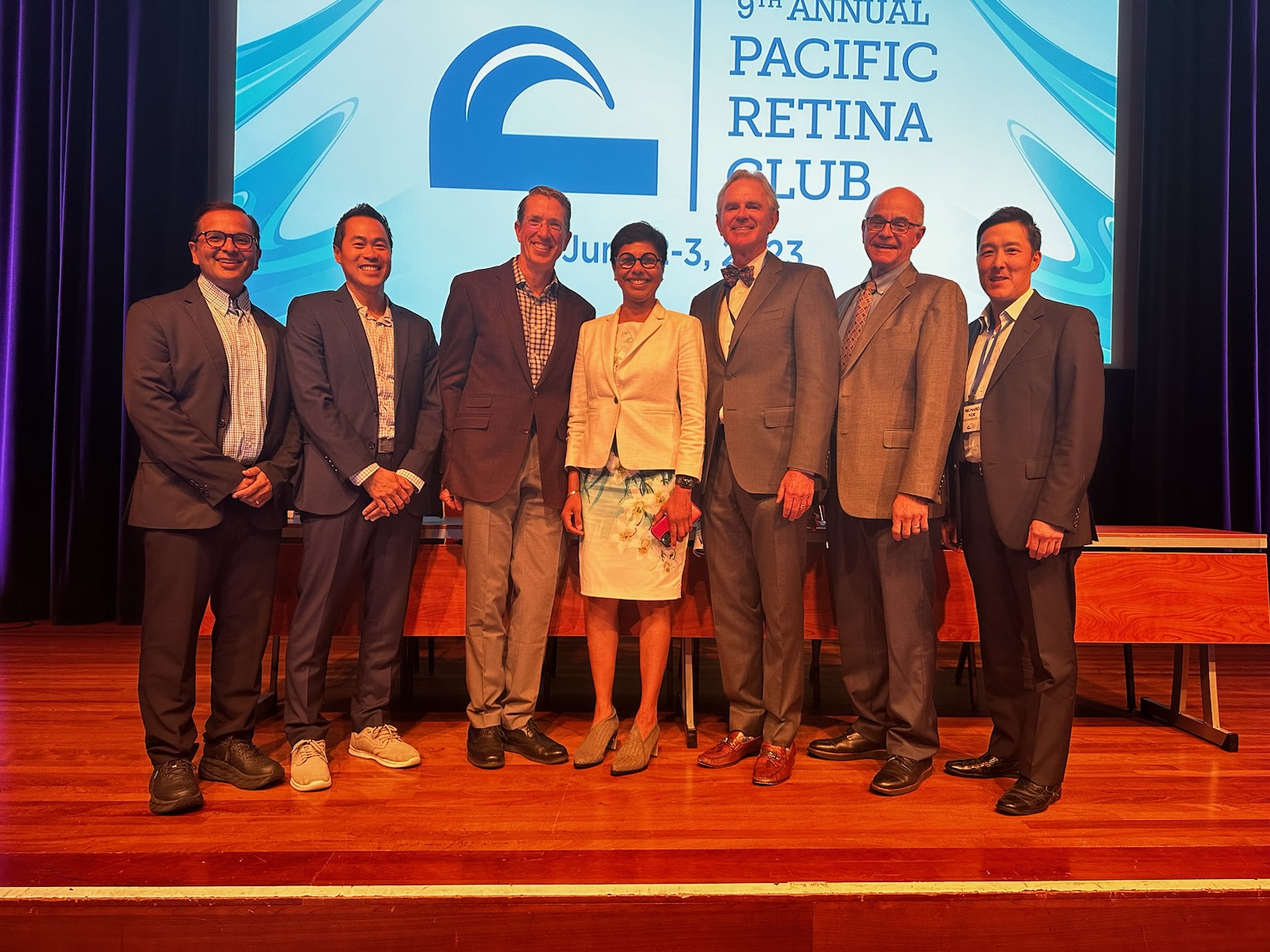
Figure 2. (From left to right): Gaurav K. Shah, MD; Robert W. Wong, MD; J. Michael Jumper, MD; Anita Agarwal, MD; H. Richard McDonald, MD; Robert N. Johnson, MD; and Richard R. Roe, MD, on the PRC stage.
The morning continued with a session on tumors. William F. Mieler, MD, provided an update on retinal and choroidal vascular tumors, and Jose S. Pulido, MD, MS, MPH, MBA, and Dr. Sarraf touched on the imaging and biomarkers of vitreoretinal lymphoma. Dr. Mruthyunjaya moderated a session with panelists Armin Afshar, MD, MBA; Robert N. Johnson, MD; Tara A. McCannel, MD, PhD; Dr. Mieler; and Dr. Pulido, who illustrated the breadth of techniques used for the diagnosis and management of choroidal tumors. The attendees were reminded of the importance of monitoring choroidal nevi with B-scan ultrasound to catch the rare case of choroidal melanoma with orbital extension.
Next in line were two fascinating talks on imaging by K. Bailey Freund, MD, and Amani A. Fawzi, MD. Dr. Freund spoke about imaging of the vortex vein system in central serous chorioretinopathy using en face ultra-widefield OCT and touched on key points related to the clinical cases presented the day prior. A highly intellectual panel discussion on imaging followed with Anita Agarwal, MD; Dr. Fawzi; Dr. Freund; Richard F. Spaide, MD; and Robin A. Vora, MD.
In the wet AMD session, David S. Boyer, MD, discussed the therapeutic pipeline, Michael S. Ip, MD, presented 2-year data from the OPTIC trial and the rationale for the LUNA study, and Dr. Sarraf discussed biomarkers for wet AMD. The wet AMD panel cases were moderated by Dante J. Pieramici, MD. Four panelists—Frank L. Brodie, MD, MBA; Judy J. Chen, MD; Dr. Ip; and Dr. Rahimy—provided their insights into treatment approaches for complex and recalcitrant cases.
The afternoon kicked off with a session on dry AMD. Dr. Sadda presented an update on clinical trials for dry AMD, a topic that was further discussed by a panel consisting of Dr. Bernstein; Dr. Brodie; Dr. Rahimy; and Roger A. Goldberg, MD, MBA. Dr. Shah moderated this session and addressed important considerations regarding the practical use of intravitreal injections for dry AMD.
The diabetes and retinal vascular disease session was up next. Andrew A. Moshfeghi, MD, MBA, gave an exciting presentation on potential nonintraocular therapies for the treatment of diabetic retinopathy and diabetic macular edema. An engaging panel discussion on diabetic retinopathy followed, with panelists Diana V. Do, MD; Jesse J. Jung, MD; Caesar Luo, MD; Dr. Ip; and Dr. Pieramici, moderated by Baruch D. Kuppermann, MD, PhD.
Emmett T. Cunningham Jr, MD, PhD, MPH, moderated the uveitis session that included an excellent discussion of complex cases presented by the panelists (Dr. Agarwal; Nisha Acharya, MD, MS; Quan D. Nguyen, MD, MSc; Jessica G. Shantha, MD, MSc; and Edmund Tsui, MD).
The day finished with a session on pediatric retina and inherited diseases chaired by Mary Elizabeth Hartnett, MD, and Aaron Nagiel, MD, PhD. Three excellent presentations preceded a panel discussion moderated by Darius M. Moshfeghi, MD. Topics under discussion included retinopathy of prematurity, familial exudative vitreoretinopathy, and X-linked retinitis pigmentosa.
THE ALEXANDER R. IRVINE LECTURE
The named lecture, in honor of the University of California San Francisco Professor Alexander R. Irvine, was the highlight of the first day. This year’s Irvine award recipient, Richard F. Spaide, MD, gave an incredible lecture discussing the concept of foveation in both development and disease.
SEE YOU IN LA
The 2023 PRC meeting was packed with exciting debates, engaging discussions, and a healthy dose of humor and rivalry. Fellows and attendings united with an eagerness to teach and learn. The baton will be handed off to the Los Angeles team for next year’s meeting, which will take place on May 30-31, 2024, at the UCLA Luskin Conference Center. It will be followed by the International Retinal Imaging Symposium on June 1, 2024, and we will no doubt see the meeting continue to grow into an international event.


_1784132761.jpg?auto=compress,format&w=75)





