


The 2023 Aspen Retinal Detachment Society (ARDS) meeting in Snowmass, Colorado, boasted several panel discussions on all things surgical, medical, and novel. Experts hashed out ways in which we might integrate new therapies for geographic atrophy (GA) and how we are approaching tough cases in the OR. Here, you can catch a glimpse of the conversation. Registration will open October 16 for ARDS 2024, set for March 2-6. Visit aspenretina.com for more information—it’s never too early to start thinking snow.
- Timothy G. Murray, MD, MBA
The 2023 ARDS meeting took place during an exciting time—just weeks after the FDA approved the first drug for the treatment of GA, which was a major topic of discussion throughout the meeting. The panels are a long-standing tradition at ARDS, creating a space to discuss the medical and surgical management of various retinal conditions and highlight the diversity of approaches for even common diseases.
SURGICAL MANAGEMENT IN RETINA
The first panel focused on surgery and was moderated by Donald J. D’Amico, MD, with panelists Allen C. Ho, MD; Zofia A. Nawrocka, MD, PhD; Gregg T. Kokame, MD, MMM; and Stratos Gotzaridis, MD (Figure 1). The group used cases to spearhead a discussion of lamellar macular holes, retinal detachments, and proliferative vitreoretinopathy (PVR).
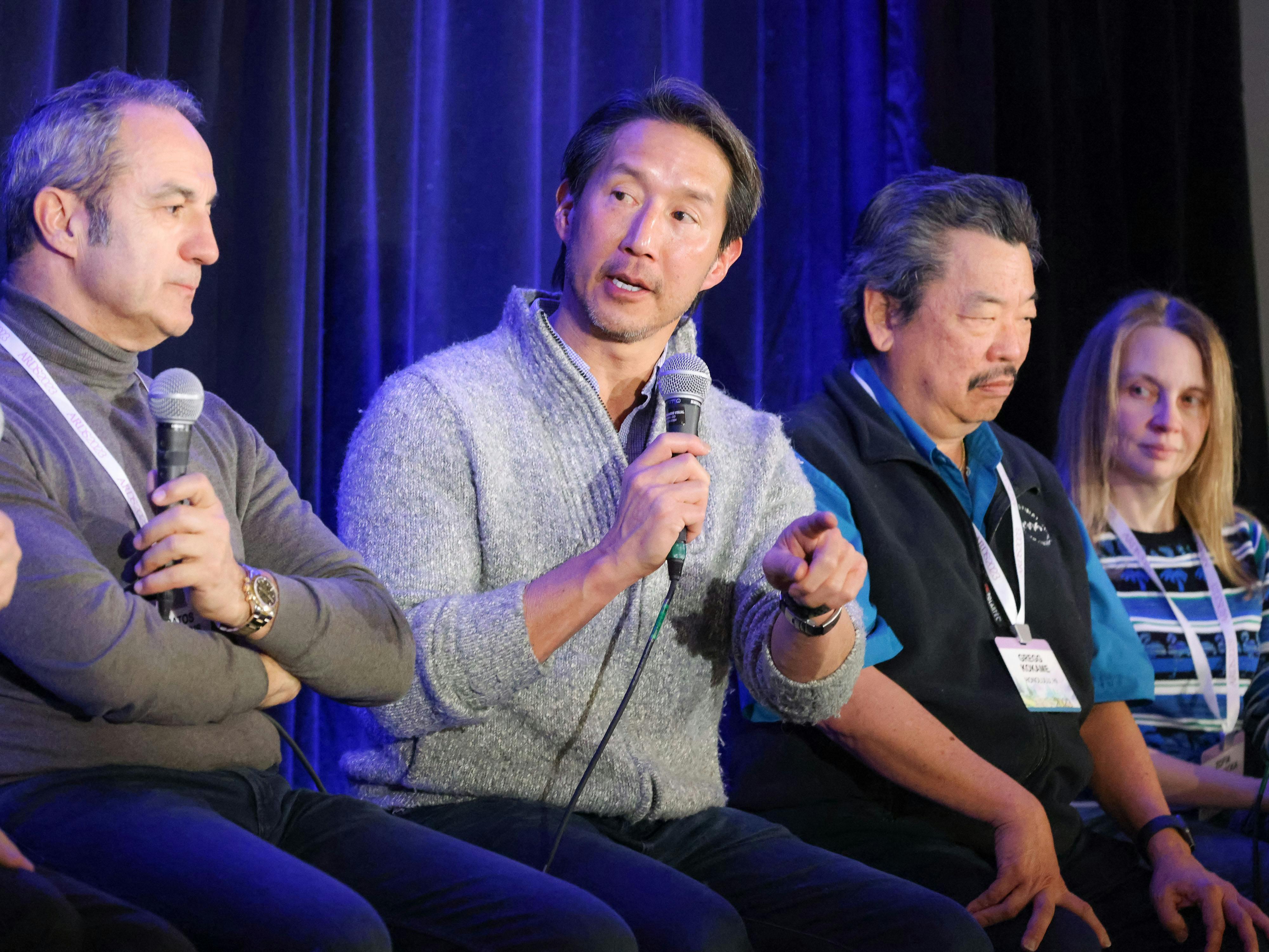
Figure 1. The surgical panelists shared their approaches to PVR. From left to right: Stratos Gotzaridis, MD; Allen C. Ho, MD; Gregg T. Kokame, MD, MMM; and Zofia A. Nawrocka, MD, PhD. Image courtesy of Kevin Caldwell Photography.
When treating lamellar macular holes, the panel was split regarding whether symptoms or visual acuity should be the primary driver of surgical management. Dr. Kokame noted that he would not operate on a patient with good visual acuity (ie, 20/25 or better), but Dr. Gotzaridis would “if the patient is symptomatic, even if the visual acuity is good, but the patient sees metamorphopsia and it’s disturbing.” Other panelists suggested worsening symptoms or anatomy as drivers of management, but there was no consensus.
The panelists did, however, unanimously agree on peeling the internal limiting membrane (ILM) for macular pucker caused by epiretinal membrane. Dr. D’Amico was surprised by the total agreement, given the relatively recent advent of this approach. Dr. Nawrocka emphasized the importance of staining and removing the ILM, stating: “Before finishing the case, I give additional staining to be completely sure that the ILM is peeled off; this way, I have [had] no repeated epiretinal membranes [for] 20 years.”
Next, Dr. D’Amico presented multiple clinical scenarios and asked the panelists to provide their opinion on the best management approach. For a superior break with a retinal hole, the entire panel opted for pneumatic retinopexy. But an additional break, even within the same clock hour, provoked a mixture of answers, including repeat pneumatic retinopexy, vitrectomy, and scleral buckling.
Lastly, the group discussed different surgical approaches to PVR. Dr. Ho said that he prefers PFO and emphasized that if a retinectomy is to be performed, it should be large. “If your retinectomy is less than 120°, you better ask yourself, ‘Am I doing a large enough retinectomy?’” Dr. Kokame uses intravitreal methotrexate for cases of PVR, while the European surgeons on the panel recommended staining and peeling of the ILM throughout the fundus to control PVR.
GA AND WET AMD THERAPY
Moderated by Dr. Murray, the second panel discussed GA and wet AMD management with experts Charles C. Wykoff, MD, PhD; Susan B. Bressler, MD; Tarek S. Hassan, MD; and Steven Yeh, MD (Figure 2).
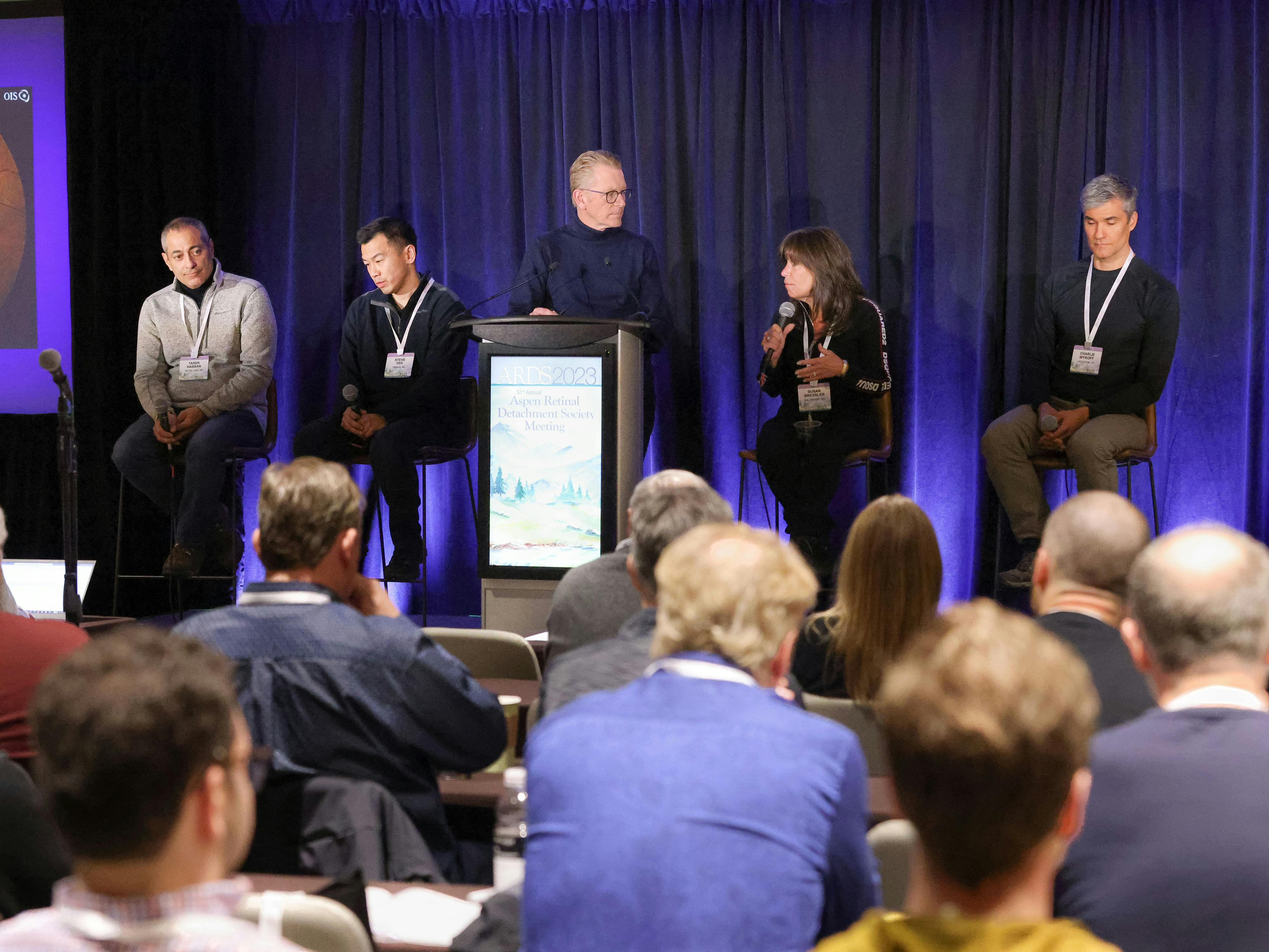
Figure 2. The medical retina panel included an animated discussion of GA therapy. From left to right: Tarek S. Hassan, MD; Steven Yeh, MD; Timothy G. Murray, MD, MBA; Susan B. Bressler, MD; and Charles C. Wykoff, MD, PhD. Image courtesy of Kevin Caldwell Photography.
Pegcetacoplan (Syfovre, Apellis Pharmaceuticals) was the hot topic at this year’s conference, and clinicians had many questions about the clinical trial data and the road ahead regarding implementation in clinical practice.
Each panelist described their experience with GA prior to the approval—patients were educated about GA and the likely progression and were prescribed the AREDS2 vitamin formulation. It’s no surprise that many on the panel saw the drug as a first step toward a new treatment paradigm.
The panel first discussed how to set patient expectations in GA, given the unknowns that still exist in this disease. Each expert agreed that retina specialists must educate patients carefully about dry and wet AMD. When it comes to wet AMD, it is nearly impossible to predict the treatment outcome and the expected course with and without injections. Research is still unclear about the natural history of any given patient’s disease course in AMD. The benefit of monthly pegcetacoplan versus treatment every other month is still up for debate, according to Dr. Hassan.
The data have not given guidance on chronic VEGF suppression, and many specialists wonder if residual intraretinal fluid may be necessary to prevent GA, or if patients need to be kept completely dry. Dr. Wykoff felt that the evidence did not support this conclusion. “I don’t think that VEGF suppression at the levels that we’re using in the clinic is exacerbating or worsening GA,” he noted.
The conversation then pivoted to the combination of anti-VEGF drugs and GA therapy. Because pegcetacoplan is new, retina specialists must make independent decisions in the early management of GA. “All the GA trials actively excluded active wet AMD,” Dr. Wykoff pointed out. “We really don’t know [and] we have a lot to learn here.” Dr. Bressler expressed strong reservations about using pegcetacoplan in patients who developed GA in the setting of wet AMD management. “I would be extraordinarily reluctant to use an agent that was developed and tested on patients [who] had native GA completely in the absence of past or present choroidal neovascularization; I would have no data to say that it was going to be efficacious for them,” she explained.
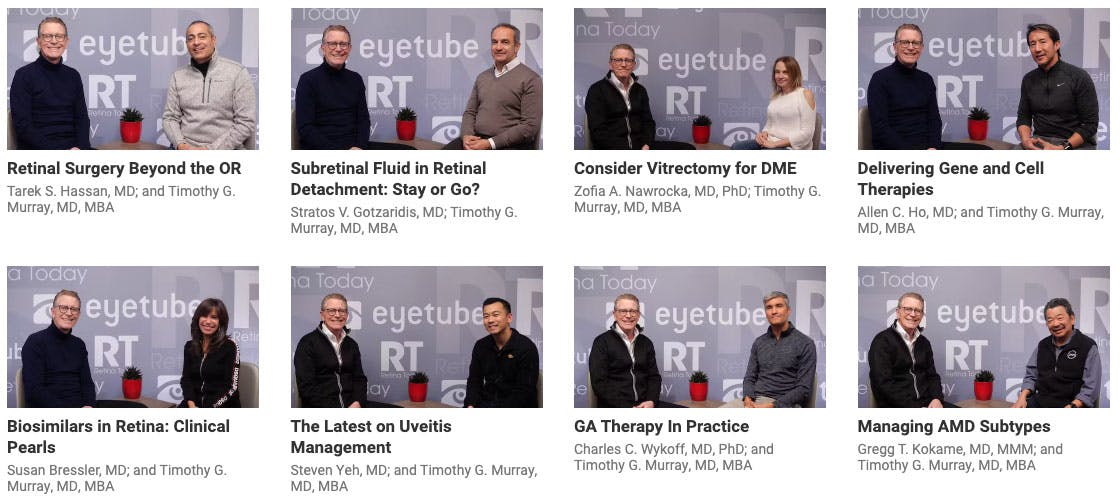
CHECK OUT OUR VIDEO COVERAGE OF ARDS 2023
One of the challenges of transitioning from trials to the clinic is the ability to assess treatment success. When treating wet AMD with anti-VEGF therapy, there are known biomarkers. For GA, window defects and autofluorescence findings often are multifocal, and assessing the area of GA is difficult, especially in a busy clinic. Dr. Murray asked, “How are we going to manage treating patients with GA when we don't really have a marker that we can look at? How do you tell your patient whether they’re doing well or poorly?” The panelists didn't have a good answer yet. Dr. Wykoff noted that the field needs better algorithms in clinical imaging software to help assess drug efficacy. Dr. Hassan suspects that AI will come into play. Other panelists expressed reservations about the readiness of AI for clinical practice. Dr. Yeh pointed out that clinical metrics in the studies may be a potential avenue for implementation in the clinic, such as low luminance and microperimetry.
Finally, safety was a primary concern.* Many of the panelists were forward about the 12% risk of new-onset neovascularization in the monthly treatment arm (and roughly 7% in the every-other-month arm) but expressed more concern about the rate of nonarteritic anterior ischemic optic neuropathy (NAION). The panelists said that they would be able to treat neovascularization with well-established paradigms but felt nervous about the risk of NAION. “A 1.7% [risk of NAION] with monthly dosing over 2 years is very high, in my opinion,” Dr. Wykoff said.
Ultimately, the panel agreed that the most important thing is to get informed consent when deciding to treat patients with GA. Dr. Bressler summed up the opinion of the entire panel, stating, “The patient needs to understand what we're sharing and then make the decisions that are appropriate to them, their needs, and their expectations.”
UNTIL NEXT YEAR
The ARDS panels showed that very few issues are truly settled in the field of retina, and many questions remain to be discussed—likely at the 2024 ARDS meeting in March.
*Editor's note: These panel discussions took place before the American Society of Retina Specialists Research and Safety in Therapeutics Committee reported eight cases of occlusive retinal vasculitis after intravitreal injection of pegcetacoplan.1
1. Apellis provides update on review of safety events with Syfovre for geographic atrophy. Eyewire+. July 30, 2023. Accessed August 28, 2023. eyewire.news/news/apellis-provides-update-on-review-of-safety-events-with-syfovre-for-geographic-atrophy


_1784132761.jpg?auto=compress,format&w=75)





