


AT A GLANCE
- Individuals of varying races and ethnicities have different experiences that have a resounding effect on their well-being, according to KFF’s 2023 Survey on Racism, Discrimination, and Health.
- Underrepresented populations are more likely to experience unfair treatment within the health care system at the hands of providers and the care, or lack thereof, they provide.
- Consequently, many American Indian and Alaska Native, Black, Hispanic, and Asian patients reported feeling the need to switch health care providers or not seek care at all.
Due to historic and ongoing policies often rooted in discriminatory practices, individuals of varying races and ethnicities have different experiences in their everyday lives that have a resounding effect on their well-being. Gender identity and sexual orientation also come into play to exacerbate these effects.
The 2023 KFF Survey on Racism, Discrimination, and Health, conducted from June through August 2023, assessed a nationally representative sample of 6,292 US adults, seeking to uncover the manifestations of racism and discrimination in everyday life, including health care.1
HOW DISCRIMINATION MANIFESTS IN HEALTH CARE
Despite the smaller sample size of those who identify as American Indian and Alaska Native (AIAN; 267 vs 693 Asian adults, > 1,750 Hispanic adults, > 1,750 Black adults), the study authors decided to include results for this population to avoid contributing to data erasure and the invisibility of smaller populations.1
The study found that at least half of AIAN, Black, and Hispanic adults, and about four in 10 Asian adults, reported experiencing at least one type of discrimination at least a few times over the past year, and were more likely to attribute these experiences to their race or ethnicity compared with their White counterparts.1
Among the survey respondents, Hispanic (20%), AIAN (14%), and Black (10%) adults reported higher uninsured rates compared with White (6%) adults. Already at a disadvantage in their ability to access health care, these groups are also more likely to experience unfair treatment within the health care system.1
The Depth of Discrimination
Most White survey respondents reported positive and respectful interactions with their health care providers most of the time over the last 3 years. The same, unfortunately, was not true for Hispanic, Black, Asian, and AIAN respondents. AIAN, Asian, Hispanic, and Black adults were about twice as likely as White adults to report that their health care providers explained things well just some of the time, rarely, or never. Similarly, about one in four AIAN adults and about one in five Black, Asian, and Hispanic adults reported that their health care providers understood and respected their cultural beliefs just some of the time, rarely, or never compared with about one in 10 White adults.1
The same groups were also more likely than their White counterparts to report that their providers did not frequently involve them in decision making about their care. Language barriers seemed to exacerbate this finding; the Hispanic survey respondents with limited English proficiency were about twice as likely as those who are fluent in English to report that their providers rarely or never involved them in decision making about their care (16% vs 9%).1
Further, almost half of adult survey respondents with limited English proficiency reported that difficulty speaking or reading English made it difficult to complete at least one activity related to their health care, such as filling out forms, communicating with staff, and understanding instructions.1
Hispanic, Black, Asian, and AIAN survey respondents noted that many of these negative interactions with a health care provider were due to the provider making assumptions, assigning personal blame, ignoring a request or question, or refusing to provide potentially necessary medication.1
Women across races and ethnicities were more likely to feel the effects of this treatment, particularly with providers making assumptions and ignoring requests or questions. Specifically, 22% of Black women who were pregnant or gave birth in the last 10 years said they were denied pain medication they thought they needed, more than double the percentage of White adults who shared this same experience. Many who experienced this treatment believe race or ethnicity played a role, compared with just 4% of their White counterparts.1
In addition, at least half of Black, Hispanic, AIAN, and Asian adults reported that fewer than half of their visits were with a provider who shared their racial and ethnic background. Those who had more visits with a provider with a shared racial and ethnic background were more likely to report that the provider was better able to explain things in a way they could understand, understand and respect their cultural values and beliefs, and involve them in decision making at least most of the time.1
The Damage of Discrimination
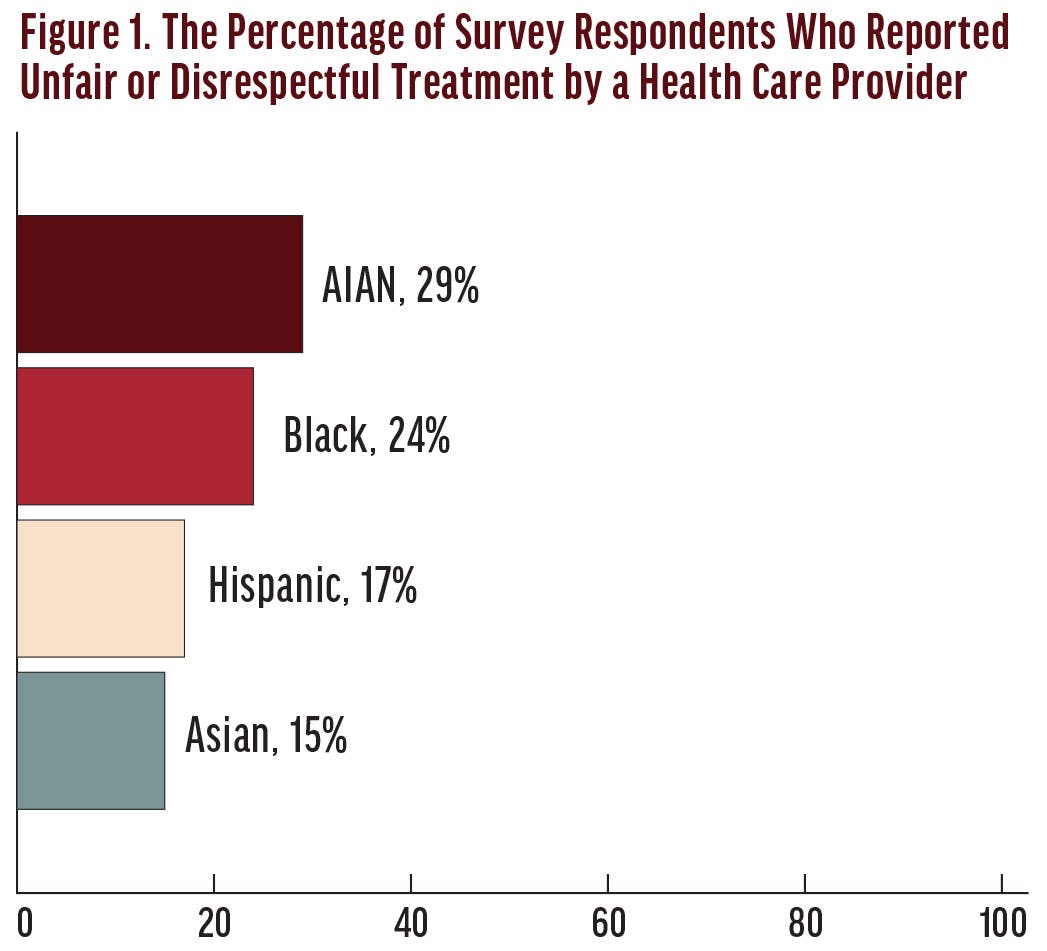
Overall, AIAN (29%), Black (24%), Hispanic (17%), and Asian (15%) survey respondents were more likely than White (14%) respondents to report unfair or disrespectful treatment by a health care provider over the last 3 years due to any reason, most notably racial or ethnic background, gender identity, health insurance status, ability to pay for care, and sexual orientation (Figure 1). This finding held true even with higher income and health insurance, and progressed in severity as household income decreased.1
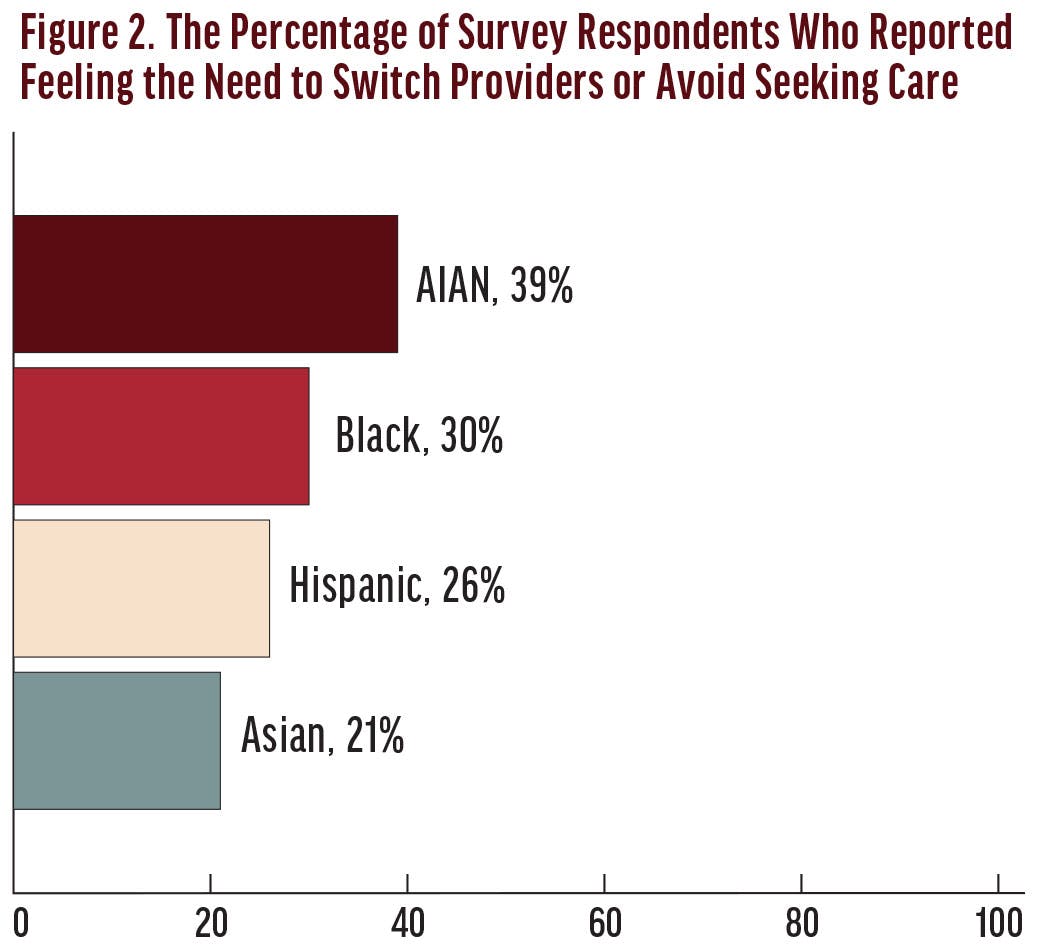
To facilitate a more constructive health care visit, Black, AIAN, Hispanic, and Asian survey respondents were more likely to prepare for visits by considering their appearance at least some of the time compared with White respondents. Lesbian, gay, bisexual, transgender, queer, intersexual, asexual, and all other identities, as well as lower-income patients, reported feeling particularly susceptible to heightened vigilance as a means of avoiding discrimination and receiving better care. Consequently, many AIAN, Black, Hispanic, and Asian patients reported feeling the need to switch health care providers or not seek care at all (Figure 2).1
ANSWER THE CALL
KFF’s survey found that treatment rooted in racism and discrimination disproportionately affects those of Hispanic, Black, Asian, or AIAN descent.1
Backed by these findings that identify areas for increased and improved attention, eye care providers have a duty to their patients and themselves to address these challenges and create a more inclusive environment for all, regardless of background (see An Eye Care Provider’s Insights).
AN EYE CARE PROVIDER'S INSIGHTS
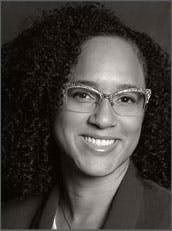
By Jessica Randolph, MD
Racism shows up in health care through underrepresented providers and undertreated patients, as seen through KFF’s survey results. Ophthalmology specifically has seen several initiatives that address these disparities, including:
- organizations collecting data to understand membership demographics and creating representative subcommittees,
- studies like KFF’s shedding light on discrimination, and
- clinical trials practicing more inclusive enrollment to better pinpoint how different populations react to various treatments.
In my clinic, I make time to talk to my patients, especially those who are underrepresented, and identify any social determinants of health. For example, I talk loudly and slowly for hearing-impaired patients and use translator services for non-English-speaking patients. Working in an academic environment, I am able to arrange social work consults when necessary. I also make therapist referrals as needed. Seeing many patients of low socioeconomic status, I consider medication costs and assistance programs whenever I can.
One of the most important things we can do is acknowledge there is a problem. Admitting there are systems of racism, oppression, and disparity entrenched in our country and medical system is the first step toward trying to improve them. Once we know where the gaps are, we can work together to try to close them.
Jessica Randolph, MD
Assistant Professor, Department of Ophthalmology, Virginia Commonwealth University, Richmond, Virginia
jessica.randolph@vcuhealth.org
Financial disclosure: Consultant (Abbvie, Advarra, Apellis)
1. Artiga S, Hamel L, Gonzalez-Barrera A, et al. Survey on Racism, Discrimination and Health: experiences and impacts across racial and ethnic groups. KFF. December 5, 2023. Accessed January 11, 2024. www.kff.org/racial-equity-and-health-policy/poll-finding/survey-on-racism-discrimination-and-health


_1784132761.jpg?auto=compress,format&w=75)





