


AT A GLANCE
- Rather than intravitreal or suprachoroidal delivery, many gene therapy trials for inherited retinal diseases use transvitreal subretinal delivery of the therapeutic.
- During the subretinal injection, real-time guidance with microscope-integrated intraoperative OCT can confirm subretinal placement, prevent suprachoroidal delivery, monitor foveal integrity, and map the bleb location.
- Post-injection, patients are closely monitored for intraocular inflammation, which may present as subretinal deposits, intraretinal cysts, or anterior/vitreous cells and flare.
Many gene therapy trials for inherited retinal disease (IRDs) and AMD are underway, exploring both gene-specific and gene-agnostic strategies. Rather than intravitreal or suprachoroidal delivery, many trials use transvitreal subretinal delivery. Although many surgeons are familiar with subretinal TPa administration, it’s not a common surgical technique. Here, I describe the current standard surgical approach used in clinical trials and offer pearls to enhance the success and safety of subretinal injections.
THE SURGICAL STEPS
The principle of this procedure involves performing a 23- or 25-gauge three-port vitrectomy followed by the creation of a subretinal bleb—a localized detachment between the neurosensory retina and the retinal pigment epithelium (RPE)—where the viral vector is injected (Figure 1).
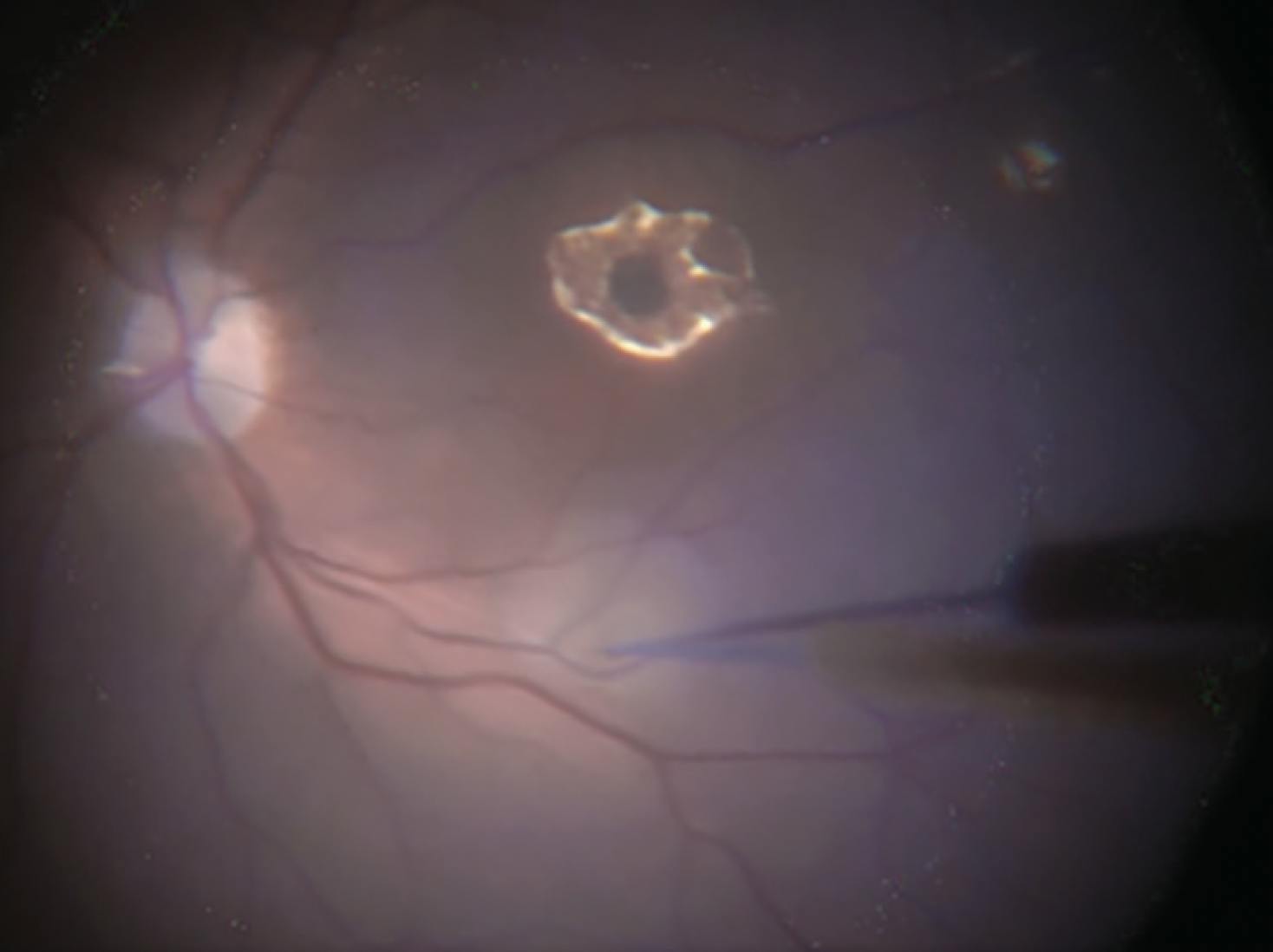
Figure 1. A subretinal cannula is used to begin a subretinal bleb via an injection along the superotemporal arcade (surgeon’s view). Triamcinolone acetonide was used to stain the vitreous, and the remnant is seen over the fovea.
Inducing a Posterior Vitreous Detachment
The vitreous and hyaloid often behave unusually in IRD cases. The vitreous may be more stringy and less dense than usual, even in younger patients. The hyaloid is often wispy or membrane-like and very adherent, making the vitrector suboptimal for lifting the cortical vitreous over the posterior pole. To better visualize and remove residual vitreous, it is critical to use diluted triamcinolone acetonide (Triesence, Harrow) or kenalog (Bristol-Myers Squibb). If vitreous wisps remain over the posterior pole following removal of the vitreous bulk with the vitrector, surgeons can use a soft-tip silicone cannula, such as a backflush cannula, to safely and effectively gather, pull up, and detach the wispy hyaloid off the posterior pole (Video 1). However, if a membrane-like hyaloid remains over the macula, a retinal scraper such as the Finesse Flex Loop (Alcon) is safer and more effective (Video 2). Lifting the hyaloid off the posterior pole is essential for successful subretinal bleb formation because the 38- or 41-gauge subretinal cannula used for the procedure can be impeded by residual cortical vitreous.
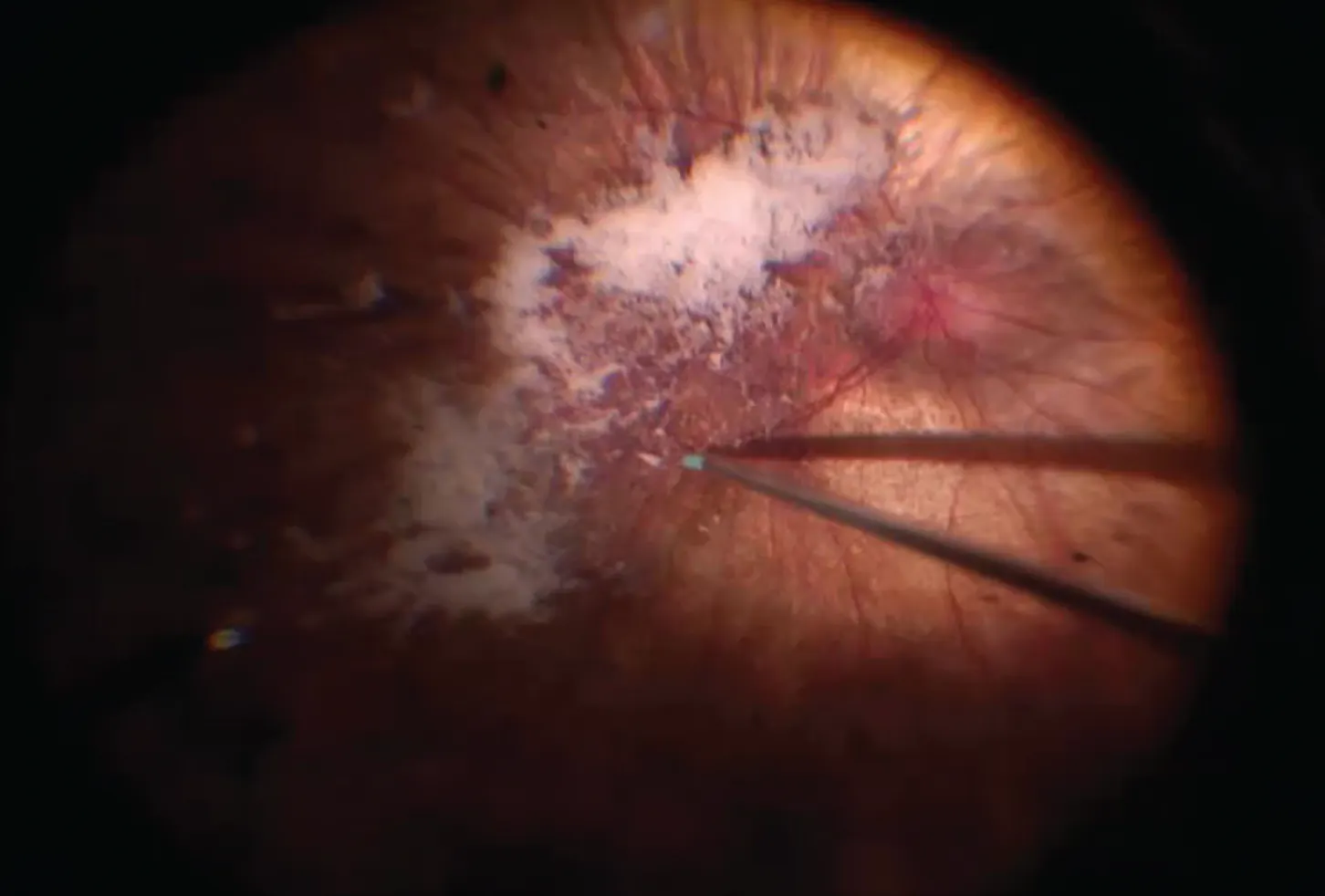
Video 1. Lifting the Hyaloid With a Soft-Tip Cannula.
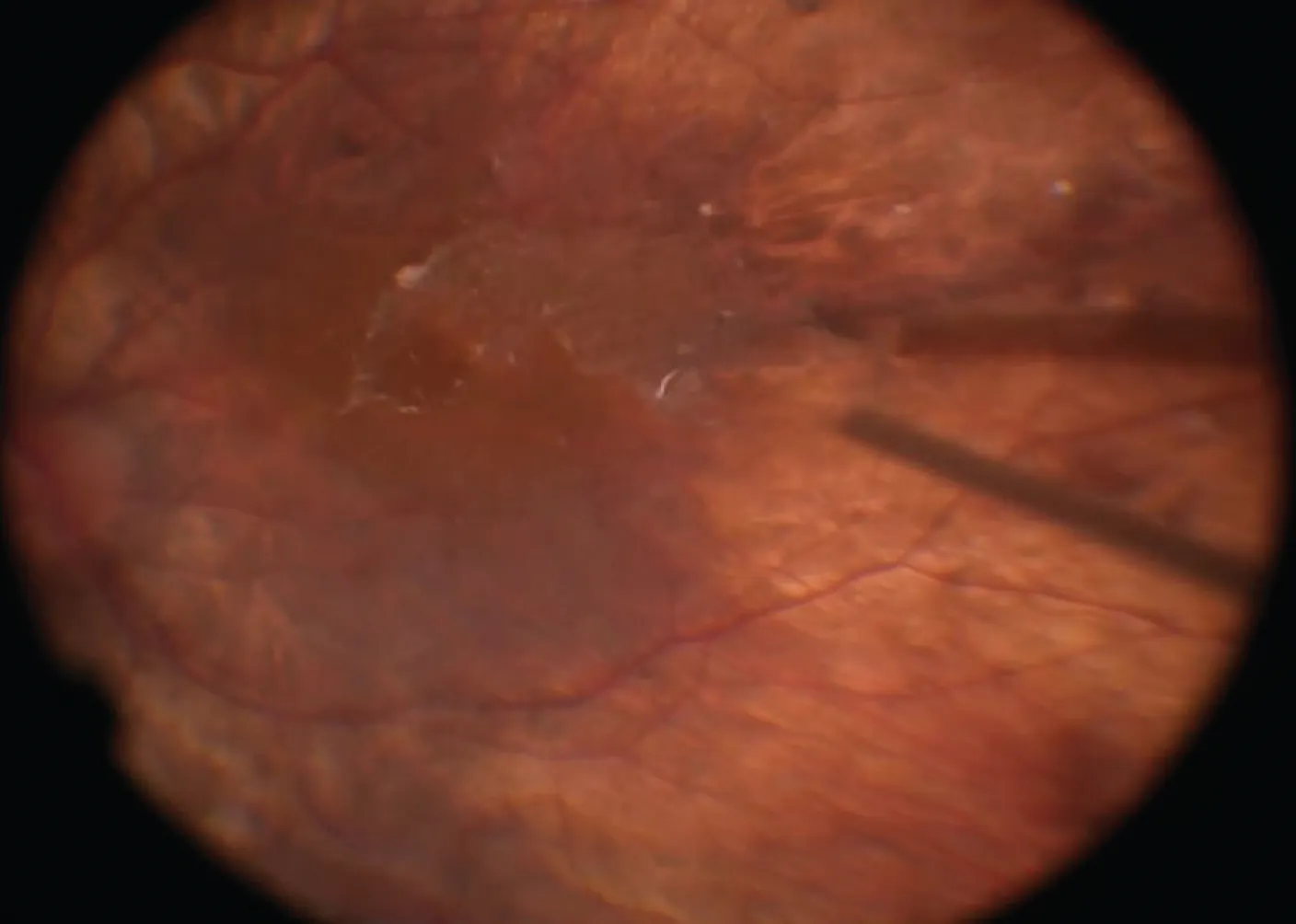
Video 2. Lifting the Hyaloid With a Retinal Scraper.
Removing Peripheral Vitreous
The vitreous tends to adhere strongly to the peripheral retina in many IRD eyes. To avoid iatrogenic breaks, it is important to be gentle in lifting the peripheral hyaloid. When strong adhesion is encountered, surgeons should stop aspirating and trim the vitreous to the retina without attempting complete peripheral removal. Creating a break in a fragile, atrophic peripheral retina poses a high risk of retinal detachment, which is difficult to repair due to the thin atrophic neurosensory retina and degenerated RPE. Even if the retinal detachment is small, the surgeon may have to forego gene therapy delivery.
Selecting a Retinotomy Site
Once the hyaloid is cleared from the macula, surgeons must select the retinotomy site, typically near a recognizable vascular landmark. The gene therapy is injected under the retina to create a subretinal bleb in a one-step procedure. For patients with particularly adherent retinas (eg, those with choroideremia and some forms of retinitis pigmentosa), a two-step procedure may be useful, in which the surgeon instills a small pre-bleb of balanced salt solution (BSS) to facilitate entry into the subretinal space and reduce the risk of consuming the gene product while attempting to lift the retina. The retinotomy is usually placed at least two disc diameters from the fovea, near the superotemporal or inferotemporal arcades. Beginning closer to the fovea increases the risk of overstretching the fovea and creating a macular hole.1 Depending on how the bleb spreads, even a small amount of subretinal fluid may reach and stretch the fovea.2 In current clinical trials, the typical volume of viral vector injected into a bleb ranges from 50 µL to 300 µL.
To aid in the subretinal delivery, surgeons can lower the main infusion cannula pressure to 10 mm Hg to 20 mm Hg. During the injection, real-time guidance with microscope-integrated intraoperative OCT (iOCT) can confirm subretinal placement, prevent suprachoroidal delivery, monitor foveal integrity, and map the bleb location to ensure adequate coverage of the treatment target zone.3
Because the direction of bleb expansion is unpredictable, multiple blebs are often required to adequately cover the target area. Most trials permit one to three blebs (Figure 2). For example, a superior bleb may expand peripherally without involving the fovea, while a second bleb near the inferotemporal arcade may cover the inferior macula and the fovea. In some trials (eg, for Stargardt disease), investigators seek to treat the macula without lifting the fovea or the central atrophic zone by initiating multiple blebs around the atrophy. iOCT is invaluable for tracking bleb formation and ensuring the targeted area is effectively covered.4
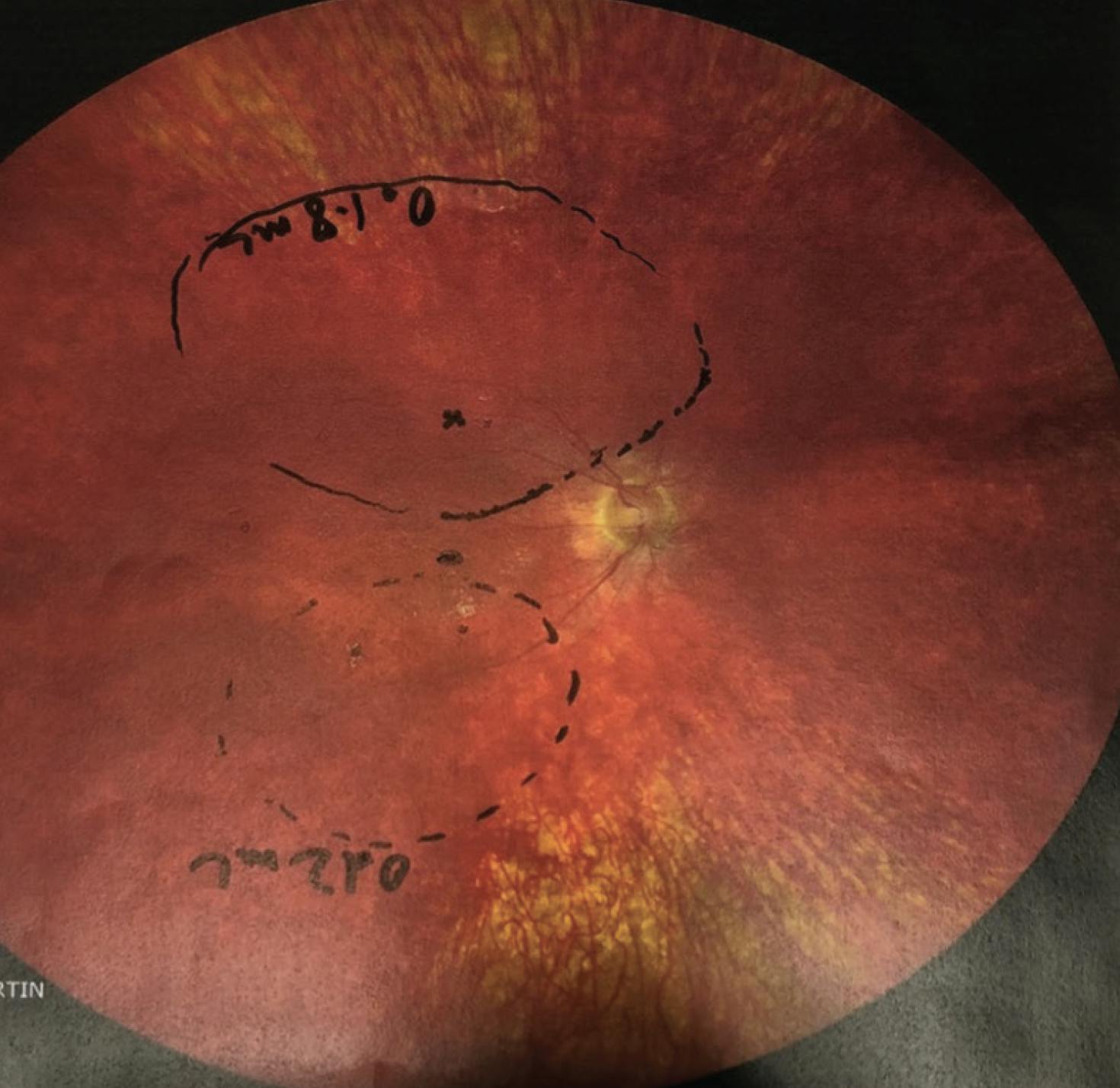
Figure 2. These drawings demarcate the blebs and injection sites near the vascular arcades to cover most of the macula and deliver a total of 300 µL of viral vector.
Following the gene therapy injection, a gentle BSS rinse or fluid-air exchange can remove any refluxed vector and minimize postoperative inflammation induced by the viral vector.5 Sclerotomies are sutured to prevent postoperative hypotony and potential gene therapy reflux. A fluid-air exchange may push the bleb toward the fovea—a maneuver recommended in some trials but undesirable in others.
At the end of surgery, some trials also require sub-Tenon triamcinolone acetonide. The risk of postoperative intraocular hypertension must be balanced against potential postoperative inflammation. Patients are typically kept in a supine position for at least 1 hour to promote bleb absorption and avoid gravity-induced bleb displacement.
Postoperative care includes standard eye drops and trial-specific oral prednisone regimens with a taper.
RISKS OF TRANSVITREAL SUBRETINAL INJECTIONS
In addition to the usual risks of vitrectomy, this approach carries specific concerns, including the following:
- Inflammation due to the viral vector
- Vector reflux, reducing delivered dosage
- Postoperative macular hole
- Perifoveal chorioretinal and RPE atrophy
- Subretinal deposits
- Iatrogenic choroidal neovascularization
Patients are closely monitored for intraocular inflammation, which may present as subretinal deposits, intraretinal cysts, or anterior/vitreous cells and flare. These are generally managed with escalated oral/topical steroids or intraocular steroids, depending on the severity and the trial protocol.
IMPROVING SAFETY
Subsequent to the clinical trials for voretigene neparvovec-rzyl (Luxturna, Spark Therapeutics) for RPE65-associated retinal degeneration, innovations such as the MedOne microinjector have allowed surgeons to connect the syringe with gene therapy product to the viscous fluid control (VFC) function on the vitrectomy machine. The pedal control this provides offers excellent control over injection pressure and speed.
For example, a typical VFC injection pressure of 10 psi to 12 psi produces a steady drip and not a forceful jet from the tip of the subretinal cannula, minimizing mechanical trauma to the retina. The retina typically elevates with pressures around 10 psi to 14 psi, occasionally up to 18 psi.
Experimental animal models show that excessive pressure during subretinal injections is harmful. In monkey eyes, subretinal BSS injection at 20 psi caused temporary inner segment/outer segment disruption and RPE changes, persisting for 5 to 6 weeks.6 Similarly, Olufsen et al reported significant damage to the outer retina and RPE at 32 psi versus 14 psi in pig eyes.7
OPTOMIZING BLEB FORMATION
In my clinical experience, the ease of bleb formation and required pressure vary widely among patients. Removal of the cortical vitreous at the injection site is crucial for successful access using 38- or 41-gauge subretinal cannulas.
A common misconception among novice surgeons is that higher manual pressure of the cannula against the retina aids in bleb formation. In fact, excess pressure may occlude the cannula tip against the retina, visible as RPE compression on iOCT. Lifting the cannula slightly can restore flow and allow the fluid to penetrate the neurosensory retina. If I have trouble inducing a bleb, I typically trim the cannula tip at a 45° angle, which creates a sharp tip to nick the internal limiting membrane and allow fluid to penetrate and lift the neurosensory retina.
FOVEAL INCLUSION IN SUBRETINAL GENE THERAPY
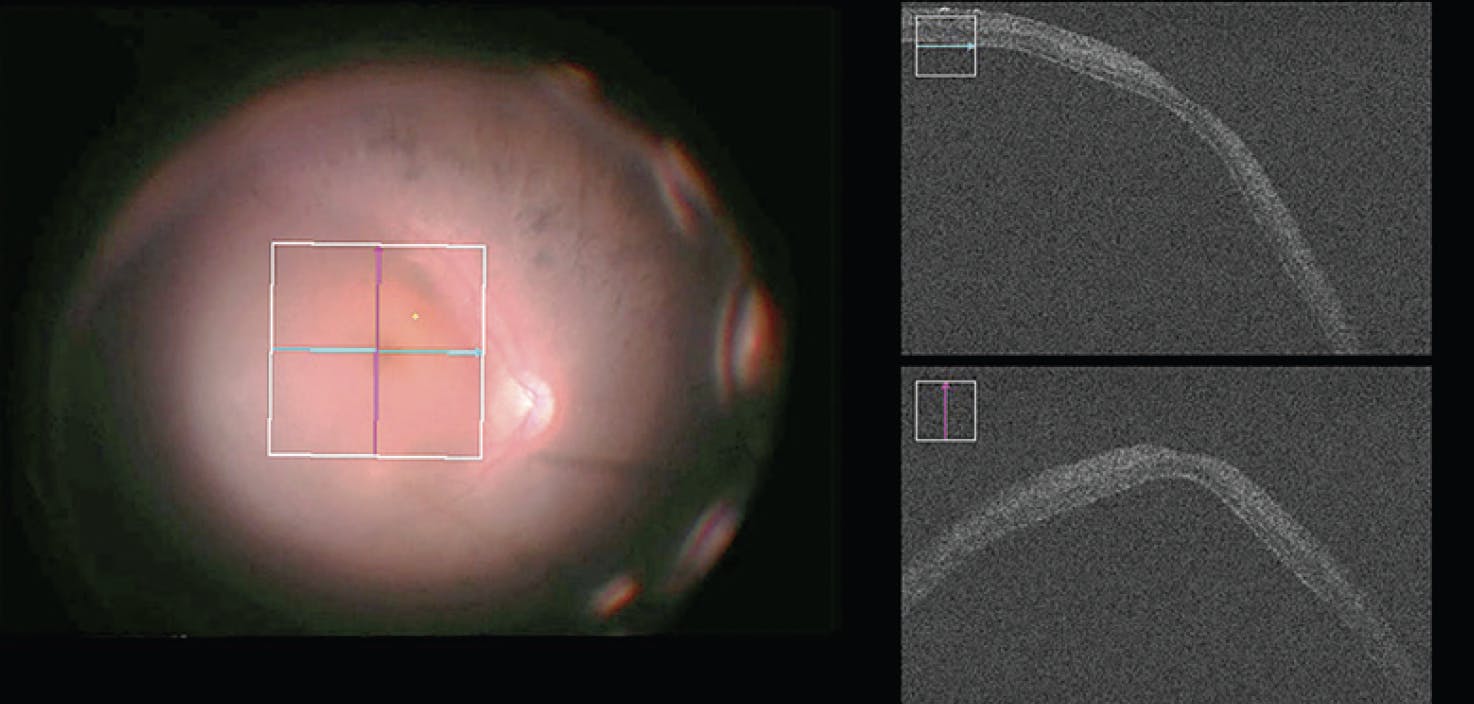
When treatment requires foveal involvement, it is essential to monitor the fovea in real-time using iOCT. OCT-guided visualization allows precise monitoring of foveal elevation, stopping the injection if the foveal stretch is significant and minimizing trauma and macular hole formation—a serious complication that may lead to vector reflux, additional surgical procedures, and postoperative vision loss (Figure 3).5
Xue et al demonstrated that foveal stretch correlates with injection volume and retinotomy proximity. The study suggests placing the retinotomy at least 3 mm from the foveal center reduces mechanical stress (Figure 4).1
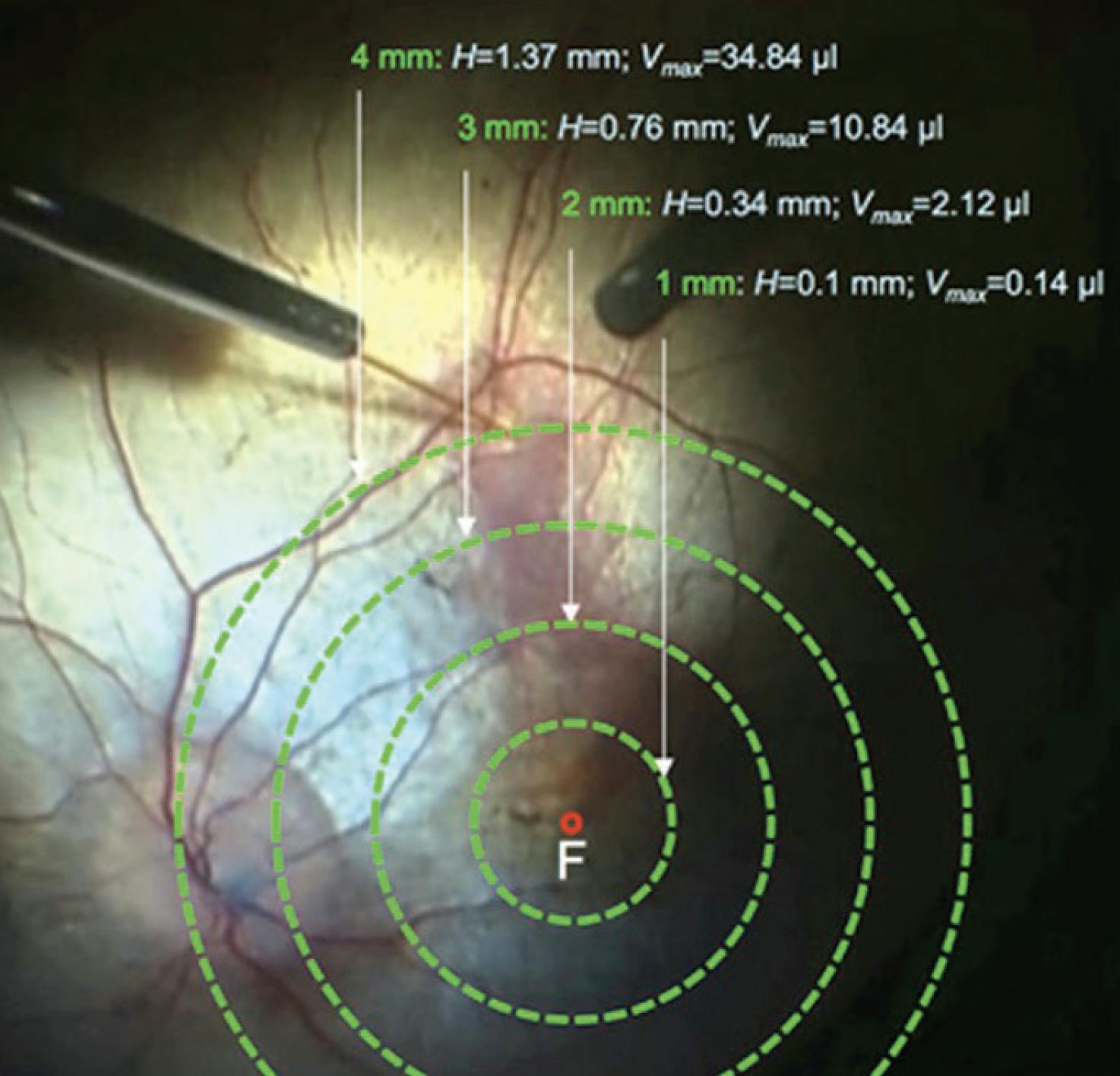
Figure 4. Retinal stretch as a function of distance from the fovea and volume. Reproduced with permission through creativecommons.org/licenses/by/4.0.
EASING THE STRAIN ON SURGEON’S HANDS
Manual subretinal injections are also affected by the surgeon’s physiological tremor and fatigue during prolonged injections. While robotic systems are in development, current procedures rely on the surgeon’s precision. A stable hand and adequate wrist support, including a reliable wrist rest and avoidance of caffeine prior to surgery, can enhance hand steadiness and delivery accuracy.
1. Xue K, Groppe M, Salvetti AP, MacLaren RE. Technique of retinal gene therapy: delivery of viral vector into the subretinal space. Eye (Lond). 2017;31(9):1308-1316.
2. Sisk RA, Berger TA, Williams ER, Riemann CD. Intraoperative bleb behavior in subretinal gene augmentation therapy for inherited retinal diseases. Retina. 2023;43(10):1763-1772.
3. Gregori NZ, Lam BL, Davis JL. Intraoperative use of microscope-integrated optical coherence tomography for subretinal gene therapy delivery. Retina. 2019;39(Suppl 1):S9-S12.
4. Gregori NZ, Davis JL. Surgical observations from the first 120 cases of subretinal gene therapy for inherited retinal diseases. Retina. 2023;43(9):1608-1611.
5. Davis JL, Gregori NZ, MacLaren RE, Lam BL. Surgical technique for subretinal gene therapy in humans with inherited retinal degeneration. Retina. 2019;39(Suppl 1):S2-S8.
6. Takahashi K, Morizane Y, Hisatomi T, et al. The influence of subretinal injection pressure on the microstructure of the monkey retina. PLoS One. 2018;13(12):e0209996.
7. Olufsen ME, Spindler L, Sorensen NB, et al. Controlled subretinal injection pressure prevents damage in pigs. Ophthalmologica. 2022;245(3):285-294.
-1%20(1)_1769020986.jpg?auto=compress,format&w=70)


%20FINAL-1_1771612597.jpg?auto=compress,format&w=70)


_1784132761.jpg?auto=compress,format&w=75)




