


AT A GLANCE
- Most surgeons agree that the gas bubble should come into contact with the macular hole (MH), but full face-down positioning may not be necessary.
- Large MHs greater than 500 µm, duration greater than 6 months, and a hole configuration with flat edges and no cystoid macular edema are all risk factors for failure to close.
- For a persistent MH, strategies include creating a macular detachment or arcuate retinotomies, macular buckling, and scleral imbrication.
The concept of modern macular hole (MH) surgery was first described by Kelly and Wendel in 1991.1 Since then, the technique has evolved considerably, and the success rates for MHs < 400 µm now approach 95% to 100%.2
For most vitreoretinal surgeons, the standard technique includes a pars plana vitrectomy, internal limiting membrane (ILM) peel, and gas tamponade. Surgeons should meticulously shave the vitreous base to reduce the risk of any postoperative retinal tears and allow a full gas bubble fill.
I stain the ILM with ICG or Brilliant Blue and perform a wide ILM peel to relieve tangential traction. I fill the eye with 20% SF6 gas or 14% C3F8 and will choose the latter if the hole has had a longer duration, or if there are any inferior retinal tears. I recommend face-down positioning for 1 to 3 days.
CONTROVERSIES
Recently, the utility of face-down positioning has been debated. Most retina surgeons agree that the gas bubble should come into contact with the hole, but full face-down positioning may not be necessary. A recent systematic review and meta-analysis found no difference in macular hole closure rates when studying eight randomized controlled trials (709 eyes). However, the researchers noted a visual benefit to face-down positioning, which was driven by large holes.3
Most surgeons perform an ILM peel for MHs, as it may increase the closure rate by ensuring that any epiretinal tissue is removed, as well as the scaffold for epiretinal membrane recurrence. Peeling also is known to reduce the rate of MH reopening after cataract surgery.
Creating an ILM flap is now an alternative to a traditional ILM peel. In this technique, surgeons perform a vitrectomy, assisted by triamcinolone, and laser any peripheral retinal tears to minimize manipulation at the end of surgery. The surgeon peels two strips of ILM and then flaps the remaining ILM over the macular hole, followed by an air-fluid exchange.
Even with these techniques, there is an up to 10% failure rate of conventional MH surgery. Large MHs greater than 500 µm, duration greater than 6 months, and a hole configuration with flat edges and no cystoid macular edema are all risk factors for failure to close. High myopia, concomitant macular disease, uveitis, and macular telangiectasia are also risk factors for non-closure.
KEEP IT SIMPLE
When I’m referred a patient with a MH that has not closed with the first intervention, I often strategize to do a complex procedure. However, I often find that it’s unnecessary. Perhaps the hyaloid is still attached at the macula, and I can use triamcinolone to lift the hyaloid or to check that the “wave” of hyaloid has been stripped to the periphery.
Sometimes, there’s an inadequate ILM peel, which could be due to many reasons, including inability to complete the procedure safely if the patient was moving or breathing heavily under monitored anesthesia care. Sometimes inadequate staining may lead to inadequate visualization of the ILM, resulting in difficulty removing the ILM. You may even find a large peripheral vitreous skirt, which leads to a poor gas fill and lowers the chance of closure.
Thus, conventional surgery may still be a useful approach when reoperating on a failed MH closure, and the success rate can be up to 90% if there were obvious reasons for the failed first surgery. I usually use C3F8 in these cases, but I have colleagues who will use silicone oil.
WHEN COMPLEX IS NECESSARY
When faced with a persistent MH, some strategies focus on relaxing the retina. A few good approaches include creating a macular detachment or arcuate retinotomies, macular buckling, and scleral imbrication.
Surgeons can also increase gliosis with the use of growth factors, such as autologous platelet-rich plasma or human amniotic membrane, and employ techniques to plug the hole using an ILM free flap or a lens capsular flap. In addition, autologous neurosensory retinal flaps and human amniotic membrane (epiretinal or subretinal) are gaining in popularity.
The human amniotic membrane graft, first described by Stanislao Rizzo, MD, in 2019, is rich in growth factors, can integrate into tissue, and is noninflammatory.4 Dr. Rizzo described subretinal implantation inside the hole and the use of air or gas. Other techniques have since evolved, such as the epiretinal patch that may include silicone oil tamponade.
Autologous retinal transplantation was developed by Grewal and Mahmoud, and results of a multicenter international collaborative study group showed complete closure in 89% of holes, with vision improving in 37%.5
Small macular holes can be treated medically, and a review of patients showed that these holes can close with topical antiinflammatories or carbonic anhydrase inhibitors in approximately 5.6 weeks.6
QUESTIONS REMAIN
MH surgery has evolved considerably since the initial description in 1991. Questions surrounding MH surgery that remain include: “should we peel the ILM?” “Which gas should we use, or should we use oil?” “How long should the patient position face-down, or is it even necessary?”
Nonetheless, there are evolving techniques for the management of refractory and large MHs that were previously considered inoperable.
Editor’s note: This content was first presented at AAO 2022 in Chicago on October 1.
MACULAR HOLE APPROACHES ON EYETUBE
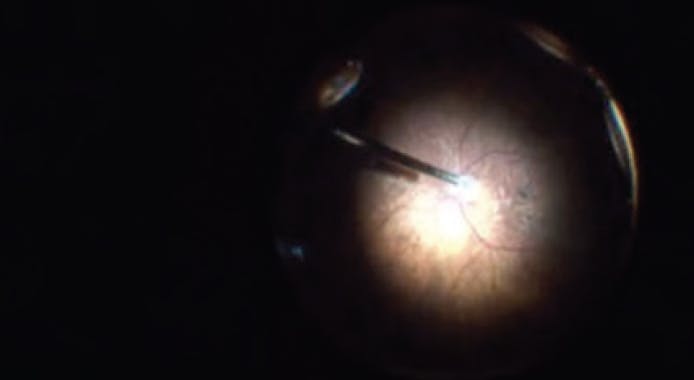
An Inverted ILM Flap for an Atrophic Macular Hole
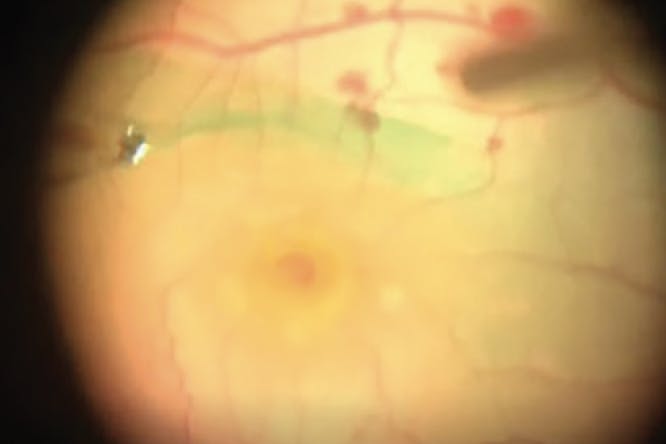
Superior Wide-Base ILM Flap Transposition (SWIFT) Technique for Macular Hole Closure
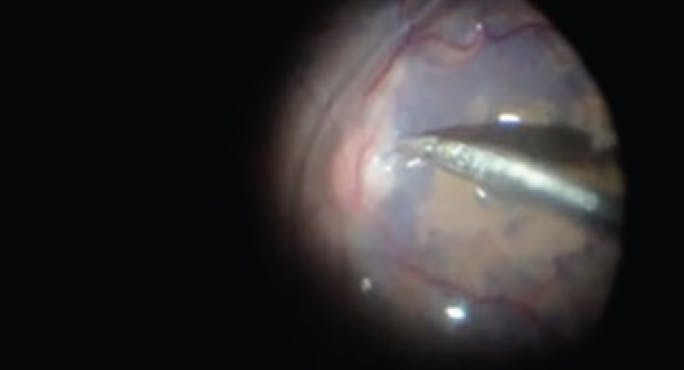
Stuff-In Technique With Brilliant Blue Dye and Perfluorocarbon Liquid for Large Macular Holes
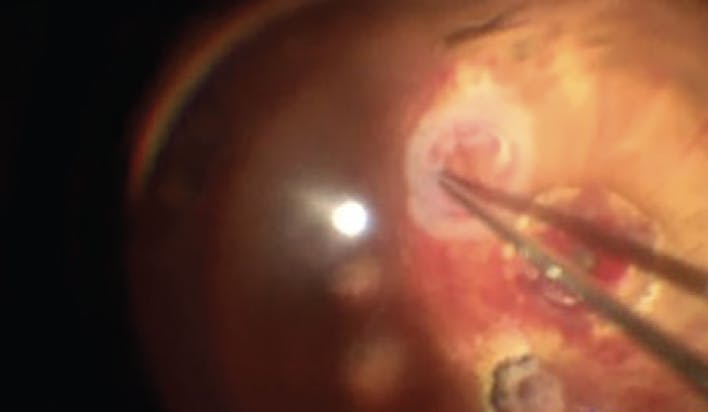
Autologous Retinal Transplant for a Full-Thickness Macular Hole
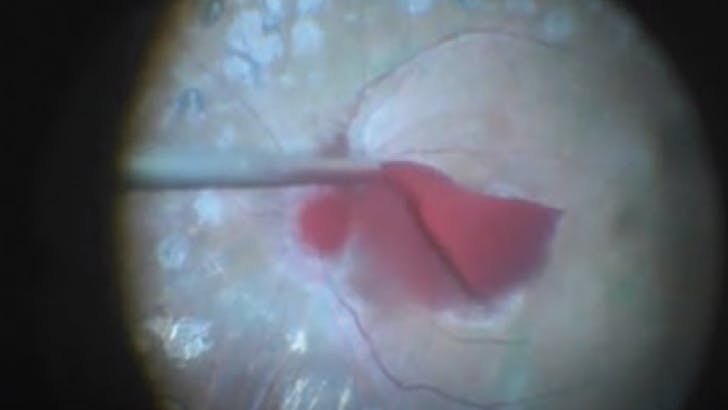
Plasma-Assisted Macular Hole Closure
1. Kelly NE, Wendel RT. Vitreous surgery for idiopathic macular holes. Results of a pilot study. Arch Ophthalmol. 1991;109(5):654-659.
2. Ittarat M, Somkijrungroj T, Chansangpetch S, Pongsachareonnont P. Literature review of surgical treatment in idiopathic full-thickness macular hole. Clin Ophthalmol. 2020;14:2171-2183.
3. Chaudhary V, Sarohia GS, Phillips MR, et al. Role of positioning after full-thickness macular hole surgery: a systematic review and meta-analysis [published online ahead of print July 1, 2022]. Ophthalmol Retina.
4. Rizzo S, Caporossi T, Tartaro R, et al. A Human amniotic membrane plug to promote retinal breaks repair and recurrent macular hole closure. Retina. 2019;39(Suppl 1):S95-S103.
5. Grewal DS, Mahmoud TH. Autologous neurosensory retinal free flap for closure of refractory myopic macular holes. JAMA Ophthalmol. 2016;134(2):229-230.
6. Niffenegger JH, Fong DS, Wong KL, Modjtahedi BS. Treatment of secondary full-thickness macular holes with topical therapy. Ophthalmol Retina. 20204(7):695-699.

_1674488812.jpg?auto=compress,format&w=70)


-1_1674489004.jpg?auto=compress,format&w=70)
_1784132761.jpg?auto=compress,format&w=75)





